

oxygen to allow phosphorus removal, but also contributed themselves for the
phosphorus uptake [31]. This uptake occurred in amounts that were higher than the
P needed for their growth, suggesting a possibly accumulation of phosphorus
granules as internal reserves [31, 47, 58, 70]. The overall process results indicated
that without any mechanical aeration, the photo-EBPR had a phosphorus removal
capacity of 74%, with a P net removal of 34 mg P/L, when the reactor was fed with
a COD/P ratio of 3.3/1 (mg COD/mg P) [31]. This ratio was much lower than the
ratios found in domestic wastewaters, which normally range 30/1 [71], showing that
the photo-EBPR is capable of treating effluents with low carbon concentrations and
high P amount, which can occur in industrial and agricultural wastewaters [46]. In
comparison with other conventional EBPR processes, the P net removal obtained
by [31] was consistently higher: [72] in full-scale WWTPs with EBPR systems,
indicating a net P removal of 10 mg P/L with a COD/P ratio of 10/1; [73] obtained
a net P removal of 10 mg P/L with a COD/P ratio of 20/1 using real wastewaters in
laboratory tests; [74] obtained 20 mg P/L of net P removal with a COD/P ratio of
10/1 using synthetic wastewaters in laboratory tests.
[32] also studied the possibility of selecting a photo-EBPR system starting from
activated sludge and concluded that it was possible but required the double of the
time to obtain a stable and efficient P removal culture. This extra time is necessary
to simultaneously give conditions for algae growth and for the selection of PAOs
with high P uptake capability, which require high oxygen availability. Although the
culture selection process was slower in comparison with cultures already enriched
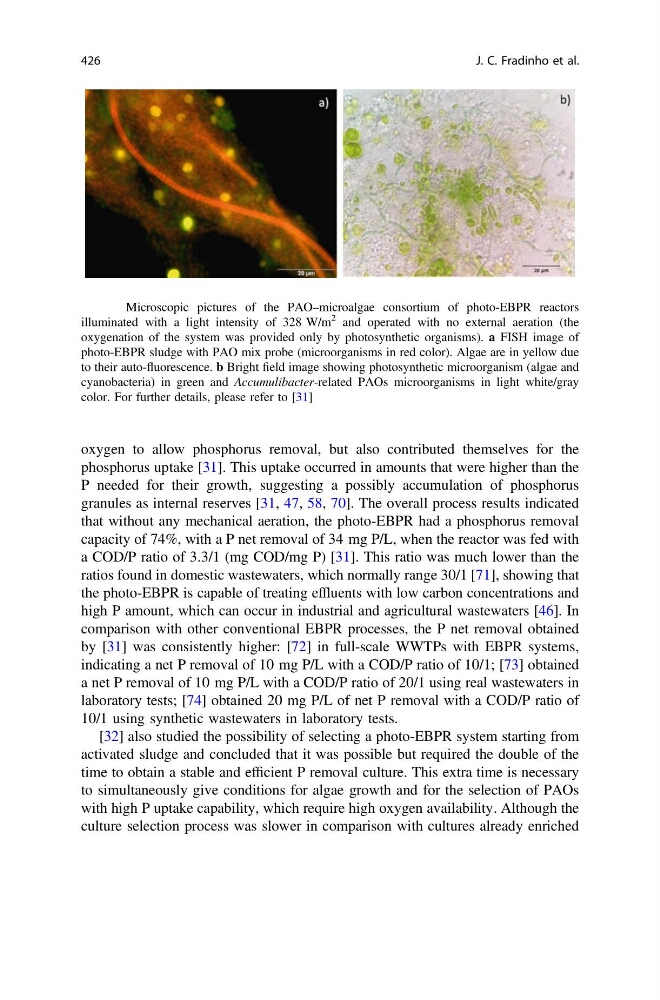
Fig. 4 Microscopic pictures of the PAO–microalgae consortium of photo-EBPR reactors
illuminated with a light intensity of 328 W/m
2 and operated with no external aeration (the
oxygenation of the system was provided only by photosynthetic organisms). a FISH image of
photo-EBPR sludge with PAO mix probe (microorganisms in red color). Algae are in yellow due
to their auto-fluorescence. b Bright field image showing photosynthetic microorganism (algae and
cyanobacteria) in green and Accumulibacter-related PAOs microorganisms in light white/gray
color. For further details, please refer to [31]
426
J. C. Fradinho et al.
phosphorus uptake [31]. This uptake occurred in amounts that were higher than the
P needed for their growth, suggesting a possibly accumulation of phosphorus
granules as internal reserves [31, 47, 58, 70]. The overall process results indicated
that without any mechanical aeration, the photo-EBPR had a phosphorus removal
capacity of 74%, with a P net removal of 34 mg P/L, when the reactor was fed with
a COD/P ratio of 3.3/1 (mg COD/mg P) [31]. This ratio was much lower than the
ratios found in domestic wastewaters, which normally range 30/1 [71], showing that
the photo-EBPR is capable of treating effluents with low carbon concentrations and
high P amount, which can occur in industrial and agricultural wastewaters [46]. In
comparison with other conventional EBPR processes, the P net removal obtained
by [31] was consistently higher: [72] in full-scale WWTPs with EBPR systems,
indicating a net P removal of 10 mg P/L with a COD/P ratio of 10/1; [73] obtained
a net P removal of 10 mg P/L with a COD/P ratio of 20/1 using real wastewaters in
laboratory tests; [74] obtained 20 mg P/L of net P removal with a COD/P ratio of
10/1 using synthetic wastewaters in laboratory tests.
[32] also studied the possibility of selecting a photo-EBPR system starting from
activated sludge and concluded that it was possible but required the double of the
time to obtain a stable and efficient P removal culture. This extra time is necessary
to simultaneously give conditions for algae growth and for the selection of PAOs
with high P uptake capability, which require high oxygen availability. Although the
culture selection process was slower in comparison with cultures already enriched
Fig. 4 Microscopic pictures of the PAO–microalgae consortium of photo-EBPR reactors
illuminated with a light intensity of 328 W/m
2 and operated with no external aeration (the
oxygenation of the system was provided only by photosynthetic organisms). a FISH image of
photo-EBPR sludge with PAO mix probe (microorganisms in red color). Algae are in yellow due
to their auto-fluorescence. b Bright field image showing photosynthetic microorganism (algae and
cyanobacteria) in green and Accumulibacter-related PAOs microorganisms in light white/gray
color. For further details, please refer to [31]
426
J. C. Fradinho et al.