

microalgae biomass is a slow releaser of ammonia and phosphorus [67, 68]. Algal
fertilizers have several advantages when compared to chemical fertilizers or other
natural fertilizers like manure [68, 69]. The nitrogen present in microalgae biomass
is less probable of being lost in run-off or leaching, since only *5% of the
microalgae nitrogen content is available as mineral N at the time of application,
resulting in no volatilization of ammonia when dry microalgae biomass is disposed
as fertilizer [69]. In terms of P release, the fact that the poly-P present in the
biomass is slowly released in the soil, optimizes plants growth and reduces P soil
run-off, in comparison to inorganic fertilizers [67]. The presence of eventual
pathogens on the microalgae fertilizers can be controlled by the pH, temperature,
and the UV exposure during the wastewater treatment [68].
The first studies on the development of the photo-EBPR technology were carried
out at laboratory scale with the aim of understanding if a consortium of microalgae
and PAOs could efficiently remove P, while solely assisted by photo-oxygenation,
with no external aeration. The selection of a photo-EBPR system started by
exposing a sludge previously enriched in the PAO Accumulibacter phosphatis to
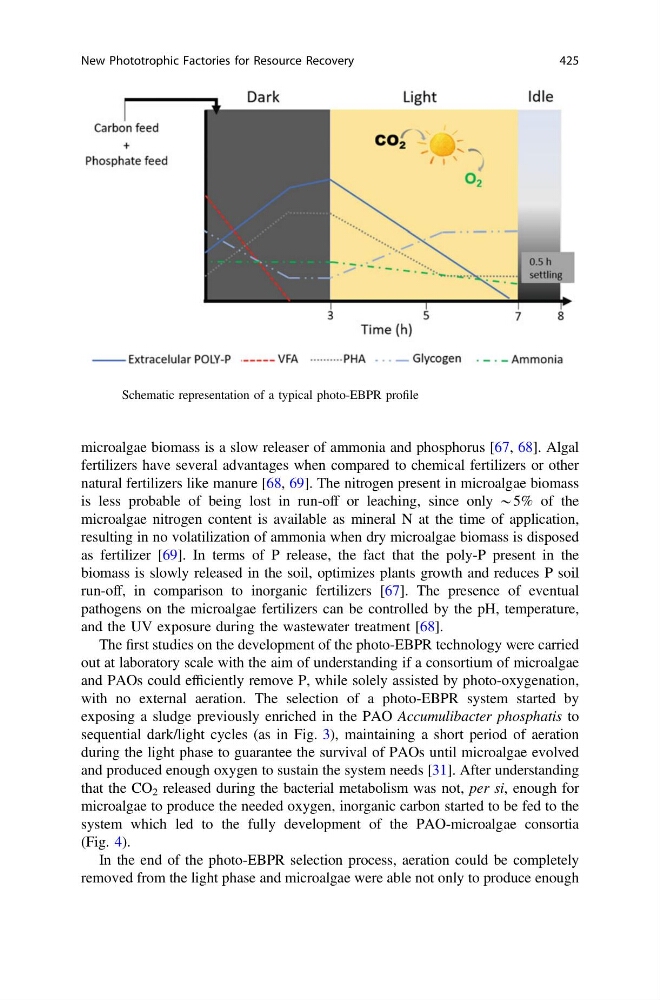
sequential dark/light cycles (as in Fig. 3), maintaining a short period of aeration
during the light phase to guarantee the survival of PAOs until microalgae evolved
and produced enough oxygen to sustain the system needs [31]. After understanding
that the CO 2 released during the bacterial metabolism was not, per si, enough for
microalgae to produce the needed oxygen, inorganic carbon started to be fed to the
system which led to the fully development of the PAO-microalgae consortia
(Fig. 4).
In the end of the photo-EBPR selection process, aeration could be completely
removed from the light phase and microalgae were able not only to produce enough
Fig. 3 Schematic representation of a typical photo-EBPR profile
New Phototrophic Factories for Resource Recovery
425
fertilizers have several advantages when compared to chemical fertilizers or other
natural fertilizers like manure [68, 69]. The nitrogen present in microalgae biomass
is less probable of being lost in run-off or leaching, since only *5% of the
microalgae nitrogen content is available as mineral N at the time of application,
resulting in no volatilization of ammonia when dry microalgae biomass is disposed
as fertilizer [69]. In terms of P release, the fact that the poly-P present in the
biomass is slowly released in the soil, optimizes plants growth and reduces P soil
run-off, in comparison to inorganic fertilizers [67]. The presence of eventual
pathogens on the microalgae fertilizers can be controlled by the pH, temperature,
and the UV exposure during the wastewater treatment [68].
The first studies on the development of the photo-EBPR technology were carried
out at laboratory scale with the aim of understanding if a consortium of microalgae
and PAOs could efficiently remove P, while solely assisted by photo-oxygenation,
with no external aeration. The selection of a photo-EBPR system started by
exposing a sludge previously enriched in the PAO Accumulibacter phosphatis to
sequential dark/light cycles (as in Fig. 3), maintaining a short period of aeration
during the light phase to guarantee the survival of PAOs until microalgae evolved
and produced enough oxygen to sustain the system needs [31]. After understanding
that the CO 2 released during the bacterial metabolism was not, per si, enough for
microalgae to produce the needed oxygen, inorganic carbon started to be fed to the
system which led to the fully development of the PAO-microalgae consortia
(Fig. 4).
In the end of the photo-EBPR selection process, aeration could be completely
removed from the light phase and microalgae were able not only to produce enough
Fig. 3 Schematic representation of a typical photo-EBPR profile
New Phototrophic Factories for Resource Recovery
425