

(Fig. 9). The latter cluster serves as an electron reservoir during the catalytic cycle
while the former cluster is responsible for proton activation and reduction.
Many efforts have been devoted to the design of low molecular weight mimics of
hydrogenases active site (see Chap. 3). However, these molecules hardly mimic the
second coordination sphere of the metal center, and even less the outer sphere
provided by the protein environment. Embedding active site models of hydrogenase
in protein scaffolds may lead to more efficient catalysts, shielding the metal center
against degradation and enabling electron/proton tunneling to the active site [63].
The first strategy to design a functional artificial hydrogenase consisted of
incorporating a simplified diiron carbonyl dithiolate cluster into an appropriate
protein scaffold to mimic [FeFe]–hydrogenase. In the seminal work published by
Hayashi and coworkers, apo-cytochrome c (Cyt c) was chosen as a protein scaffold
[64]. When devoid of its natural prosthetic group, heme c, Cyt c displays a CXXC
motif that can mimic the bridging dithiolate ligand of the diiron subcluster
(Fig. 10).
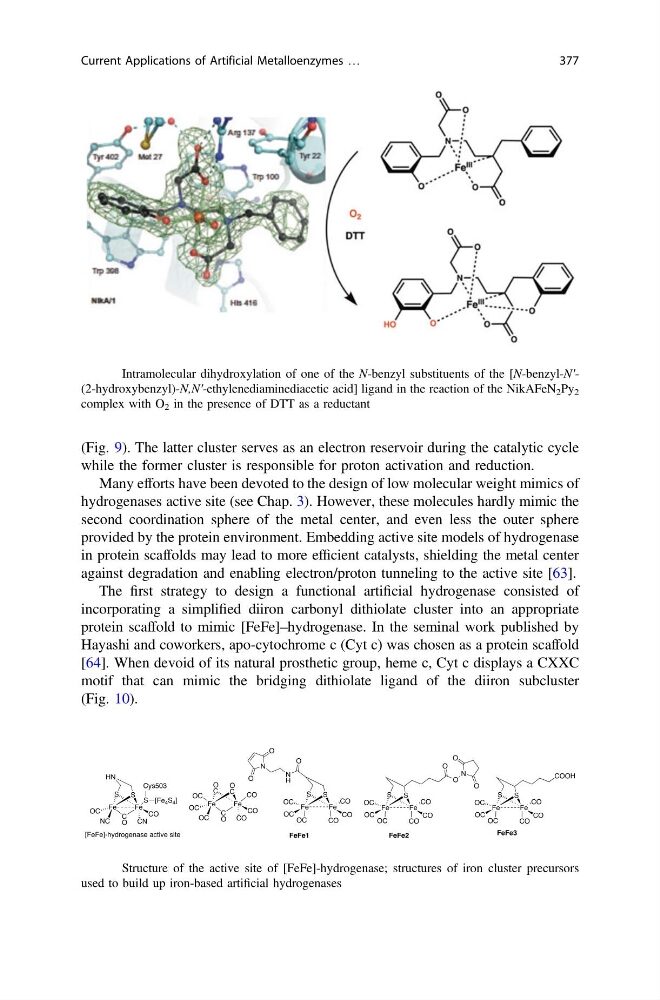
Fig. 8 Intramolecular dihydroxylation of one of the N-benzyl substituents of the [N-benzyl-N′(2-hydroxybenzyl)-N,N′-ethylenediaminediacetic acid] ligand in the reaction of the NikAFeN 2 Py 2
complex with O 2 in the presence of DTT as a reductant
Fig. 9 Structure of the active site of [FeFe]-hydrogenase; structures of iron cluster precursors
used to build up iron-based artificial hydrogenases
Current Applications of Artificial Metalloenzymes …
377
while the former cluster is responsible for proton activation and reduction.
Many efforts have been devoted to the design of low molecular weight mimics of
hydrogenases active site (see Chap. 3). However, these molecules hardly mimic the
second coordination sphere of the metal center, and even less the outer sphere
provided by the protein environment. Embedding active site models of hydrogenase
in protein scaffolds may lead to more efficient catalysts, shielding the metal center
against degradation and enabling electron/proton tunneling to the active site [63].
The first strategy to design a functional artificial hydrogenase consisted of
incorporating a simplified diiron carbonyl dithiolate cluster into an appropriate
protein scaffold to mimic [FeFe]–hydrogenase. In the seminal work published by
Hayashi and coworkers, apo-cytochrome c (Cyt c) was chosen as a protein scaffold
[64]. When devoid of its natural prosthetic group, heme c, Cyt c displays a CXXC
motif that can mimic the bridging dithiolate ligand of the diiron subcluster
(Fig. 10).
Fig. 8 Intramolecular dihydroxylation of one of the N-benzyl substituents of the [N-benzyl-N′(2-hydroxybenzyl)-N,N′-ethylenediaminediacetic acid] ligand in the reaction of the NikAFeN 2 Py 2
complex with O 2 in the presence of DTT as a reductant
Fig. 9 Structure of the active site of [FeFe]-hydrogenase; structures of iron cluster precursors
used to build up iron-based artificial hydrogenases
Current Applications of Artificial Metalloenzymes …
377