

(Mo, Re, W, Se, Os). One of the best results was obtained by Ward et al. with
vanadate-loaded streptavidin (SAV), that catalyzed the enantioselective thioether
sulfoxidation by
t
BuOOH with up to 93% ee in favor of the (R)-product and 96%
conversion [24].
Several artificial metalloenzymes, generated using the “Trojan Horse” strategy,
were also reported to catalyze chemoselective sulfide oxidations. Not surprisingly,
in 2009, the group of Ward incorporated achiral biotinylated manganese-salen
complexes into WT-SAV and five mutants to obtain ArMs that were tested as
enantioselective sulfoxidation catalysts. The resulting enzymes showed moderate
conversions (up to 56%) and low enantioselectivities (up to 13%) for the sulfoxidation of thioanisole using hydrogen peroxide as an oxidant in water (Fig. 3) [25].
Later, following the same strategy, Mahy et al. have exploited the neocarzinostatin
(NCS) variant NCS-3.24, which displays an affinity for testosterone to prepare a
novel ArM. A water-soluble anionic iron-porphyrin–testosterone conjugate was
synthesized and subsequently associated with the NCS-3.24 variant (Fig. 3) [26].
The obtained Fe(III)-porphyrin–testosterone-NCS-3.24 artificial metalloenzyme
was able to catalyze the chemo- and enantio-selective (ee = 13%) sulfoxidation of
thioanisole by H 2 O 2 . Molecular modeling studies revealed synergy between the
binding of the steroid moiety and that of the porphyrin macrocycle into the protein
binding site, thus explaining both the observed better affinity for the conjugate
(K D = 1.6 µM) and the selectivity.
“The Host-Guest” strategy that appears to be the simplest one to incorporate
metal cofactors into the cavity of proteins, has of course been the most often used to
generate ArMs for sulfide oxidation catalysis. First of all, Human serum albumin
(HSA) that is known to bind heme within a narrow cavity with a strong affinity
(K a = 1.1 Â 10
8 M
−1 ) was widely used not only for the generation of new efficient
O 2 binding artificial hemoproteins but also for preparing ArMs [27–29]. Gross et al.
inserted bis-sulfonated Ga- and Mn-corrole into HSA [30] as well as iron and
manganese complexes of the same corrole into human, bovine (BSA), porcine
(PSA), rabbit (RSA), and sheep (SSA) serum albumins to build new ArMs. These
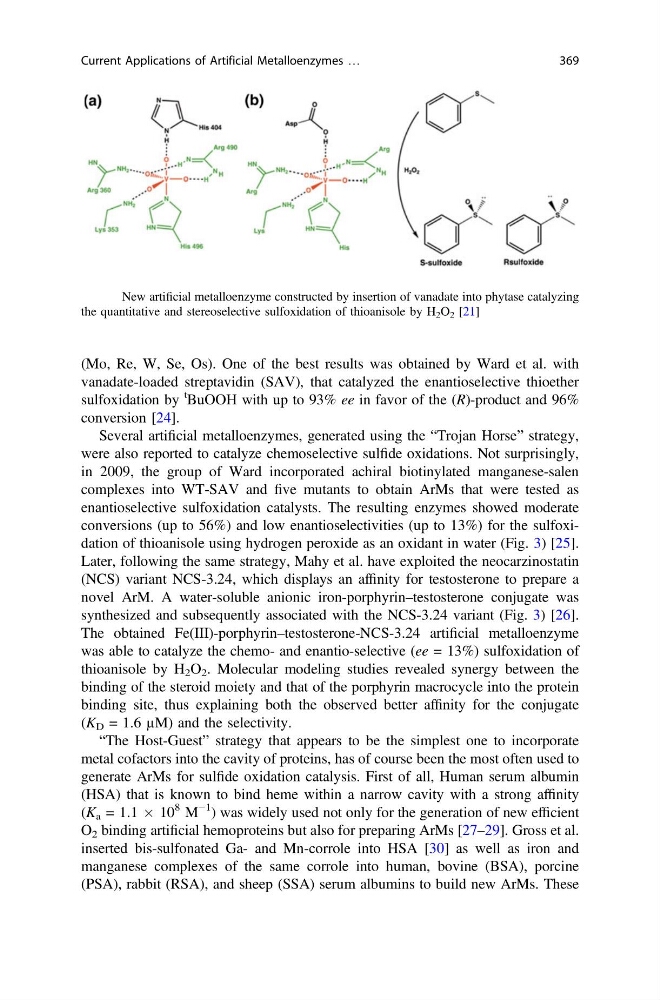
Fig. 2 New artificial metalloenzyme constructed by insertion of vanadate into phytase catalyzing
the quantitative and stereoselective sulfoxidation of thioanisole by H 2 O 2 [21]
Current Applications of Artificial Metalloenzymes …
369
vanadate-loaded streptavidin (SAV), that catalyzed the enantioselective thioether
sulfoxidation by
t
BuOOH with up to 93% ee in favor of the (R)-product and 96%
conversion [24].
Several artificial metalloenzymes, generated using the “Trojan Horse” strategy,
were also reported to catalyze chemoselective sulfide oxidations. Not surprisingly,
in 2009, the group of Ward incorporated achiral biotinylated manganese-salen
complexes into WT-SAV and five mutants to obtain ArMs that were tested as
enantioselective sulfoxidation catalysts. The resulting enzymes showed moderate
conversions (up to 56%) and low enantioselectivities (up to 13%) for the sulfoxidation of thioanisole using hydrogen peroxide as an oxidant in water (Fig. 3) [25].
Later, following the same strategy, Mahy et al. have exploited the neocarzinostatin
(NCS) variant NCS-3.24, which displays an affinity for testosterone to prepare a
novel ArM. A water-soluble anionic iron-porphyrin–testosterone conjugate was
synthesized and subsequently associated with the NCS-3.24 variant (Fig. 3) [26].
The obtained Fe(III)-porphyrin–testosterone-NCS-3.24 artificial metalloenzyme
was able to catalyze the chemo- and enantio-selective (ee = 13%) sulfoxidation of
thioanisole by H 2 O 2 . Molecular modeling studies revealed synergy between the
binding of the steroid moiety and that of the porphyrin macrocycle into the protein
binding site, thus explaining both the observed better affinity for the conjugate
(K D = 1.6 µM) and the selectivity.
“The Host-Guest” strategy that appears to be the simplest one to incorporate
metal cofactors into the cavity of proteins, has of course been the most often used to
generate ArMs for sulfide oxidation catalysis. First of all, Human serum albumin
(HSA) that is known to bind heme within a narrow cavity with a strong affinity
(K a = 1.1 Â 10
8 M
−1 ) was widely used not only for the generation of new efficient
O 2 binding artificial hemoproteins but also for preparing ArMs [27–29]. Gross et al.
inserted bis-sulfonated Ga- and Mn-corrole into HSA [30] as well as iron and
manganese complexes of the same corrole into human, bovine (BSA), porcine
(PSA), rabbit (RSA), and sheep (SSA) serum albumins to build new ArMs. These
Fig. 2 New artificial metalloenzyme constructed by insertion of vanadate into phytase catalyzing
the quantitative and stereoselective sulfoxidation of thioanisole by H 2 O 2 [21]
Current Applications of Artificial Metalloenzymes …
369