

material increased the storage stability of the encapsulated hydrogenase, while the
incorporation of the MWCNTs favoured electron delivery to the enzyme from the
MV reduced by sodium dithionite added to the solution. In this way, the H 2 production activity measured was equal to that measured for the enzyme in aqueous
solution [17]. Another strategy developed for increasing the operational stability for
in vitro evolution of H 2 has been the encapsulation of the membrane-bound
hydrogenase from P. furiosus into water-stable discoidal nanoparticles that were
formed by a lipoprotein acting as a scaffold for the self-assembly of phospholipid
bilayers [18]. The aim of the work was to resemble the in vivo environment of the
hydrogenase. Incorporation of the membrane enzyme into the nanolipoproteins
stabilized it in an aqueous solution, while maintaining its full activity of H 2 production with reduced MV. With the same goal, the encapsulation of an E. coli
NiFe-hydrogenase within the capsid of P22 bacteriophage led to a stabilization of
its quaternary structure and a 100-fold increase of the H 2 production activity [19].
NiFeSe-hydrogenases are a subclass of the NiFe-hydrogenases in which one of
the terminal cysteine ligands of Ni is replaced by a selenocysteine. This small
structural change in the active site considerably alters the catalytic function of the
NiFeSe-hydrogenases compared to NiFe-hydrogenases. First of all, their activity at
neutral pH is strongly biased towards H 2 production, which is the opposite of most
NiFe-hydrogenases [20]. The optimal H 2 -production solution activity of D. vulgaris
Hildenborough NiFeSe-hydrogenase measured with reduced MV is about one order
higher than its H 2 -oxidation, reaching turnover values of approximately 7,000 s
−1
[21]. These turnover values are almost equal to the highest ones measured with
FeFe-hydrogenases (about 10,000 s
−1 ), while NiFeSe-hydrogenases are more stable
towards irreversible inactivation by O 2 or light than the former [21]. The high H 2 -
production activity of NiFeSe-hydrogenases is attributed to the lower pKa of
selenocysteine compared to cysteine, thus favouring faster transfer of protons to and
from the bi-metallic active site [22]. Although the active site of
NiFeSe-hydrogenases reacts fast with low concentrations of O 2 and converts to the
inactive oxidized active state, it can be quickly reactivated under reductive conditions [23, 24]. This fast reactivation process is an advantage compared to
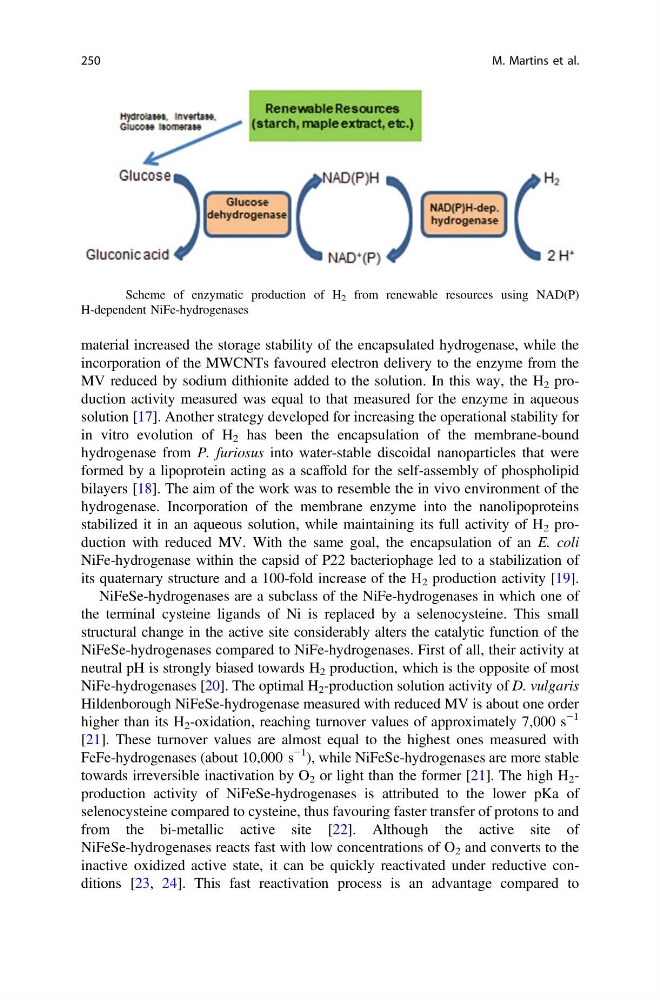
Fig. 2 Scheme of enzymatic production of H 2 from renewable resources using NAD(P)
H-dependent NiFe-hydrogenases
250
M. Martins et al.
incorporation of the MWCNTs favoured electron delivery to the enzyme from the
MV reduced by sodium dithionite added to the solution. In this way, the H 2 production activity measured was equal to that measured for the enzyme in aqueous
solution [17]. Another strategy developed for increasing the operational stability for
in vitro evolution of H 2 has been the encapsulation of the membrane-bound
hydrogenase from P. furiosus into water-stable discoidal nanoparticles that were
formed by a lipoprotein acting as a scaffold for the self-assembly of phospholipid
bilayers [18]. The aim of the work was to resemble the in vivo environment of the
hydrogenase. Incorporation of the membrane enzyme into the nanolipoproteins
stabilized it in an aqueous solution, while maintaining its full activity of H 2 production with reduced MV. With the same goal, the encapsulation of an E. coli
NiFe-hydrogenase within the capsid of P22 bacteriophage led to a stabilization of
its quaternary structure and a 100-fold increase of the H 2 production activity [19].
NiFeSe-hydrogenases are a subclass of the NiFe-hydrogenases in which one of
the terminal cysteine ligands of Ni is replaced by a selenocysteine. This small
structural change in the active site considerably alters the catalytic function of the
NiFeSe-hydrogenases compared to NiFe-hydrogenases. First of all, their activity at
neutral pH is strongly biased towards H 2 production, which is the opposite of most
NiFe-hydrogenases [20]. The optimal H 2 -production solution activity of D. vulgaris
Hildenborough NiFeSe-hydrogenase measured with reduced MV is about one order
higher than its H 2 -oxidation, reaching turnover values of approximately 7,000 s
−1
[21]. These turnover values are almost equal to the highest ones measured with
FeFe-hydrogenases (about 10,000 s
−1 ), while NiFeSe-hydrogenases are more stable
towards irreversible inactivation by O 2 or light than the former [21]. The high H 2 -
production activity of NiFeSe-hydrogenases is attributed to the lower pKa of
selenocysteine compared to cysteine, thus favouring faster transfer of protons to and
from the bi-metallic active site [22]. Although the active site of
NiFeSe-hydrogenases reacts fast with low concentrations of O 2 and converts to the
inactive oxidized active state, it can be quickly reactivated under reductive conditions [23, 24]. This fast reactivation process is an advantage compared to
Fig. 2 Scheme of enzymatic production of H 2 from renewable resources using NAD(P)
H-dependent NiFe-hydrogenases
250
M. Martins et al.