

4.3.5
Colloidal Crystals
The tendency of monodisperse nanocrystals to arrange into ordered threedimensional arrays extending to a few microns, has been noticed [150]. Careful
tuning of crystallization conditions has yielded crystallites of micrometer dimensions consisting of Au 55 nanocrystals and FeaPt alloy nanocrystals (4.5 nm) as
shown in Figure 4.22 [151, 152]. Micron-sized crystals consisting of TOPO capped
CdSe nanocrystals have previously been obtained by the groups of Bawendi and
Weller [125, 153]. However, it was observed that the nanocrystal arrangement in all
the above crystallites was polymorphous. It is believed that such crystallites, consisting of ordered nanocrystals, could prove to be the best candidates to study the
collective properties of an ensemble of nanocrystals.
4.3.6
Nanocrystal Patterning
Creating patterns of nanocrystals on surfaces has attracted wide attention. Such
patterned substrates can act as templates to grow nanowires, etch masks to grow
nanopillars and quantum dots [154–156]. Other than the layer-by-layer technique
mentioned before, simple techniques such as spin coating have been employed to
create a nanocrystalline pattern on surfaces [157].
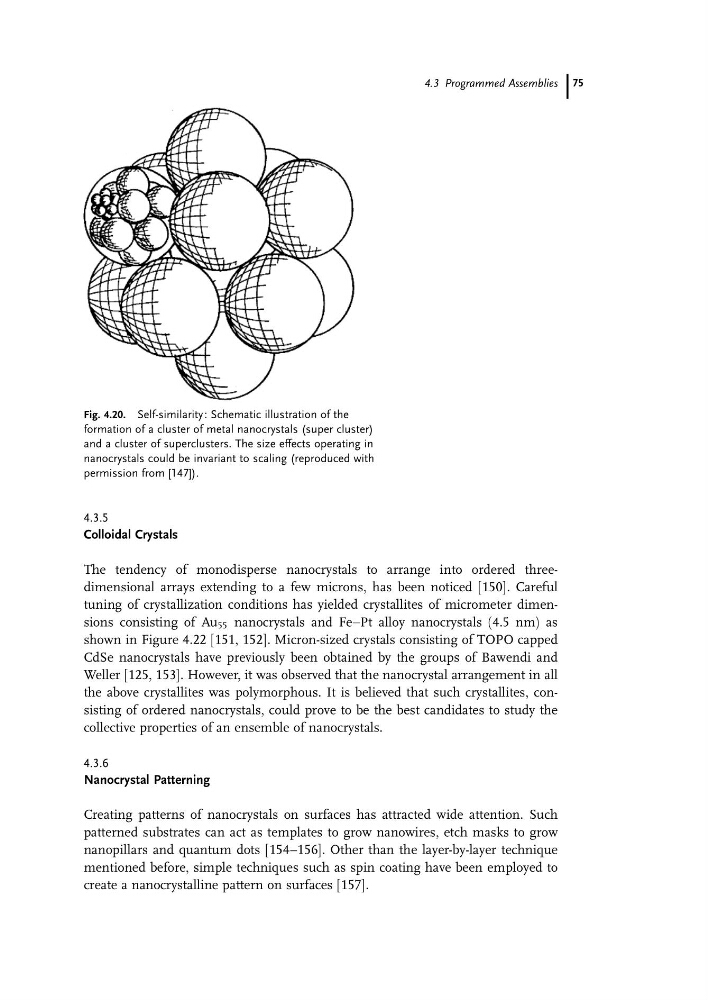
Fig. 4.20. Self-similarity : Schematic illustration of the
formation of a cluster of metal nanocrystals (super cluster)
and a cluster of superclusters. The size effects operating in
nanocrystals could be invariant to scaling (reproduced with
permission from [147]).
4.3 Programmed Assemblies 75
Colloidal Crystals
The tendency of monodisperse nanocrystals to arrange into ordered threedimensional arrays extending to a few microns, has been noticed [150]. Careful
tuning of crystallization conditions has yielded crystallites of micrometer dimensions consisting of Au 55 nanocrystals and FeaPt alloy nanocrystals (4.5 nm) as
shown in Figure 4.22 [151, 152]. Micron-sized crystals consisting of TOPO capped
CdSe nanocrystals have previously been obtained by the groups of Bawendi and
Weller [125, 153]. However, it was observed that the nanocrystal arrangement in all
the above crystallites was polymorphous. It is believed that such crystallites, consisting of ordered nanocrystals, could prove to be the best candidates to study the
collective properties of an ensemble of nanocrystals.
4.3.6
Nanocrystal Patterning
Creating patterns of nanocrystals on surfaces has attracted wide attention. Such
patterned substrates can act as templates to grow nanowires, etch masks to grow
nanopillars and quantum dots [154–156]. Other than the layer-by-layer technique
mentioned before, simple techniques such as spin coating have been employed to
create a nanocrystalline pattern on surfaces [157].
Fig. 4.20. Self-similarity : Schematic illustration of the
formation of a cluster of metal nanocrystals (super cluster)
and a cluster of superclusters. The size effects operating in
nanocrystals could be invariant to scaling (reproduced with
permission from [147]).
4.3 Programmed Assemblies 75