

ing from metal oxide nanocrystals prepared by thermolysis of metal–cupferron
complexes [130]. In contrast to metal nanocrystals, attempts to organize nonspherical oxide nanocrystals have met with reasonable success. Thus, tetrahedral
CoO nanocrystals have been organized into extended two-dimensional arrays [131].
A rectangular superlattice made of prismatic BaCrO 4 has been observed [132].
More complex arrays such as those consisting of a mixture of nanocrystals of different sizes have been obtained using Fe 3 O 4 and FeaPt nanocrystals [133]. The
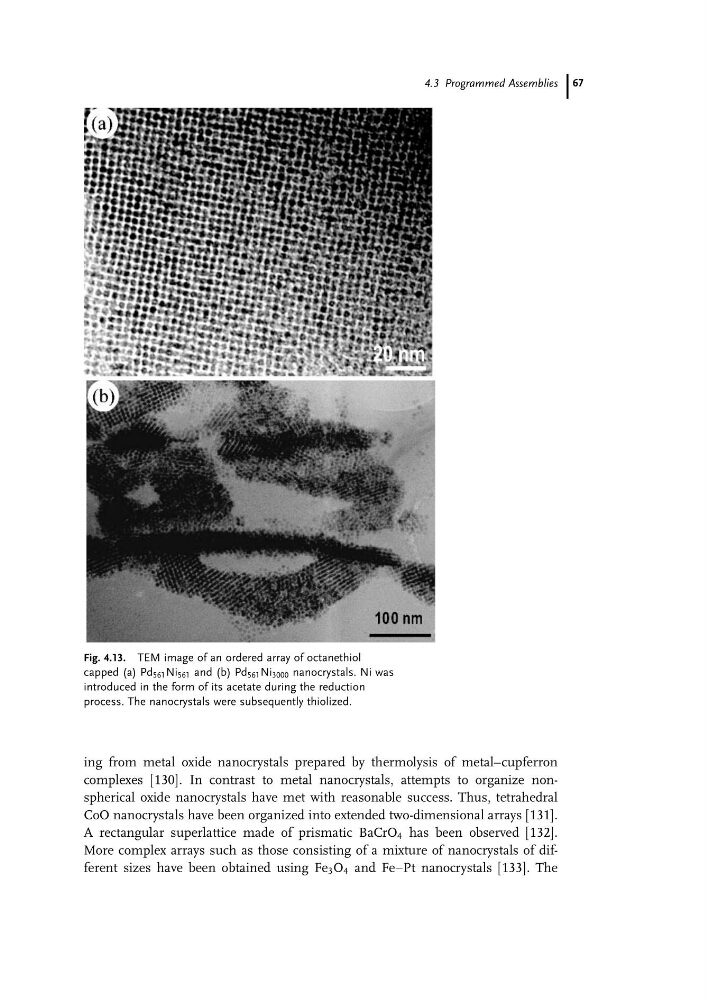
Fig. 4.13. TEM image of an ordered array of octanethiol
capped (a) Pd 561 Ni 561 and (b) Pd 561 Ni 3000 nanocrystals. Ni was
introduced in the form of its acetate during the reduction
process. The nanocrystals were subsequently thiolized.
4.3 Programmed Assemblies 67
complexes [130]. In contrast to metal nanocrystals, attempts to organize nonspherical oxide nanocrystals have met with reasonable success. Thus, tetrahedral
CoO nanocrystals have been organized into extended two-dimensional arrays [131].
A rectangular superlattice made of prismatic BaCrO 4 has been observed [132].
More complex arrays such as those consisting of a mixture of nanocrystals of different sizes have been obtained using Fe 3 O 4 and FeaPt nanocrystals [133]. The
Fig. 4.13. TEM image of an ordered array of octanethiol
capped (a) Pd 561 Ni 561 and (b) Pd 561 Ni 3000 nanocrystals. Ni was
introduced in the form of its acetate during the reduction
process. The nanocrystals were subsequently thiolized.
4.3 Programmed Assemblies 67