

dodecane [71]. Similar to the acid-facilitated phase transfer of gold nanoparticles
using alkanethiols [65, 66], the phase transfer of silver particles occurs when a
small amount of orthophosphoric/perchloric acid is added to the reaction medium
[71]. As observed by other workers, the silver particles assembled into large domains of hexagonally packed nanoparticles [71]. What is interesting about this
study is the change in conformation of the surface-bound oleate ions on transfer
between the two phases. From FTIR studies, the authors inferred the presence of
carboxylate ions on the surface of the silver particles in water that, upon phase
transfer into the organic solvent, reversed direction to expose the hydrophobic tails
of the oleate molecules towards the solvent. Detailed studies of the position of the
double bond in the capping molecule in relation to the carboxylate ions indicated
that this factor was crucial for efficient phase transfer of the silver nanoparticles
[71].
There is much interest in the synthesis and electronic application of semiconductor nanoparticles, or quantum dots as they are more popularly known [72]. It
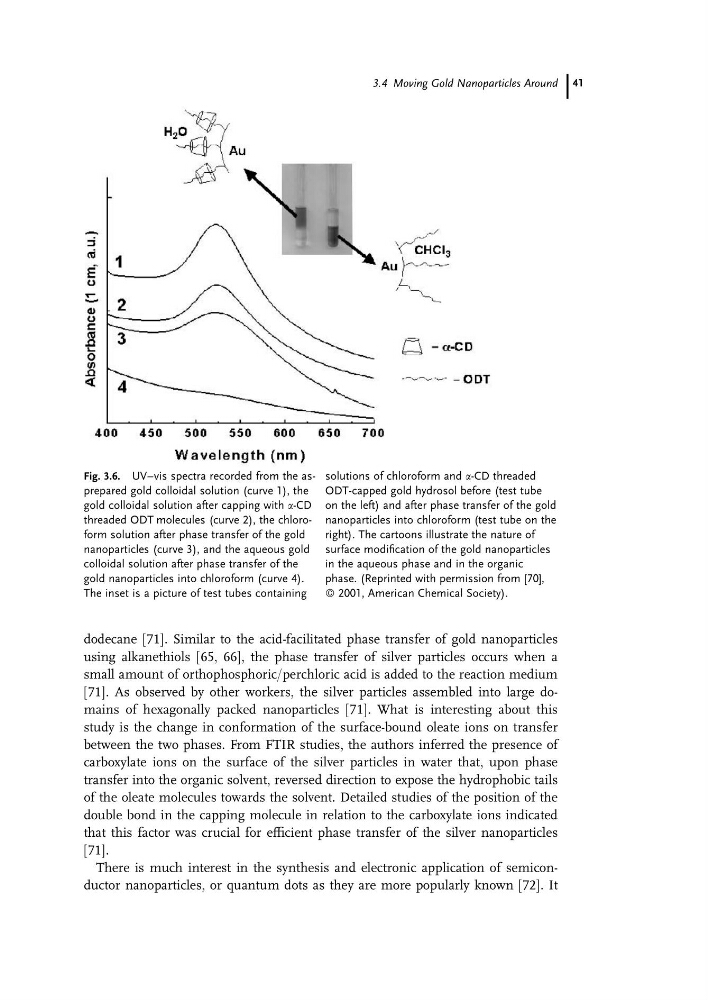
Fig. 3.6. UV–vis spectra recorded from the asprepared gold colloidal solution (curve 1), the
gold colloidal solution after capping with a-CD
threaded ODT molecules (curve 2), the chloroform solution after phase transfer of the gold
nanoparticles (curve 3), and the aqueous gold
colloidal solution after phase transfer of the
gold nanoparticles into chloroform (curve 4).
The inset is a picture of test tubes containing
solutions of chloroform and a-CD threaded
ODT-capped gold hydrosol before (test tube
on the left) and after phase transfer of the gold
nanoparticles into chloroform (test tube on the
right). The cartoons illustrate the nature of
surface modification of the gold nanoparticles
in the aqueous phase and in the organic
phase. (Reprinted with permission from [70],
8 2001, American Chemical Society).
3.4 Moving Gold Nanoparticles Around 41
using alkanethiols [65, 66], the phase transfer of silver particles occurs when a
small amount of orthophosphoric/perchloric acid is added to the reaction medium
[71]. As observed by other workers, the silver particles assembled into large domains of hexagonally packed nanoparticles [71]. What is interesting about this
study is the change in conformation of the surface-bound oleate ions on transfer
between the two phases. From FTIR studies, the authors inferred the presence of
carboxylate ions on the surface of the silver particles in water that, upon phase
transfer into the organic solvent, reversed direction to expose the hydrophobic tails
of the oleate molecules towards the solvent. Detailed studies of the position of the
double bond in the capping molecule in relation to the carboxylate ions indicated
that this factor was crucial for efficient phase transfer of the silver nanoparticles
[71].
There is much interest in the synthesis and electronic application of semiconductor nanoparticles, or quantum dots as they are more popularly known [72]. It
Fig. 3.6. UV–vis spectra recorded from the asprepared gold colloidal solution (curve 1), the
gold colloidal solution after capping with a-CD
threaded ODT molecules (curve 2), the chloroform solution after phase transfer of the gold
nanoparticles (curve 3), and the aqueous gold
colloidal solution after phase transfer of the
gold nanoparticles into chloroform (curve 4).
The inset is a picture of test tubes containing
solutions of chloroform and a-CD threaded
ODT-capped gold hydrosol before (test tube
on the left) and after phase transfer of the gold
nanoparticles into chloroform (test tube on the
right). The cartoons illustrate the nature of
surface modification of the gold nanoparticles
in the aqueous phase and in the organic
phase. (Reprinted with permission from [70],
8 2001, American Chemical Society).
3.4 Moving Gold Nanoparticles Around 41