

An imminent question in this context might be: what leads to the development
of such positive and negative curvatures in the nanoscopic landscape of a cluster?
Without doubt, the presence of a large number of building blocks in the reaction
medium is a reason for the emergence of such complex architectures showing
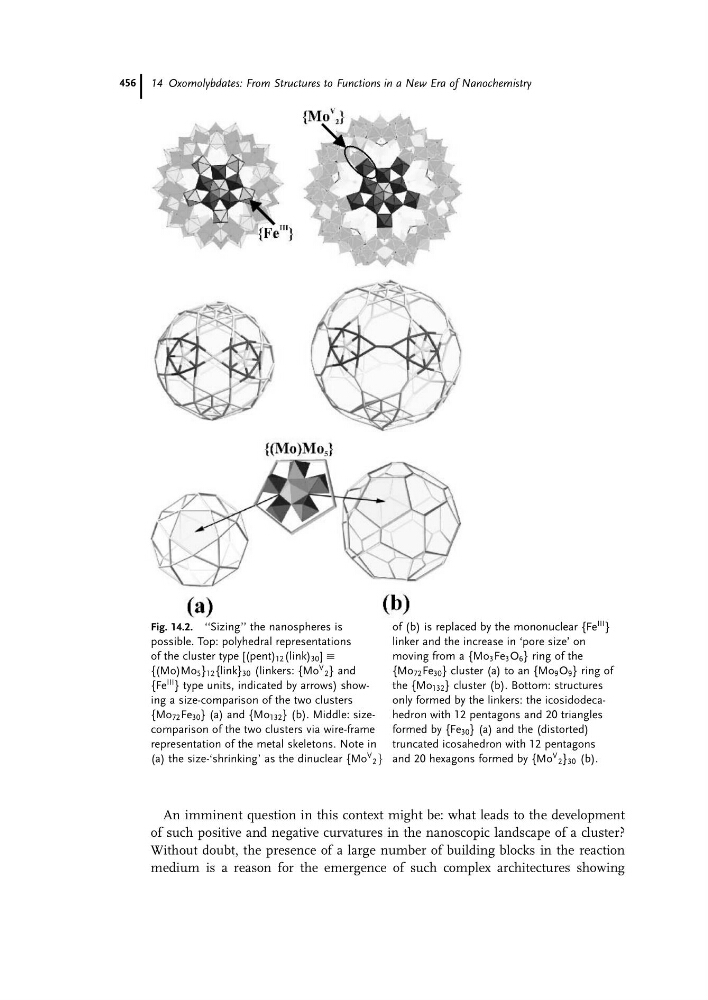
Fig. 14.2. ‘‘Sizing’’ the nanospheres is
possible. Top: polyhedral representations
of the cluster type [(pent) 12 (link) 30 ] 1
{(Mo)Mo 5 } 12 {link} 30 (linkers: {Mo
V
2 } and
{Fe
III } type units, indicated by arrows) showing a size-comparison of the two clusters
{Mo 72 Fe 30 } (a) and {Mo 132 } (b). Middle: sizecomparison of the two clusters via wire-frame
representation of the metal skeletons. Note in
(a) the size-‘shrinking’ as the dinuclear {Mo
V
2 g
of (b) is replaced by the mononuclear {Fe
III }
linker and the increase in ‘pore size’ on
moving from a {Mo 3 Fe 3 O 6 } ring of the
{Mo 72 Fe 30 } cluster (a) to an {Mo 9 O 9 } ring of
the {Mo 132 } cluster (b). Bottom: structures
only formed by the linkers: the icosidodecahedron with 12 pentagons and 20 triangles
formed by {Fe 30 } (a) and the (distorted)
truncated icosahedron with 12 pentagons
and 20 hexagons formed by {Mo
V
2 } 30 (b).
14 Oxomolybdates: From Structures to Functions in a New Era of Nanochemistry
456
of such positive and negative curvatures in the nanoscopic landscape of a cluster?
Without doubt, the presence of a large number of building blocks in the reaction
medium is a reason for the emergence of such complex architectures showing
Fig. 14.2. ‘‘Sizing’’ the nanospheres is
possible. Top: polyhedral representations
of the cluster type [(pent) 12 (link) 30 ] 1
{(Mo)Mo 5 } 12 {link} 30 (linkers: {Mo
V
2 } and
{Fe
III } type units, indicated by arrows) showing a size-comparison of the two clusters
{Mo 72 Fe 30 } (a) and {Mo 132 } (b). Middle: sizecomparison of the two clusters via wire-frame
representation of the metal skeletons. Note in
(a) the size-‘shrinking’ as the dinuclear {Mo
V
2 g
of (b) is replaced by the mononuclear {Fe
III }
linker and the increase in ‘pore size’ on
moving from a {Mo 3 Fe 3 O 6 } ring of the
{Mo 72 Fe 30 } cluster (a) to an {Mo 9 O 9 } ring of
the {Mo 132 } cluster (b). Bottom: structures
only formed by the linkers: the icosidodecahedron with 12 pentagons and 20 triangles
formed by {Fe 30 } (a) and the (distorted)
truncated icosahedron with 12 pentagons
and 20 hexagons formed by {Mo
V
2 } 30 (b).
14 Oxomolybdates: From Structures to Functions in a New Era of Nanochemistry
456