

plications have yet to be realized. The development of synthetic methodologies,
especially for Se and Te [3], has occurred in parallel with the availability of more
advanced X-ray diffraction instrumentation. This combination will no doubt continue to evolve, with new reagents, more sensitive X-ray detectors and higher intensity X-ray sources, all of which will permit the formation and characterization of
new and interesting structural types.
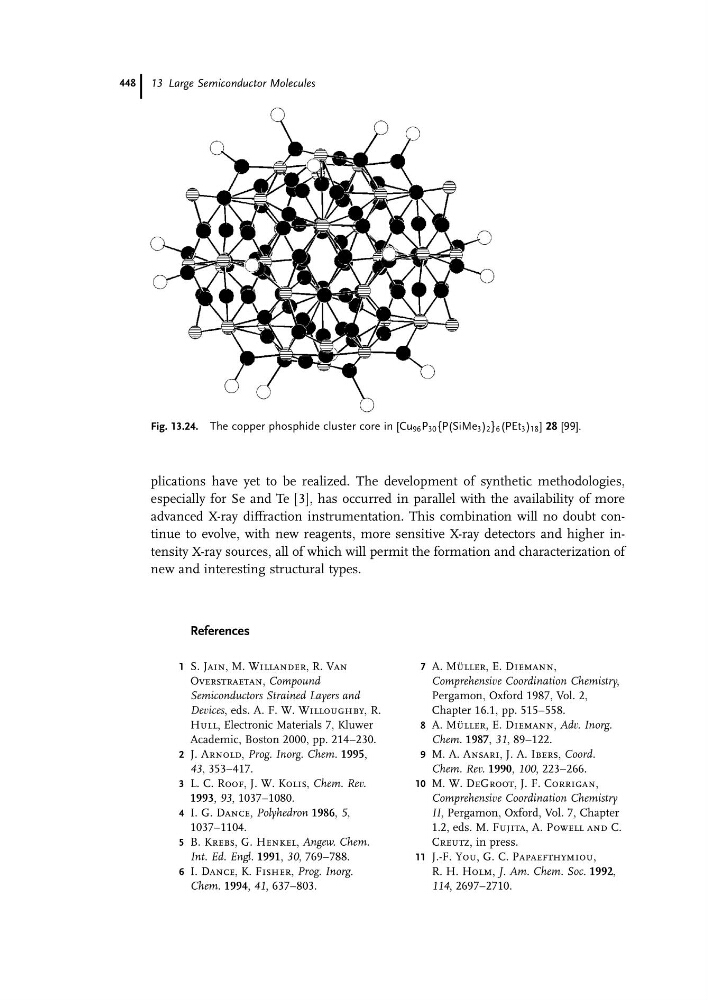
Fig. 13.24. The copper phosphide cluster core in [Cu 96 P 30 {P(SiMe 3 ) 2 } 6 (PEt 3 ) 18 ] 28 [99].
References
1 S. Jain, M. Willander, R. Van
Overstraetan, Compound
Semiconductors Strained Layers and
Devices, eds. A. F. W. Willoughby, R.
Hull, Electronic Materials 7, Kluwer
Academic, Boston 2000, pp. 214–230.
2 J. Arnold, Prog. Inorg. Chem. 1995,
43, 353–417.
3 L. C. Roof, J. W. Kolis, Chem. Rev.
1993, 93, 1037–1080.
4 I. G. Dance, Polyhedron 1986, 5,
1037–1104.
5 B. Krebs, G. Henkel, Angew. Chem.
Int. Ed. Engl. 1991, 30, 769–788.
6 I. Dance, K. Fisher, Prog. Inorg.
Chem. 1994, 41, 637–803.
7 A. Mu ¨ller, E. Diemann,
Comprehensive Coordination Chemistry,
Pergamon, Oxford 1987, Vol. 2,
Chapter 16.1, pp. 515–558.
8 A. Mu ¨ller, E. Diemann, Adv. Inorg.
Chem. 1987, 31, 89–122.
9 M. A. Ansari, J. A. Ibers, Coord.
Chem. Rev. 1990, 100, 223–266.
10 M. W. DeGroot, J. F. Corrigan,
Comprehensive Coordination Chemistry
II, Pergamon, Oxford, Vol. 7, Chapter
1.2, eds. M. Fujita, A. Powell and C.
Creutz, in press.
11 J.-F. You, G. C. Papaefthymiou,
R. H. Holm, J. Am. Chem. Soc. 1992,
114, 2697–2710.
13 Large Semiconductor Molecules
448
especially for Se and Te [3], has occurred in parallel with the availability of more
advanced X-ray diffraction instrumentation. This combination will no doubt continue to evolve, with new reagents, more sensitive X-ray detectors and higher intensity X-ray sources, all of which will permit the formation and characterization of
new and interesting structural types.
Fig. 13.24. The copper phosphide cluster core in [Cu 96 P 30 {P(SiMe 3 ) 2 } 6 (PEt 3 ) 18 ] 28 [99].
References
1 S. Jain, M. Willander, R. Van
Overstraetan, Compound
Semiconductors Strained Layers and
Devices, eds. A. F. W. Willoughby, R.
Hull, Electronic Materials 7, Kluwer
Academic, Boston 2000, pp. 214–230.
2 J. Arnold, Prog. Inorg. Chem. 1995,
43, 353–417.
3 L. C. Roof, J. W. Kolis, Chem. Rev.
1993, 93, 1037–1080.
4 I. G. Dance, Polyhedron 1986, 5,
1037–1104.
5 B. Krebs, G. Henkel, Angew. Chem.
Int. Ed. Engl. 1991, 30, 769–788.
6 I. Dance, K. Fisher, Prog. Inorg.
Chem. 1994, 41, 637–803.
7 A. Mu ¨ller, E. Diemann,
Comprehensive Coordination Chemistry,
Pergamon, Oxford 1987, Vol. 2,
Chapter 16.1, pp. 515–558.
8 A. Mu ¨ller, E. Diemann, Adv. Inorg.
Chem. 1987, 31, 89–122.
9 M. A. Ansari, J. A. Ibers, Coord.
Chem. Rev. 1990, 100, 223–266.
10 M. W. DeGroot, J. F. Corrigan,
Comprehensive Coordination Chemistry
II, Pergamon, Oxford, Vol. 7, Chapter
1.2, eds. M. Fujita, A. Powell and C.
Creutz, in press.
11 J.-F. You, G. C. Papaefthymiou,
R. H. Holm, J. Am. Chem. Soc. 1992,
114, 2697–2710.
13 Large Semiconductor Molecules
448