

AgO 2 CPh in the presence of the triphos ligand. The sixteen interstitial sulfide
ligands result in a more spherical and condensed silver–sulfur core versus 18.
Whereas in 18 the surface of the cluster contains only thiolate ligands, coverage
of the surface of the Ag 70 cluster is achieved with PhS
À , PhCO 2
À and phosphine
ligands.
Perhaps surprisingly, the synthesis of the nanocluster complex, [Ag 188 S 94 (PR 3 ) 30 ]
(19, Figure 13.14, R ¼ Bu, Pr), arises from the straightforward reaction of PR 3 -
solubilized AgO 2 CCF 3 with S(SiMe 3 ) 2 [64]. Cluster 19 represents the highest
nuclearity semiconductor cluster that has been structurally characterized, and
its size can be compared with that of the oxometallate of molybdenum, Na 48 Á
[H x Mo 368 O 1032 (H 2 O) 240 (SO 4 ) 48 ] [65]. The synthesis and structure of 19 contrast
with all other silver-chalcogen nanoclusters in that these invariably require the
use of chalcogenolate sources in order to ensure kinetic stabilization of the silverchalcogenide molecular core (see Sections 13.3.2 and 13.3.4).
The distribution of sulfide ligands in 19 results in a shell-like make up, with
a central S 10 non-bonded polyhedron surrounded by S 34 and S 50 polyhedra. The
Ag(I) centers bonded to the edges of the outer S 50 polyhedron exhibit normal AgaS
bonding distances (2.36–2.44 A ˚ ), whereas markedly long AgaS contacts are observed for the silver ions at the cluster core (3.33–3.88 A ˚ ). The latter have been
ascribed to the ionic nature of the AgaS bonds, and compared to the bonding in
the ionic conductor Ag 2 S [66]. Further advancing this reasoning is the observed
occupational site disorder of the Ag
þ ions in the core center, whereas no disorder
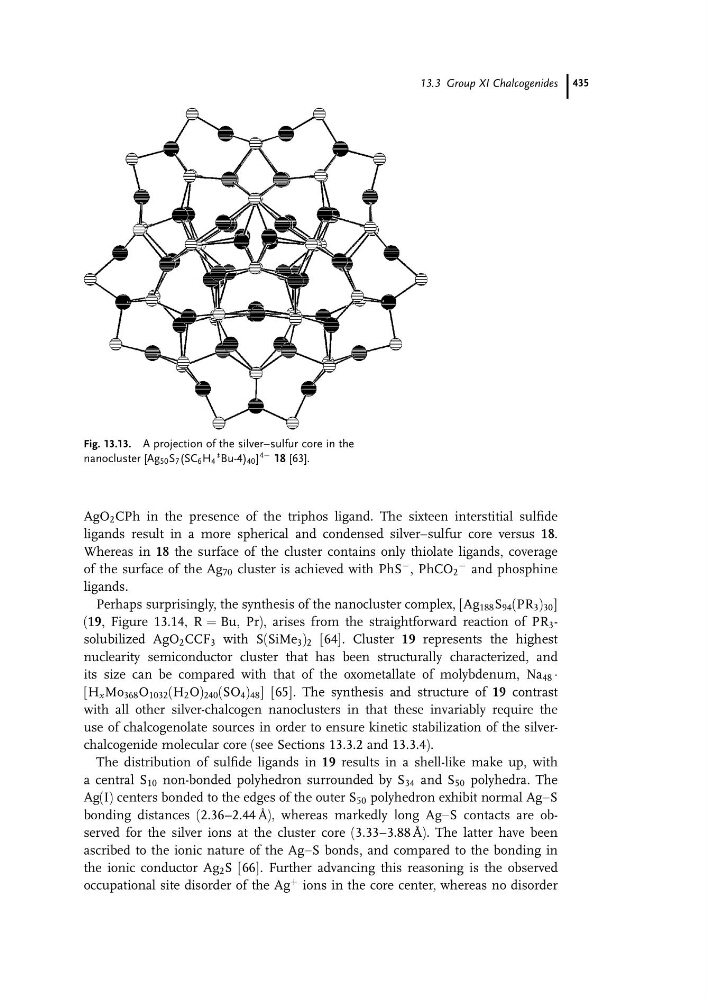
Fig. 13.13. A projection of the silver–sulfur core in the
nanocluster [Ag 50 S 7 (SC 6 H 4
t Bu-4) 40 ]
4À 18 [63].
13.3 Group XI Chalcogenides 435
ligands result in a more spherical and condensed silver–sulfur core versus 18.
Whereas in 18 the surface of the cluster contains only thiolate ligands, coverage
of the surface of the Ag 70 cluster is achieved with PhS
À , PhCO 2
À and phosphine
ligands.
Perhaps surprisingly, the synthesis of the nanocluster complex, [Ag 188 S 94 (PR 3 ) 30 ]
(19, Figure 13.14, R ¼ Bu, Pr), arises from the straightforward reaction of PR 3 -
solubilized AgO 2 CCF 3 with S(SiMe 3 ) 2 [64]. Cluster 19 represents the highest
nuclearity semiconductor cluster that has been structurally characterized, and
its size can be compared with that of the oxometallate of molybdenum, Na 48 Á
[H x Mo 368 O 1032 (H 2 O) 240 (SO 4 ) 48 ] [65]. The synthesis and structure of 19 contrast
with all other silver-chalcogen nanoclusters in that these invariably require the
use of chalcogenolate sources in order to ensure kinetic stabilization of the silverchalcogenide molecular core (see Sections 13.3.2 and 13.3.4).
The distribution of sulfide ligands in 19 results in a shell-like make up, with
a central S 10 non-bonded polyhedron surrounded by S 34 and S 50 polyhedra. The
Ag(I) centers bonded to the edges of the outer S 50 polyhedron exhibit normal AgaS
bonding distances (2.36–2.44 A ˚ ), whereas markedly long AgaS contacts are observed for the silver ions at the cluster core (3.33–3.88 A ˚ ). The latter have been
ascribed to the ionic nature of the AgaS bonds, and compared to the bonding in
the ionic conductor Ag 2 S [66]. Further advancing this reasoning is the observed
occupational site disorder of the Ag
þ ions in the core center, whereas no disorder
Fig. 13.13. A projection of the silver–sulfur core in the
nanocluster [Ag 50 S 7 (SC 6 H 4
t Bu-4) 40 ]
4À 18 [63].
13.3 Group XI Chalcogenides 435