

action of SiO þ SiO ¼ Si þ SiO 2 , and subsequently separated from the silicon core
during growth. According to this reaction, the amount of segregated silicon oxide
is proportional to the amount of silicon at the same place.
The growth of Si nanoribbons cannot be via the twin-plane growth mechanism,
(i.e. controlled by a twin plane parallel to the flat surface of the nanoribbons) as
suggested for microribbons [64]. A twin-plane mechanism is impossible from
crystallographic considerations taking into account the observed structure of the
nanoribbons and, indeed, no twins were observed. The precise growth mechanism
of the nanoribbons is not yet clear, but it is likely that it is governed by anisotropic
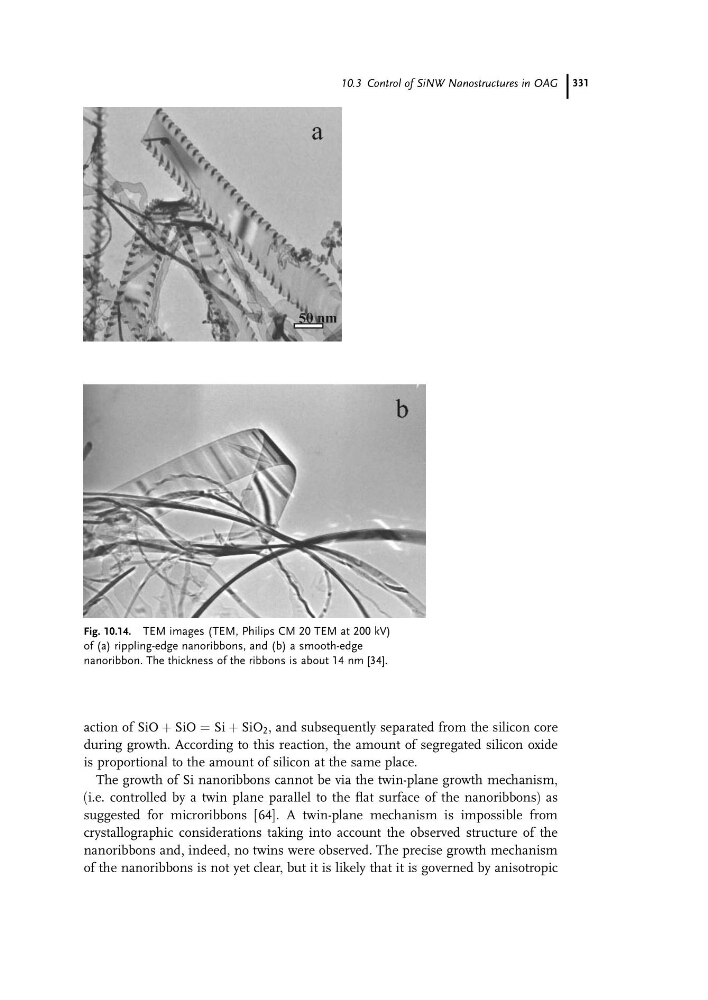
Fig. 10.14. TEM images (TEM, Philips CM 20 TEM at 200 kV)
of (a) rippling-edge nanoribbons, and (b) a smooth-edge
nanoribbon. The thickness of the ribbons is about 14 nm [34].
10.3 Control of SiNW Nanostructures in OAG 331
during growth. According to this reaction, the amount of segregated silicon oxide
is proportional to the amount of silicon at the same place.
The growth of Si nanoribbons cannot be via the twin-plane growth mechanism,
(i.e. controlled by a twin plane parallel to the flat surface of the nanoribbons) as
suggested for microribbons [64]. A twin-plane mechanism is impossible from
crystallographic considerations taking into account the observed structure of the
nanoribbons and, indeed, no twins were observed. The precise growth mechanism
of the nanoribbons is not yet clear, but it is likely that it is governed by anisotropic
Fig. 10.14. TEM images (TEM, Philips CM 20 TEM at 200 kV)
of (a) rippling-edge nanoribbons, and (b) a smooth-edge
nanoribbon. The thickness of the ribbons is about 14 nm [34].
10.3 Control of SiNW Nanostructures in OAG 331