

suggest that this process is not specific enough to produce well-defined {100} side
faces, particularly in the initial stages of nanorod formation.
It seems likely that steric and chemical factors play an important role in determining the preferential interactions between the cationic quaternary ammonium headgroups and growth sites on the side edges and faces. One possibility is
that surfactant-containing complexes such as [AuBrCTA]
þ are specifically incorporated into the {100} side edges, whereas non-complexed ion-pairs or Au(0) atoms/
clusters are added to the {111} end faces. The discrimination between sites could
be due to the increased stability of the close-packed {111} surfaces compared with
the edge sites, which will contain numerous defects. Moreover, binding of the large
[NMe 3 ]
þ headgroup of CTAB (diameter ¼ 0.814 nm, area ¼ 0.521 nm
2 ) and associated long alkyl chain can be more readily accommodated at the {100} side edges
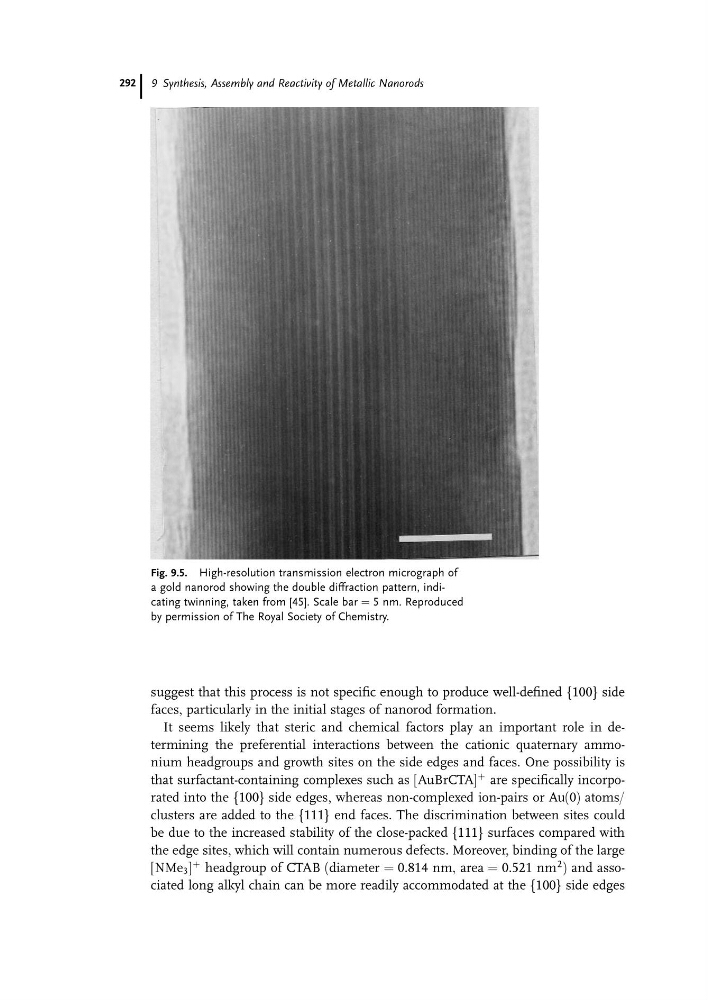
Fig. 9.5. High-resolution transmission electron micrograph of
a gold nanorod showing the double diffraction pattern, indicating twinning, taken from [45]. Scale bar ¼ 5 nm. Reproduced
by permission of The Royal Society of Chemistry.
9 Synthesis, Assembly and Reactivity of Metallic Nanorods
292
faces, particularly in the initial stages of nanorod formation.
It seems likely that steric and chemical factors play an important role in determining the preferential interactions between the cationic quaternary ammonium headgroups and growth sites on the side edges and faces. One possibility is
that surfactant-containing complexes such as [AuBrCTA]
þ are specifically incorporated into the {100} side edges, whereas non-complexed ion-pairs or Au(0) atoms/
clusters are added to the {111} end faces. The discrimination between sites could
be due to the increased stability of the close-packed {111} surfaces compared with
the edge sites, which will contain numerous defects. Moreover, binding of the large
[NMe 3 ]
þ headgroup of CTAB (diameter ¼ 0.814 nm, area ¼ 0.521 nm
2 ) and associated long alkyl chain can be more readily accommodated at the {100} side edges
Fig. 9.5. High-resolution transmission electron micrograph of
a gold nanorod showing the double diffraction pattern, indicating twinning, taken from [45]. Scale bar ¼ 5 nm. Reproduced
by permission of The Royal Society of Chemistry.
9 Synthesis, Assembly and Reactivity of Metallic Nanorods
292