

correlated with the widths of the transferred cylindrical, short rod-like or isometric
nanoparticles, respectively, which in turn are related to the dimensions and shapes
of crystals formed in earlier stages of the sequential process. Isolation of the
higher-aspect ratio nanoparticles by centrifugation and precipitation works relatively well [27].
In general, the formation of mixed populations of gold nanoparticles and their
associated morphologies and sizes can be rationalized by differences in the delay in
the onset of shape anisotropy in the reaction sequence. Clearly, the mechanism
responsible for the transformation from isotropic to anisotropic growth of the isometric penta-twinned nanoparticles is not highly competitive, although once
achieved, the crystals rapidly elongate along the common [110] axis, suggesting
that the process is essentially auto-catalytic. As the unidirectional growth rate is
high and the onset of the shape transformation process occurs over an extended
reaction period, the nanorods originate at different times to produce a marked
variation in the particle lengths. In contrast, the width of each particle increases
only slowly, which indicates that the {100} side edges are effectively blocked from
further growth compared with the {111} end faces. Previous studies have indicated
that the yield of nanorods rises with an increased concentration of CTAB [27],
suggesting that CTAB molecules bind more strongly to the side edges than the
{111} end faces, with the consequence that the crystal grows preferentially along
the [110] direction as the side edges/faces become stabilized. The HRTEM data
Electron Beam
Substrate
T5
T1
T2
T3 T4
T3
T2
T1
T4
T5
i) <112> + <100> ii) <111> + <110>
{111}
{100}
a
b
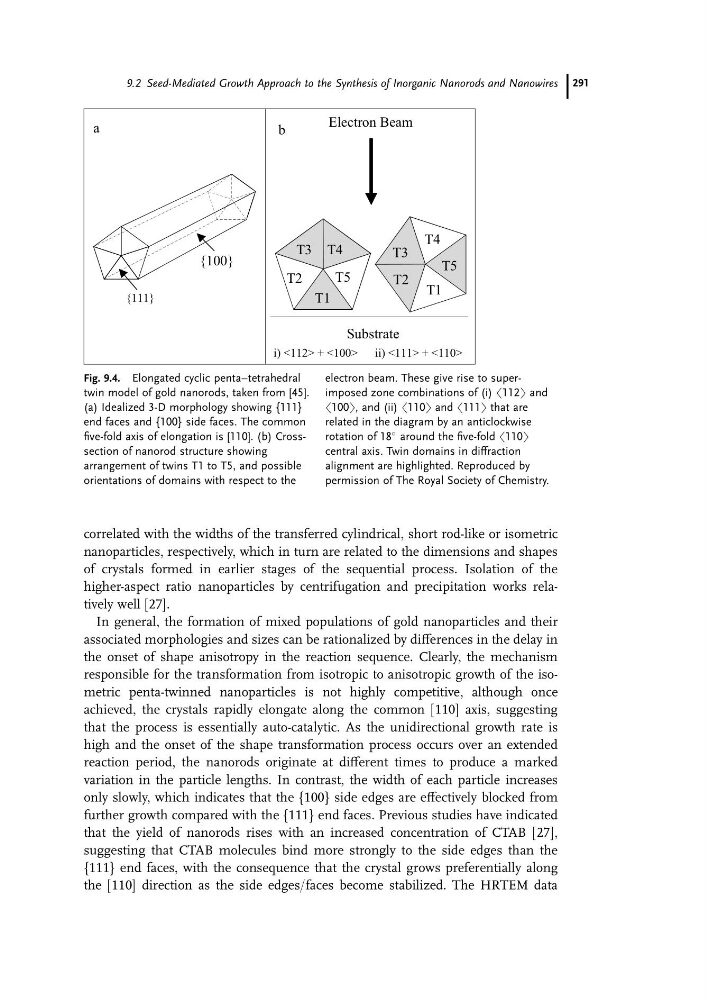
Fig. 9.4. Elongated cyclic penta–tetrahedral
twin model of gold nanorods, taken from [45].
(a) Idealized 3-D morphology showing {111}
end faces and {100} side faces. The common
five-fold axis of elongation is [110]. (b) Crosssection of nanorod structure showing
arrangement of twins T1 to T5, and possible
orientations of domains with respect to the
electron beam. These give rise to superimposed zone combinations of (i) h112i and
h100i, and (ii) h110i and h111i that are
related in the diagram by an anticlockwise
rotation of 18
around the five-fold h110i
central axis. Twin domains in diffraction
alignment are highlighted. Reproduced by
permission of The Royal Society of Chemistry.
9.2 Seed-Mediated Growth Approach to the Synthesis of Inorganic Nanorods and Nanowires 291
nanoparticles, respectively, which in turn are related to the dimensions and shapes
of crystals formed in earlier stages of the sequential process. Isolation of the
higher-aspect ratio nanoparticles by centrifugation and precipitation works relatively well [27].
In general, the formation of mixed populations of gold nanoparticles and their
associated morphologies and sizes can be rationalized by differences in the delay in
the onset of shape anisotropy in the reaction sequence. Clearly, the mechanism
responsible for the transformation from isotropic to anisotropic growth of the isometric penta-twinned nanoparticles is not highly competitive, although once
achieved, the crystals rapidly elongate along the common [110] axis, suggesting
that the process is essentially auto-catalytic. As the unidirectional growth rate is
high and the onset of the shape transformation process occurs over an extended
reaction period, the nanorods originate at different times to produce a marked
variation in the particle lengths. In contrast, the width of each particle increases
only slowly, which indicates that the {100} side edges are effectively blocked from
further growth compared with the {111} end faces. Previous studies have indicated
that the yield of nanorods rises with an increased concentration of CTAB [27],
suggesting that CTAB molecules bind more strongly to the side edges than the
{111} end faces, with the consequence that the crystal grows preferentially along
the [110] direction as the side edges/faces become stabilized. The HRTEM data
Electron Beam
Substrate
T5
T1
T2
T3 T4
T3
T2
T1
T4
T5
i) <112> + <100> ii) <111> + <110>
{111}
{100}
a
b
Fig. 9.4. Elongated cyclic penta–tetrahedral
twin model of gold nanorods, taken from [45].
(a) Idealized 3-D morphology showing {111}
end faces and {100} side faces. The common
five-fold axis of elongation is [110]. (b) Crosssection of nanorod structure showing
arrangement of twins T1 to T5, and possible
orientations of domains with respect to the
electron beam. These give rise to superimposed zone combinations of (i) h112i and
h100i, and (ii) h110i and h111i that are
related in the diagram by an anticlockwise
rotation of 18
around the five-fold h110i
central axis. Twin domains in diffraction
alignment are highlighted. Reproduced by
permission of The Royal Society of Chemistry.
9.2 Seed-Mediated Growth Approach to the Synthesis of Inorganic Nanorods and Nanowires 291