

uct. However, with multi-walled carbon tubes, high yields of pure BN nanotubes
are obtained as the major product. BN nanotubes with different structures were
obtained on heating boric acid and iron particles in the presence of NH 3 . Aligned
BN nanotubes are obtained when aligned multi-walled nanotubes are used as the
templates (Figure 8.24).
Needle-shaped TiO 2 (anatase) nanotubes could be precipitated from a gel containing a mixture of SiO 2 and TiO 2 [239]. A mixture of titanium isopropoxide and
tetraethylorthosilicate (TEOS) was hydrolyzed and gelled in an incubator, and the
gel further heated to 600
C, resulting in the precipitation of fine TiO 2 (anatase)
crystals. This was further treated with NaOH at 100
C for 20 h to yield the TiO 2
nanotubular phase. An amorphous SiO 2 -related phase present in the product was
removed by chemical treatment. The nanotubes formed by this method had a diameter of @8 nm and lengths upto 100 nm (Figure 8.25(a)). Much smaller TiO 2
nanotubes have recently been synthesized by a surprisingly simple procedure.
TiO 2 with anatase or rutile structure was treated with NaOH and subsequently
with HCl [239, 245]. The resulting TiO 2 nanotubes are 50–200 nm long and their
diameter is about 10 nm (Figure 8.25(b)). The HREM image (Figure 8.25(c)) of
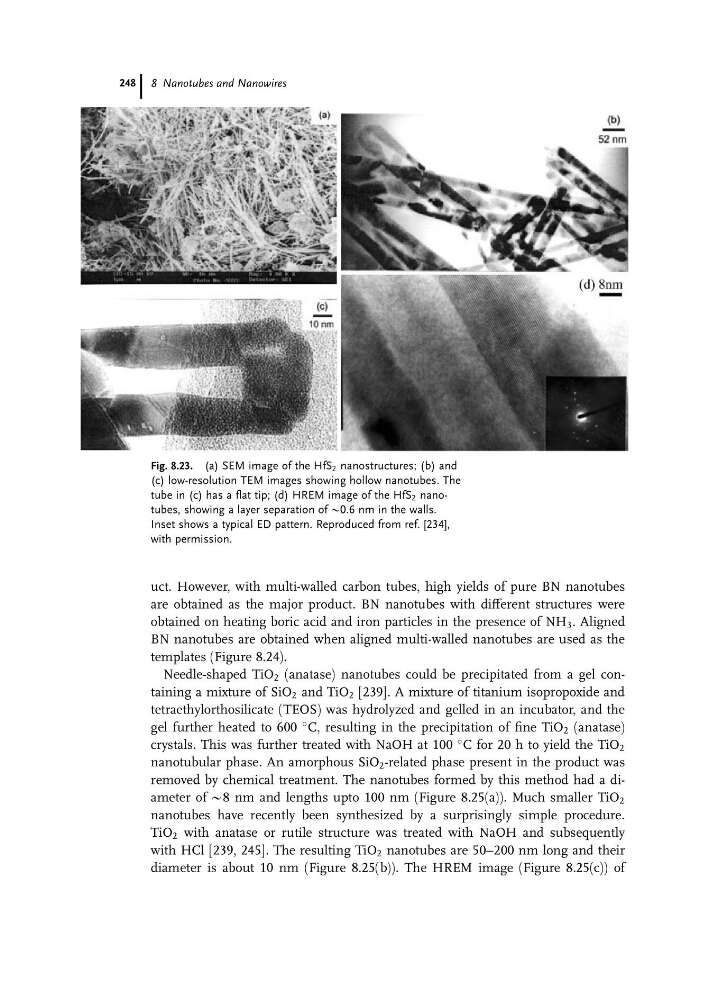
Fig. 8.23. (a) SEM image of the HfS 2 nanostructures; (b) and
(c) low-resolution TEM images showing hollow nanotubes. The
tube in (c) has a flat tip; (d) HREM image of the HfS 2 nanotubes, showing a layer separation of @0.6 nm in the walls.
Inset shows a typical ED pattern. Reproduced from ref. [234],
with permission.
8 Nanotubes and Nanowires
248
are obtained as the major product. BN nanotubes with different structures were
obtained on heating boric acid and iron particles in the presence of NH 3 . Aligned
BN nanotubes are obtained when aligned multi-walled nanotubes are used as the
templates (Figure 8.24).
Needle-shaped TiO 2 (anatase) nanotubes could be precipitated from a gel containing a mixture of SiO 2 and TiO 2 [239]. A mixture of titanium isopropoxide and
tetraethylorthosilicate (TEOS) was hydrolyzed and gelled in an incubator, and the
gel further heated to 600
C, resulting in the precipitation of fine TiO 2 (anatase)
crystals. This was further treated with NaOH at 100
C for 20 h to yield the TiO 2
nanotubular phase. An amorphous SiO 2 -related phase present in the product was
removed by chemical treatment. The nanotubes formed by this method had a diameter of @8 nm and lengths upto 100 nm (Figure 8.25(a)). Much smaller TiO 2
nanotubes have recently been synthesized by a surprisingly simple procedure.
TiO 2 with anatase or rutile structure was treated with NaOH and subsequently
with HCl [239, 245]. The resulting TiO 2 nanotubes are 50–200 nm long and their
diameter is about 10 nm (Figure 8.25(b)). The HREM image (Figure 8.25(c)) of
Fig. 8.23. (a) SEM image of the HfS 2 nanostructures; (b) and
(c) low-resolution TEM images showing hollow nanotubes. The
tube in (c) has a flat tip; (d) HREM image of the HfS 2 nanotubes, showing a layer separation of @0.6 nm in the walls.
Inset shows a typical ED pattern. Reproduced from ref. [234],
with permission.
8 Nanotubes and Nanowires
248