

Mo and W dichalcogenides in the last few years. Detailed studies on the synthesis,
structural characterization and applications of these inorganic nanotubes can be
found in a series of review articles devoted to this topic [20a, 22–24, 214].
Transition metal chalcogenides possess a wide range of interesting physical
properties. They are widely used in catalysis and as lubricants. They have both
semiconducting and superconducting properties. With the synthesis and characterization of the fullerenes and nanotubes of MoS 2 and WS 2 , a wide field of research has opened up enabling the successful synthesis of nanotubes of other
metal chalcogenides. It may be recalled that the dichalcogenides of many of the
Group 4 and 5 metals have layered structures suitable for forming nanotubes.
Curved structures are not only limited to carbon and the dichalcogenides of Mo
and W. Perhaps the most well-known example of a tube-like structure with diameters in the nanometer range is formed by the asbestos mineral (chrysotil) whose
fibrous characteristics are determined by the tubular structure of the fused tetrahedral and octahedral layers. The synthesis of mesoporous silica with well-defined
pores in the 2–20 nm range was reported by Beck and Kresge [215]. The synthetic
strategy involved the self-assembly of liquid crystalline templates. The pore size in
zeolitic and other inorganic porous solids is varied by a suitable choice of the template. However, in contrast to the synthesis of porous compounds, the synthesis of
nanotubes is somewhat more difficult.
Nanotubes of oxides of several transition metals, as well as of other metals, have
been synthesized by employing different methodologies [24, 216–220]. Silica
nanotubes were first produced as a spin-off product during the synthesis of spherical silica particles by the hydrolysis of tetraethylorthosilicate (TEOS) in a mixture
of water, ammonia, ethanol and D,L-tartaric acid [216]. Since self-assembly reactions are not straightforward with respect to the desired product, particularly its
morphology, templated reactions have been employed using carbon nanotubes to
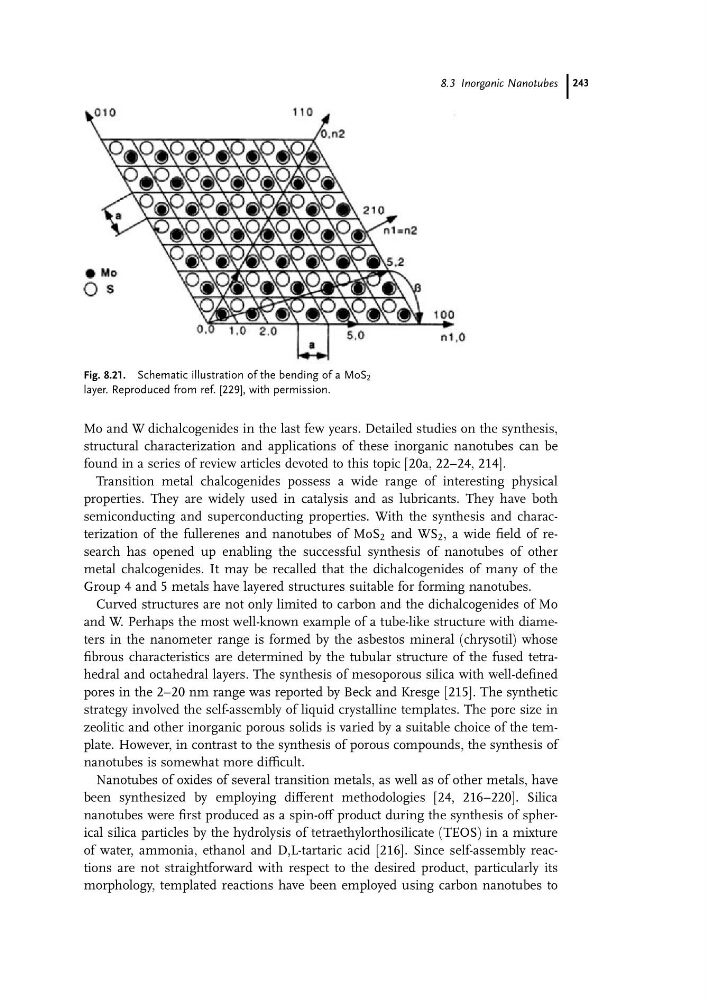
Fig. 8.21. Schematic illustration of the bending of a MoS 2
layer. Reproduced from ref. [229], with permission.
8.3 Inorganic Nanotubes 243
structural characterization and applications of these inorganic nanotubes can be
found in a series of review articles devoted to this topic [20a, 22–24, 214].
Transition metal chalcogenides possess a wide range of interesting physical
properties. They are widely used in catalysis and as lubricants. They have both
semiconducting and superconducting properties. With the synthesis and characterization of the fullerenes and nanotubes of MoS 2 and WS 2 , a wide field of research has opened up enabling the successful synthesis of nanotubes of other
metal chalcogenides. It may be recalled that the dichalcogenides of many of the
Group 4 and 5 metals have layered structures suitable for forming nanotubes.
Curved structures are not only limited to carbon and the dichalcogenides of Mo
and W. Perhaps the most well-known example of a tube-like structure with diameters in the nanometer range is formed by the asbestos mineral (chrysotil) whose
fibrous characteristics are determined by the tubular structure of the fused tetrahedral and octahedral layers. The synthesis of mesoporous silica with well-defined
pores in the 2–20 nm range was reported by Beck and Kresge [215]. The synthetic
strategy involved the self-assembly of liquid crystalline templates. The pore size in
zeolitic and other inorganic porous solids is varied by a suitable choice of the template. However, in contrast to the synthesis of porous compounds, the synthesis of
nanotubes is somewhat more difficult.
Nanotubes of oxides of several transition metals, as well as of other metals, have
been synthesized by employing different methodologies [24, 216–220]. Silica
nanotubes were first produced as a spin-off product during the synthesis of spherical silica particles by the hydrolysis of tetraethylorthosilicate (TEOS) in a mixture
of water, ammonia, ethanol and D,L-tartaric acid [216]. Since self-assembly reactions are not straightforward with respect to the desired product, particularly its
morphology, templated reactions have been employed using carbon nanotubes to
Fig. 8.21. Schematic illustration of the bending of a MoS 2
layer. Reproduced from ref. [229], with permission.
8.3 Inorganic Nanotubes 243