

nanoscience to molecular electronics and biology, and (v) to improve known tools
while discovering better tools of investigation of nanostructures.
1.1
Size Effects
Size effects constitute a fascinating aspect of nanomaterials. The effects determined by size pertain to the evolution of structural, thermodynamic, electronic,
spectroscopic, electromagnetic and chemical features of these finite systems with
increasing size. Size effects can be classified into two types, one dealing with specific size effects (e.g. magic numbers of atoms in metal clusters, quantum mechanical effects at small sizes) and the other involving size-scaling applicable to
relatively larger nanostructures. The former includes the appearance of new features in the electronic structure. In Figure 1.2, we show how the electronic structures of metal and semiconductor nanocrystals differ from those of bulk materials
and isolated atoms. In Figure 1.3, we show the size-dependence of the average energy level spacing of sodium in terms of the Kubo gap (E F =N) in K. In this figure,
we also show the effective percentage of surface atoms as a function of particle
diameter. Note that at small size, we have a high percentage of surface atoms.
Size affects the structure of nanoparticles of materials such as CdS and CdSe,
and also their properties such as the melting point and the electronic absorption
spectra. In Figures 1.4 and 1.5, we show such size effects graphically. It should be
noted that even metals show nonmetallic band gaps when the diameter of the
nanocrystals is in the 1–2 nm range. Hg clusters show a nonmetallic band gap
which shrinks with increase in cluster size. It appears that around 300 atoms are
necessary to close the gap. It is also noteworthy that metal particles of 1–2 nm
diameter also exhibit unexpected catalytic activity, as exemplified by nanocatalysis
by gold particles.
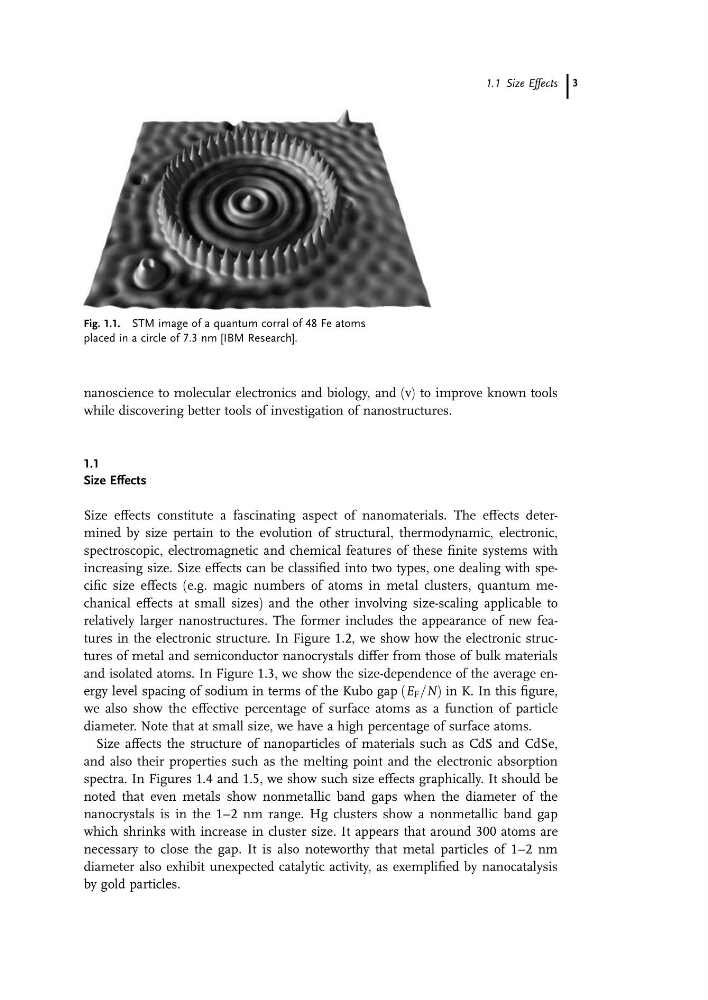
Fig. 1.1. STM image of a quantum corral of 48 Fe atoms
placed in a circle of 7.3 nm [IBM Research].
1.1 Size Effects 3
while discovering better tools of investigation of nanostructures.
1.1
Size Effects
Size effects constitute a fascinating aspect of nanomaterials. The effects determined by size pertain to the evolution of structural, thermodynamic, electronic,
spectroscopic, electromagnetic and chemical features of these finite systems with
increasing size. Size effects can be classified into two types, one dealing with specific size effects (e.g. magic numbers of atoms in metal clusters, quantum mechanical effects at small sizes) and the other involving size-scaling applicable to
relatively larger nanostructures. The former includes the appearance of new features in the electronic structure. In Figure 1.2, we show how the electronic structures of metal and semiconductor nanocrystals differ from those of bulk materials
and isolated atoms. In Figure 1.3, we show the size-dependence of the average energy level spacing of sodium in terms of the Kubo gap (E F =N) in K. In this figure,
we also show the effective percentage of surface atoms as a function of particle
diameter. Note that at small size, we have a high percentage of surface atoms.
Size affects the structure of nanoparticles of materials such as CdS and CdSe,
and also their properties such as the melting point and the electronic absorption
spectra. In Figures 1.4 and 1.5, we show such size effects graphically. It should be
noted that even metals show nonmetallic band gaps when the diameter of the
nanocrystals is in the 1–2 nm range. Hg clusters show a nonmetallic band gap
which shrinks with increase in cluster size. It appears that around 300 atoms are
necessary to close the gap. It is also noteworthy that metal particles of 1–2 nm
diameter also exhibit unexpected catalytic activity, as exemplified by nanocatalysis
by gold particles.
Fig. 1.1. STM image of a quantum corral of 48 Fe atoms
placed in a circle of 7.3 nm [IBM Research].
1.1 Size Effects 3