

operated continuously at the high current levels for at least 3 h without any degradation in the current.
Other Properties of Carbon Nanotubes Optical limiting properties of the carbon
nanotubes are considered important for applications involving high power lasers.
Optical limiting behavior of visible nanosecond laser pulses in the SWNT suspensions occurs mainly due to nonlinear scattering [199]. Nanotube composites with
conducting polymers seem to possess novel electrical and optical properties. Yoshino et al. [200] observed increased conductivity at relatively low nanotube concentrations in the composites and an enhancement of photoconductivity, implying
possible use in optoelectronic devices. SWNT-coated molybdenum electrodes appear to be alternatives for gas discharge tubes in advanced telecom networks, due
to their lower dc breakdown voltage and higher reliability [189]. Electromechanical actuators based on SWNT-sheets appear to generate stresses higher than natural muscles and higher strains than the ferroelectric counterparts [153]. This behavior of nanotubes may be useful in the direct conversion of electrical energy to
mechanical energy, relevant to applications in robotics. Wood and Wagner [201]
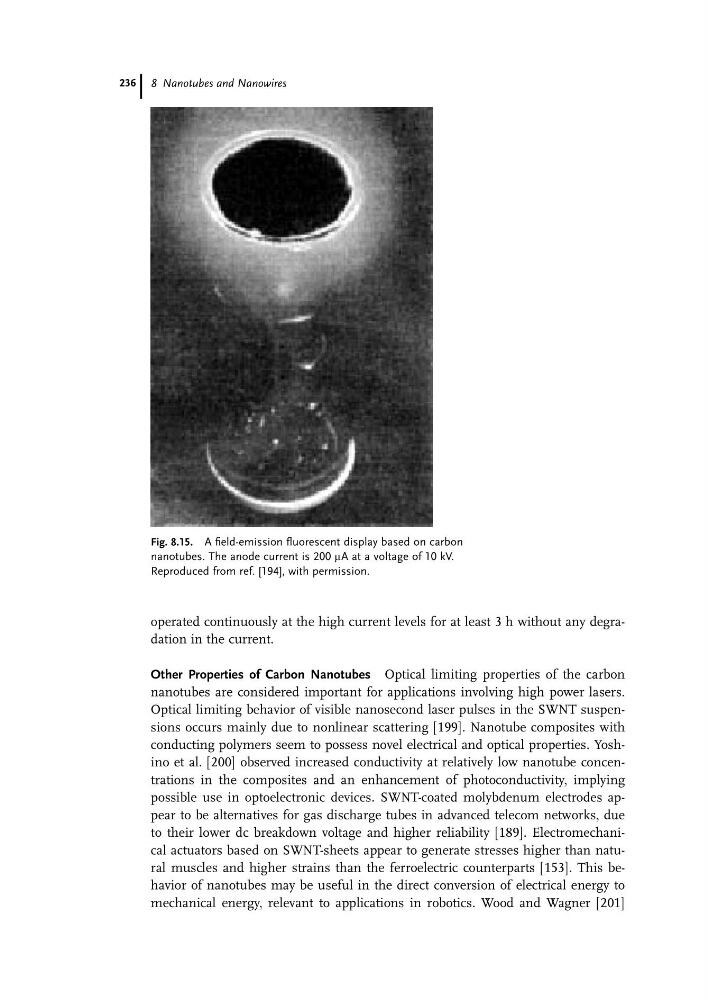
Fig. 8.15. A field-emission fluorescent display based on carbon
nanotubes. The anode current is 200 mA at a voltage of 10 kV.
Reproduced from ref. [194], with permission.
8 Nanotubes and Nanowires
236
Other Properties of Carbon Nanotubes Optical limiting properties of the carbon
nanotubes are considered important for applications involving high power lasers.
Optical limiting behavior of visible nanosecond laser pulses in the SWNT suspensions occurs mainly due to nonlinear scattering [199]. Nanotube composites with
conducting polymers seem to possess novel electrical and optical properties. Yoshino et al. [200] observed increased conductivity at relatively low nanotube concentrations in the composites and an enhancement of photoconductivity, implying
possible use in optoelectronic devices. SWNT-coated molybdenum electrodes appear to be alternatives for gas discharge tubes in advanced telecom networks, due
to their lower dc breakdown voltage and higher reliability [189]. Electromechanical actuators based on SWNT-sheets appear to generate stresses higher than natural muscles and higher strains than the ferroelectric counterparts [153]. This behavior of nanotubes may be useful in the direct conversion of electrical energy to
mechanical energy, relevant to applications in robotics. Wood and Wagner [201]
Fig. 8.15. A field-emission fluorescent display based on carbon
nanotubes. The anode current is 200 mA at a voltage of 10 kV.
Reproduced from ref. [194], with permission.
8 Nanotubes and Nanowires
236