

density of statistically stored dislocations, and ρ GND is the density of geometrically
necessary dislocations.
There are different methods to account for size effect in continuum mechanics.
One of the methods is the use of Cosserat continuum. In this section we will discuss
(Cosserat continuum) couple stress-based strain gradient theory without restrictions
to any particular constitutive model. Next we describe a particular constitutive model
incorporating coupling between degradation and rate dependency and considering
size effects by means of a couple stress theory material length scale. We provide two
distinct theories within the same framework, namely, a general couple stress theory
where translational and rotational degrees of freedom are treated as independent
kinematic variables and a more restrictive reduced couple stress theory where
translational and rotational degrees of freedom are constrained to satisfy a given
kinematic relation. The kinematic constraint allows the implementation of the
reduced theory into a displacement-based finite element formulation. The use of
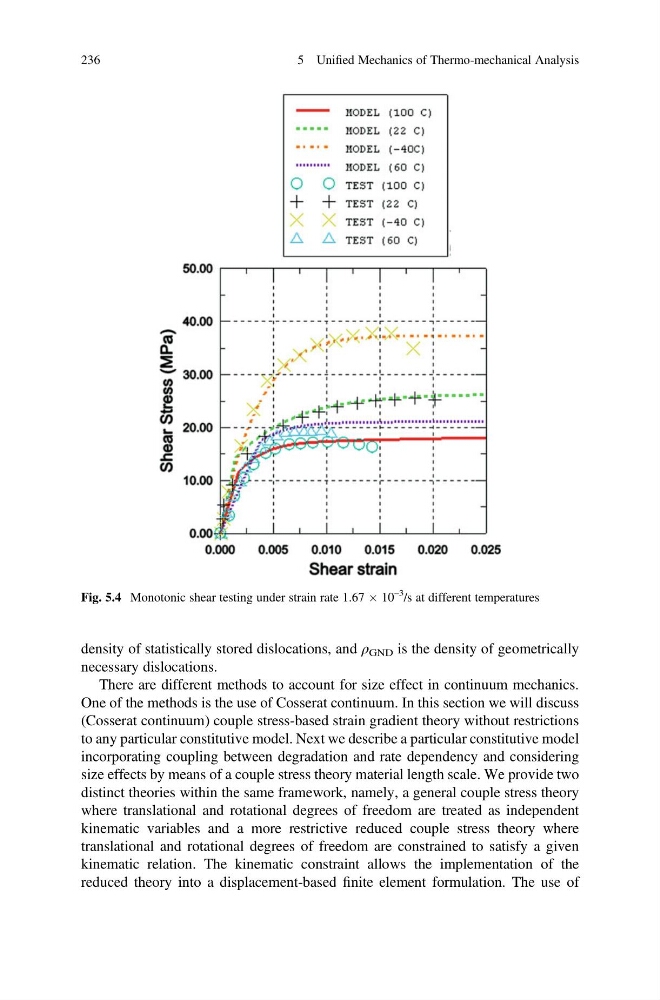
Fig. 5.4 Monotonic shear testing under strain rate 1.67 Â 10
–3
/s at different temperatures
236
5 Unified Mechanics of Thermo-mechanical Analysis
necessary dislocations.
There are different methods to account for size effect in continuum mechanics.
One of the methods is the use of Cosserat continuum. In this section we will discuss
(Cosserat continuum) couple stress-based strain gradient theory without restrictions
to any particular constitutive model. Next we describe a particular constitutive model
incorporating coupling between degradation and rate dependency and considering
size effects by means of a couple stress theory material length scale. We provide two
distinct theories within the same framework, namely, a general couple stress theory
where translational and rotational degrees of freedom are treated as independent
kinematic variables and a more restrictive reduced couple stress theory where
translational and rotational degrees of freedom are constrained to satisfy a given
kinematic relation. The kinematic constraint allows the implementation of the
reduced theory into a displacement-based finite element formulation. The use of
Fig. 5.4 Monotonic shear testing under strain rate 1.67 Â 10
–3
/s at different temperatures
236
5 Unified Mechanics of Thermo-mechanical Analysis