

exchanged to enhance the quality of cryo-EM specimens; or sitespecific labeling with immunogold of nanocarriers allows one to
identify and locate proteins or macromolecules [6]. The selection
of proper perforated film TEM grids, such as the material of the
supporting film and the associated hole size (Fig. 3), may affect the
quality of subsequent prepared cryo-EM specimens. The purity and
temperature of the cryogen and the humidity and speed for freezing samples during cryofixation determines the crystallinity of ice.
And the transferring and loading of frozen specimens to the TEM
may also introduce ice phase change. Besides the quality of the
cryo-EM specimen, the imaging condition settings in Cryo-TEM,
such as using a low dose to minimize the electron beam damage,
needs to be optimized for high quality images.
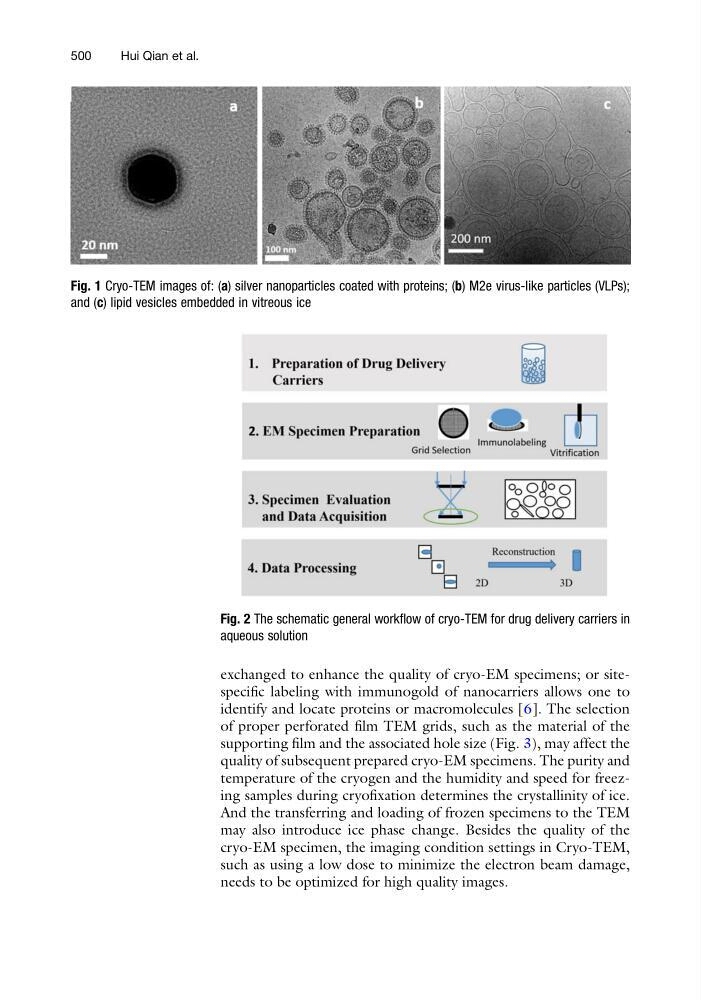
Fig. 1 Cryo-TEM images of: (a) silver nanoparticles coated with proteins; (b) M2e virus-like particles (VLPs);
and (c) lipid vesicles embedded in vitreous ice
Fig. 2 The schematic general workflow of cryo-TEM for drug delivery carriers in
aqueous solution
500
Hui Qian et al.
identify and locate proteins or macromolecules [6]. The selection
of proper perforated film TEM grids, such as the material of the
supporting film and the associated hole size (Fig. 3), may affect the
quality of subsequent prepared cryo-EM specimens. The purity and
temperature of the cryogen and the humidity and speed for freezing samples during cryofixation determines the crystallinity of ice.
And the transferring and loading of frozen specimens to the TEM
may also introduce ice phase change. Besides the quality of the
cryo-EM specimen, the imaging condition settings in Cryo-TEM,
such as using a low dose to minimize the electron beam damage,
needs to be optimized for high quality images.
Fig. 1 Cryo-TEM images of: (a) silver nanoparticles coated with proteins; (b) M2e virus-like particles (VLPs);
and (c) lipid vesicles embedded in vitreous ice
Fig. 2 The schematic general workflow of cryo-TEM for drug delivery carriers in
aqueous solution
500
Hui Qian et al.