

4 Notes
1. Alternatively, the glucose solution can be autoclaved for 10 min
at 110
C.
2. When the medium is removed from the autoclave, the fluid will
be superheated. Allow the medium to cool to 50–60
C at
room temperature before adding thermolabile substances
(e.g., glucose, sucrose, and antibiotics).
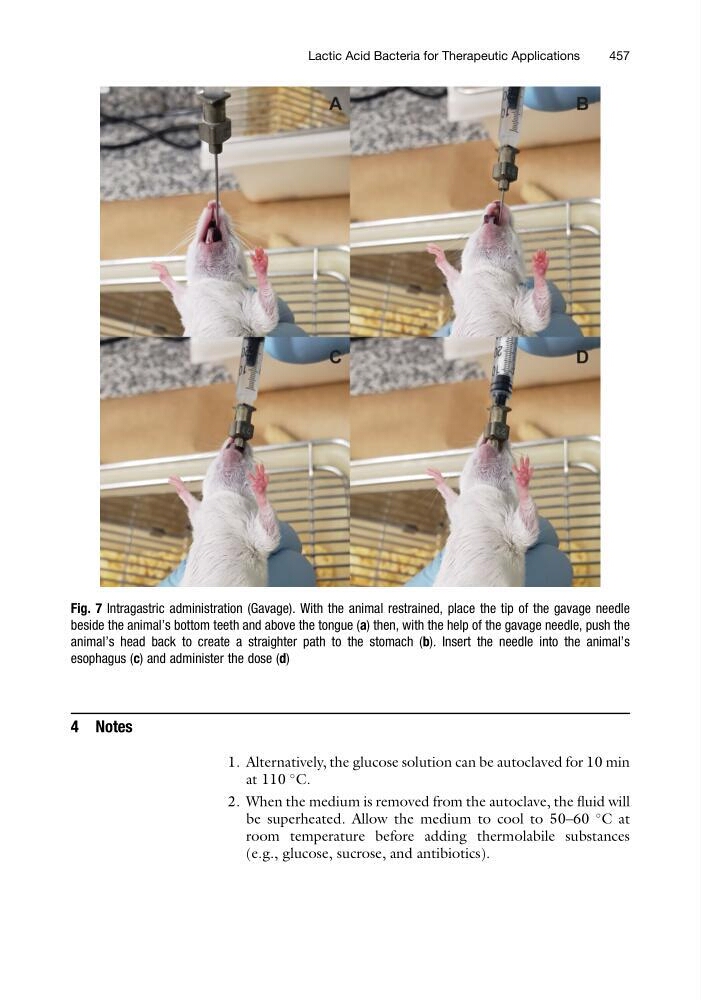
Fig. 7 Intragastric administration (Gavage). With the animal restrained, place the tip of the gavage needle
beside the animal’s bottom teeth and above the tongue (a) then, with the help of the gavage needle, push the
animal’s head back to create a straighter path to the stomach (b). Insert the needle into the animal’s
esophagus (c) and administer the dose (d)
Lactic Acid Bacteria for Therapeutic Applications
457
1. Alternatively, the glucose solution can be autoclaved for 10 min
at 110
C.
2. When the medium is removed from the autoclave, the fluid will
be superheated. Allow the medium to cool to 50–60
C at
room temperature before adding thermolabile substances
(e.g., glucose, sucrose, and antibiotics).
Fig. 7 Intragastric administration (Gavage). With the animal restrained, place the tip of the gavage needle
beside the animal’s bottom teeth and above the tongue (a) then, with the help of the gavage needle, push the
animal’s head back to create a straighter path to the stomach (b). Insert the needle into the animal’s
esophagus (c) and administer the dose (d)
Lactic Acid Bacteria for Therapeutic Applications
457