

5. Carefully remove the gel comb and control the wells and
remove polymerized gel fragments that block the sample wells.
6. Allow the chamber to cool down and the gel to equilibrate for
30 min at 4
C and 300 V (see Note 21).
7. Prepare samples by mixing samples 1:1 with loading buffer.
8. Slowly load samples into the wells (see Note 22).
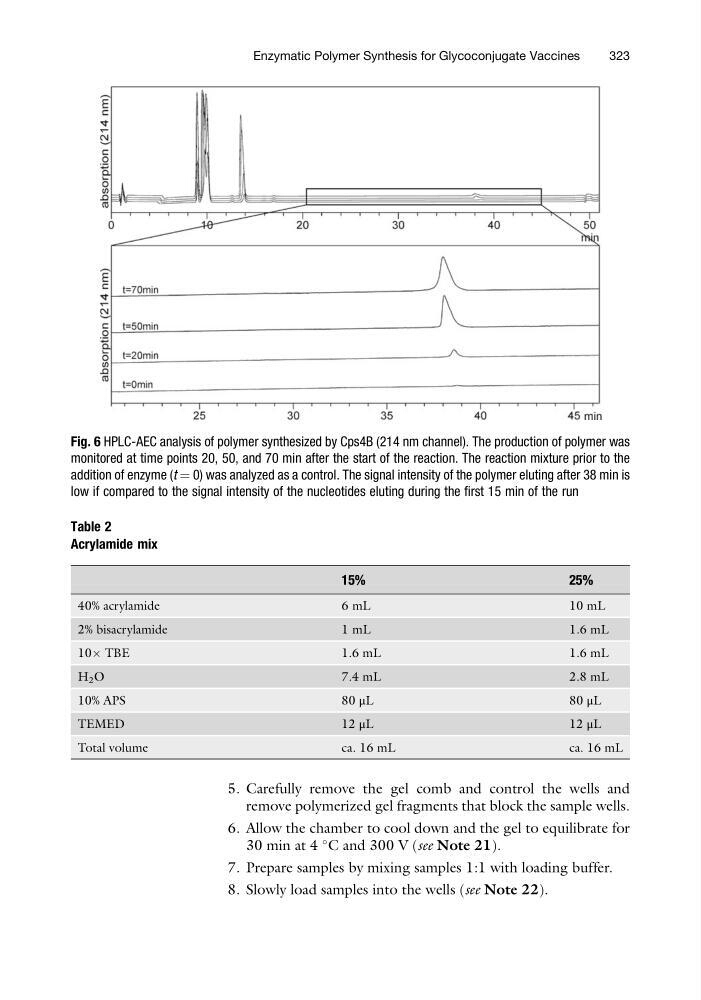
Fig. 6 HPLC-AEC analysis of polymer synthesized by Cps4B (214 nm channel). The production of polymer was
monitored at time points 20, 50, and 70 min after the start of the reaction. The reaction mixture prior to the
addition of enzyme (t ¼ 0) was analyzed as a control. The signal intensity of the polymer eluting after 38 min is
low if compared to the signal intensity of the nucleotides eluting during the first 15 min of the run
Table 2
Acrylamide mix
15%
25%
40% acrylamide
6 mL
10 mL
2% bisacrylamide
1 mL
1.6 mL
10Â TBE
1.6 mL
1.6 mL
H 2 O
7.4 mL
2.8 mL
10% APS
80 μL
8 0 μL
TEMED
12 μL
1 2 μL
Total volume
ca. 16 mL
ca. 16 mL
Enzymatic Polymer Synthesis for Glycoconjugate Vaccines
323
remove polymerized gel fragments that block the sample wells.
6. Allow the chamber to cool down and the gel to equilibrate for
30 min at 4
C and 300 V (see Note 21).
7. Prepare samples by mixing samples 1:1 with loading buffer.
8. Slowly load samples into the wells (see Note 22).
Fig. 6 HPLC-AEC analysis of polymer synthesized by Cps4B (214 nm channel). The production of polymer was
monitored at time points 20, 50, and 70 min after the start of the reaction. The reaction mixture prior to the
addition of enzyme (t ¼ 0) was analyzed as a control. The signal intensity of the polymer eluting after 38 min is
low if compared to the signal intensity of the nucleotides eluting during the first 15 min of the run
Table 2
Acrylamide mix
15%
25%
40% acrylamide
6 mL
10 mL
2% bisacrylamide
1 mL
1.6 mL
10Â TBE
1.6 mL
1.6 mL
H 2 O
7.4 mL
2.8 mL
10% APS
80 μL
8 0 μL
TEMED
12 μL
1 2 μL
Total volume
ca. 16 mL
ca. 16 mL
Enzymatic Polymer Synthesis for Glycoconjugate Vaccines
323