

and carry negative charges introduced by phosphate groups, substrate turnover in a group 2 capsule polymerase reaction can be
readily analyzed by high-performance liquid chromatography
(HPLC) coupled to UV-detection, using an anion exchange chromatography (AEC) resin as the basis for separation. UV-detection
of the polymer products is possible if UV-active groups (e.g.,
N-acetyl groups) are present; whereas, polymers lacking these
groups can be visualized using an alcian blue/silver stained PAGE.
This chapter is divided into three sections as follows:
Method 1: Enzymatic synthesis of capsule polymer.
Method 2: HPLC-AEC analysis of nucleotide substrates (280 nm)
and UV-active polymer (214 nm).
Method 3: Separation and visualization of UV-inactive capsule
polymer by high-percentage polyacrylamide gel electrophoresis
(Fig. 3).
2 Materials
Prepare all solutions with ultrapure water and analytical grade
reagents. Prepare and store all reagents at room temperature
(22
C), unless indicated otherwise.
2.1 Enzymatic
Activity Assays
1. Incubator allowing a constant temperature of 37
C (see
Note 1).
2. Purified proteins in a concentration ranging from 3 to 15 mg/
mL. Store at À80
C.
3. 100 mM tris(hydroxymethyl)aminomethane (Tris) buffer
(pH 8.0). For a 10Â stock solution (1 M Tris–HCL pH 8.0),
weigh 60.57 g of Tris in a 500 mL volumetric flask and add
approx. 350 mL of water. After the salt is completely dissolved,
adjust the pH to 8.0 with HCl. Add water to a volume of
500 mL, sterile-filter (22 μm) the buffer and transfer it to a
500 mL flask for autoclavation. Prepare 1Â working solution
from the 10Â stock with water. For a 10 mL working solution,
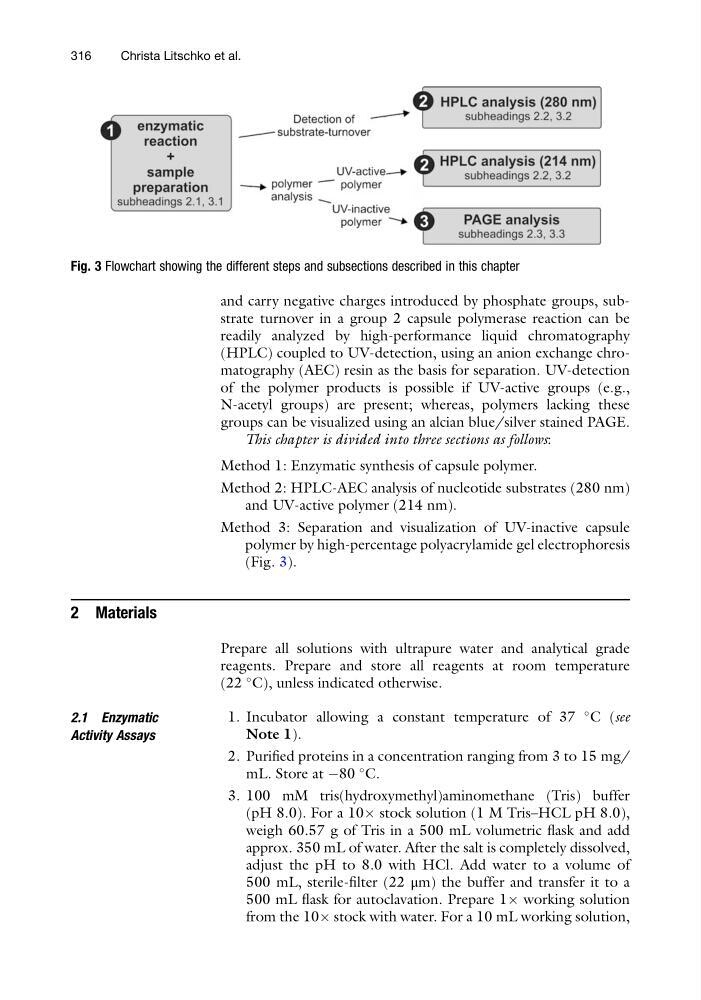
Fig. 3 Flowchart showing the different steps and subsections described in this chapter
316
Christa Litschko et al.
readily analyzed by high-performance liquid chromatography
(HPLC) coupled to UV-detection, using an anion exchange chromatography (AEC) resin as the basis for separation. UV-detection
of the polymer products is possible if UV-active groups (e.g.,
N-acetyl groups) are present; whereas, polymers lacking these
groups can be visualized using an alcian blue/silver stained PAGE.
This chapter is divided into three sections as follows:
Method 1: Enzymatic synthesis of capsule polymer.
Method 2: HPLC-AEC analysis of nucleotide substrates (280 nm)
and UV-active polymer (214 nm).
Method 3: Separation and visualization of UV-inactive capsule
polymer by high-percentage polyacrylamide gel electrophoresis
(Fig. 3).
2 Materials
Prepare all solutions with ultrapure water and analytical grade
reagents. Prepare and store all reagents at room temperature
(22
C), unless indicated otherwise.
2.1 Enzymatic
Activity Assays
1. Incubator allowing a constant temperature of 37
C (see
Note 1).
2. Purified proteins in a concentration ranging from 3 to 15 mg/
mL. Store at À80
C.
3. 100 mM tris(hydroxymethyl)aminomethane (Tris) buffer
(pH 8.0). For a 10Â stock solution (1 M Tris–HCL pH 8.0),
weigh 60.57 g of Tris in a 500 mL volumetric flask and add
approx. 350 mL of water. After the salt is completely dissolved,
adjust the pH to 8.0 with HCl. Add water to a volume of
500 mL, sterile-filter (22 μm) the buffer and transfer it to a
500 mL flask for autoclavation. Prepare 1Â working solution
from the 10Â stock with water. For a 10 mL working solution,
Fig. 3 Flowchart showing the different steps and subsections described in this chapter
316
Christa Litschko et al.