

In consideration with safety and stability of the whole cell, the
vaccine should never cause any disease as it does not constitute any
living components and is more stable than live attenuated vaccines
[81]. However, attenuated vaccines can stimulate cytotoxic T cells
which are applied for the treatment of intracellular pathogens and
cancer. In inactivate vaccines, the pathogens cannot divide, but
some of the components of pathogens are left (polysaccharide
capsules of pneumococcus) which are then recognized by the
immune system and provoke an adaptive immune response
[124]. These vaccines are given in multiple doses as they are not
active, and the immune system does not require a response in the
first dose but usually responds after the second or third dose [125].
5 Conclusion and Prospects
Whole-cell vaccines have been used for 60 years, and these vaccines
are standardized to Opacity Units. It has been suggested that the
potency of whole-cell vaccines should be as per the standards set by
regulating agencies. In the preparation of whole-cell vaccines, many
factors influence the processing of vaccines such as strain selection,
type of culture medium for growth of strains, and inactivation of
the toxin. It is found that whole-cell vaccines are being administrated to infants and toddlers in several countries for long durations. Researchers have reported the development of whole-cell
vaccines against many infectious agents with examples that include
whooping cough caused by Bordetella pertussis as part of the
Attenuation
Techniques
Physical
Method
Chemical
Method
Radiation
Method
Genetic
Engineering
Heat
Temperature
Pressure
Formaldehyde
Glutaraldehyde
Beta-propiolactone
Phenol
X-rays
Gamma radiations
Artificial mutation
Knock out
Gene silencing
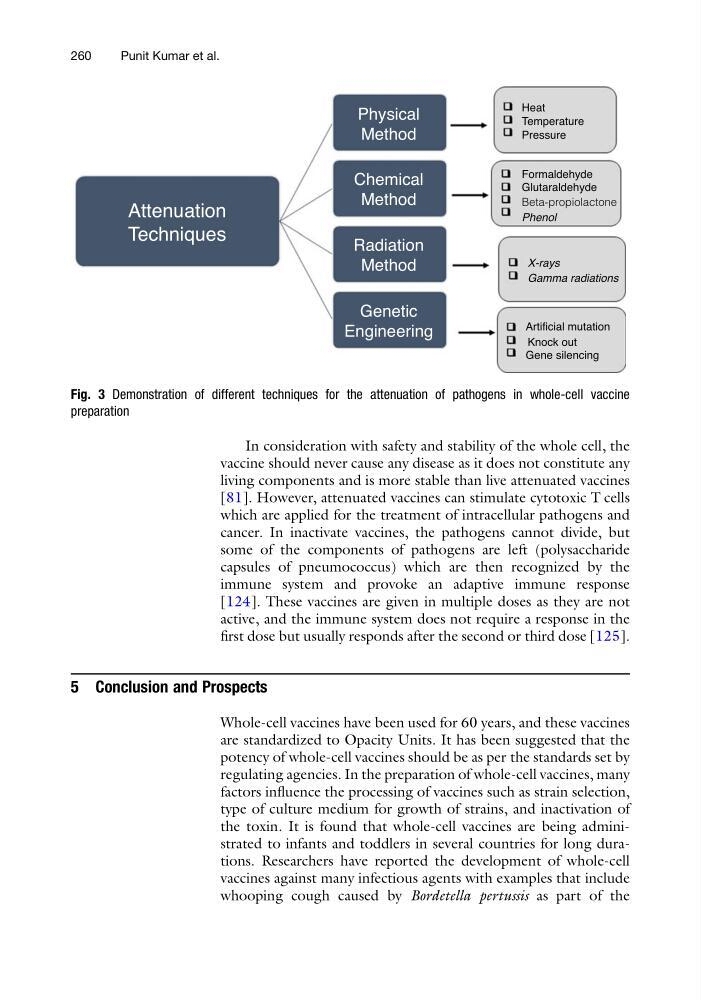
Fig. 3 Demonstration of different techniques for the attenuation of pathogens in whole-cell vaccine
preparation
260
Punit Kumar et al.
vaccine should never cause any disease as it does not constitute any
living components and is more stable than live attenuated vaccines
[81]. However, attenuated vaccines can stimulate cytotoxic T cells
which are applied for the treatment of intracellular pathogens and
cancer. In inactivate vaccines, the pathogens cannot divide, but
some of the components of pathogens are left (polysaccharide
capsules of pneumococcus) which are then recognized by the
immune system and provoke an adaptive immune response
[124]. These vaccines are given in multiple doses as they are not
active, and the immune system does not require a response in the
first dose but usually responds after the second or third dose [125].
5 Conclusion and Prospects
Whole-cell vaccines have been used for 60 years, and these vaccines
are standardized to Opacity Units. It has been suggested that the
potency of whole-cell vaccines should be as per the standards set by
regulating agencies. In the preparation of whole-cell vaccines, many
factors influence the processing of vaccines such as strain selection,
type of culture medium for growth of strains, and inactivation of
the toxin. It is found that whole-cell vaccines are being administrated to infants and toddlers in several countries for long durations. Researchers have reported the development of whole-cell
vaccines against many infectious agents with examples that include
whooping cough caused by Bordetella pertussis as part of the
Attenuation
Techniques
Physical
Method
Chemical
Method
Radiation
Method
Genetic
Engineering
Heat
Temperature
Pressure
Formaldehyde
Glutaraldehyde
Beta-propiolactone
Phenol
X-rays
Gamma radiations
Artificial mutation
Knock out
Gene silencing
Fig. 3 Demonstration of different techniques for the attenuation of pathogens in whole-cell vaccine
preparation
260
Punit Kumar et al.