

2 Materials
2.1 Expression
of Glycoconjugate
AP205 VLPs
1. Antibiotics: Antibiotic stock solutions are listed in Table 1. For
strains carrying one or two plasmids, the stocks are used at
1000-fold dilution in culture medium. Antibiotics are used at
2000-fold dilution for cultivation of strains carrying three
plasmids.
2. Inducing agent: A 1 M stock of isopropyl β-D-1-thiogalactopyranoside (IPTG) is prepared in water and sterile filtered prior
to use. The stock is stable for at least 1 year at À20
C. Protein
expression is induced by addition of 1 mM IPTG to the culture
medium.
3. Plasmids: Plasmids used in this study are listed in Table 2.
4. Luria-Bertani (LB) medium: 0.5% (w/v) Bacto yeast extract,
1.0% (w/v) Bacto tryptone, 0.5% (w/v) NaCl. Dissolve in
water and autoclaved immediately. Store at room temperature.
5. Terrific Broth (TB) medium: 2.4% (w/v) Bacto yeast extract,
1.2% (w/v) Bacto tryptone, 0.4% (v/v) glycerol, 72 mM
K 2 HPO 4 , 17 mM KH 2 PO 4 . Dissolve nutrients (Bacto yeast
extract, Bacto tryptone, and glycerol) and potassium salts separately in water and autoclave prior to mixing. Store at room
temperature.
2.2 Purification
of Glycoconjugate
AP205 VLPs
1. Lysis Solution: 50 mM Tris–HCl pH 6.8, 150 mM NaCl,
1 mM MgCl 2 , 0.5 mg/mL lysozyme, 5 μg/mL DNase I.
2. Binding/Wash Buffer: 50 mM Tris–HCl pH 6.8, 150 mM
NaCl, 2 mM EDTA.
3. Elution Buffer: 50 mM Tris–HCl pH 6.8, 150 mM NaCl,
2 mM EDTA, 5 mM desthiobiotin.
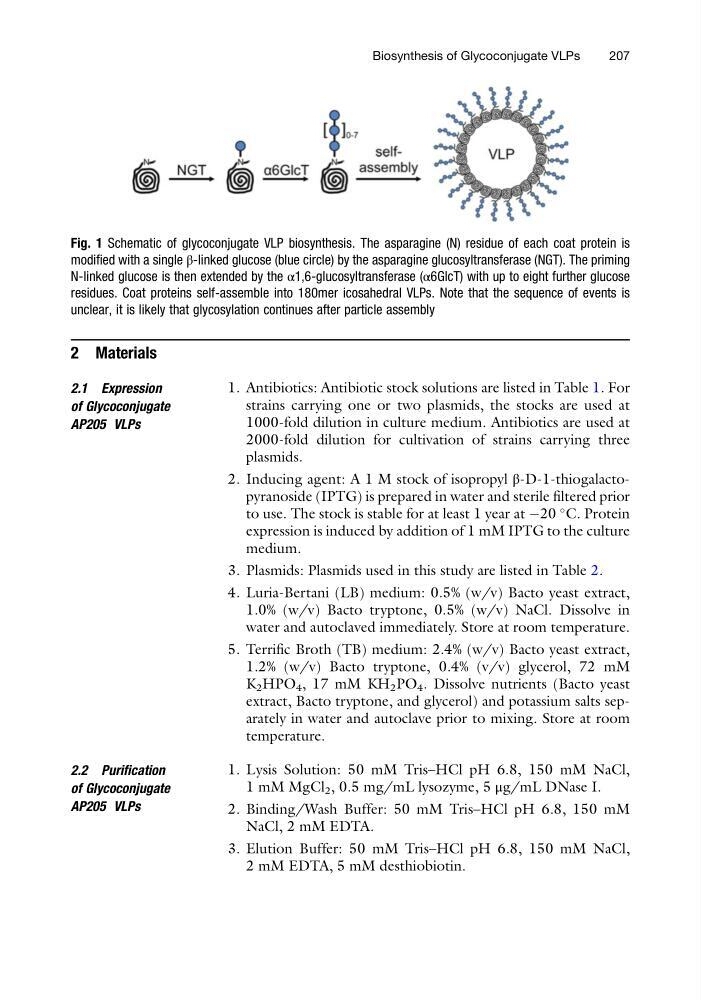
Fig. 1 Schematic of glycoconjugate VLP biosynthesis. The asparagine (N) residue of each coat protein is
modified with a single β-linked glucose (blue circle) by the asparagine glucosyltransferase (NGT). The priming
N-linked glucose is then extended by the α1,6-glucosyltransferase (α6GlcT) with up to eight further glucose
residues. Coat proteins self-assemble into 180mer icosahedral VLPs. Note that the sequence of events is
unclear, it is likely that glycosylation continues after particle assembly
Biosynthesis of Glycoconjugate VLPs
207
2.1 Expression
of Glycoconjugate
AP205 VLPs
1. Antibiotics: Antibiotic stock solutions are listed in Table 1. For
strains carrying one or two plasmids, the stocks are used at
1000-fold dilution in culture medium. Antibiotics are used at
2000-fold dilution for cultivation of strains carrying three
plasmids.
2. Inducing agent: A 1 M stock of isopropyl β-D-1-thiogalactopyranoside (IPTG) is prepared in water and sterile filtered prior
to use. The stock is stable for at least 1 year at À20
C. Protein
expression is induced by addition of 1 mM IPTG to the culture
medium.
3. Plasmids: Plasmids used in this study are listed in Table 2.
4. Luria-Bertani (LB) medium: 0.5% (w/v) Bacto yeast extract,
1.0% (w/v) Bacto tryptone, 0.5% (w/v) NaCl. Dissolve in
water and autoclaved immediately. Store at room temperature.
5. Terrific Broth (TB) medium: 2.4% (w/v) Bacto yeast extract,
1.2% (w/v) Bacto tryptone, 0.4% (v/v) glycerol, 72 mM
K 2 HPO 4 , 17 mM KH 2 PO 4 . Dissolve nutrients (Bacto yeast
extract, Bacto tryptone, and glycerol) and potassium salts separately in water and autoclave prior to mixing. Store at room
temperature.
2.2 Purification
of Glycoconjugate
AP205 VLPs
1. Lysis Solution: 50 mM Tris–HCl pH 6.8, 150 mM NaCl,
1 mM MgCl 2 , 0.5 mg/mL lysozyme, 5 μg/mL DNase I.
2. Binding/Wash Buffer: 50 mM Tris–HCl pH 6.8, 150 mM
NaCl, 2 mM EDTA.
3. Elution Buffer: 50 mM Tris–HCl pH 6.8, 150 mM NaCl,
2 mM EDTA, 5 mM desthiobiotin.
Fig. 1 Schematic of glycoconjugate VLP biosynthesis. The asparagine (N) residue of each coat protein is
modified with a single β-linked glucose (blue circle) by the asparagine glucosyltransferase (NGT). The priming
N-linked glucose is then extended by the α1,6-glucosyltransferase (α6GlcT) with up to eight further glucose
residues. Coat proteins self-assemble into 180mer icosahedral VLPs. Note that the sequence of events is
unclear, it is likely that glycosylation continues after particle assembly
Biosynthesis of Glycoconjugate VLPs
207