

4 Notes
1. The fetal bovine serum is heat-inactivated at 56
C for 30 min,
aliquoted in 50 mL Falcon tubes, and stored at À20
C.
2. Higher plasmid DNA concentration is desirable as it results in
increased stability of the solution while minimizing the volume
used in transfection reactions and hence the amount of salts
from the solvent. The DNA quality is also essential for optimal
transfection and we note that OD 260 /OD 280 ratios of 1.8 or
higher are suitable. To ensure results reproducibility, prepare
large stocks of plasmid DNA and store them at 4
C for short
term use (weeks) or aliquot and store at À20
C. Repeated
freeze–thaw cycles should be avoided as it damages the DNA
solution.
3. The protease cocktail is dissolved and stored according to
instructions provided by the manufacturer. When organic solvents are used, prepare stock solutions at least 100Â concentrated to minimize cell toxicity. Always add the protease
cocktail to the cell lysis buffer prior to use.
4. PNG-ase F de-glycosylates N-linked glycoproteins, regardless
of their oligosaccharides structure. Endo H removes only high
mannose and some hybrid types of the N-linked carbohydrates.
Therefore, acquirement of complex glycans by proteins,
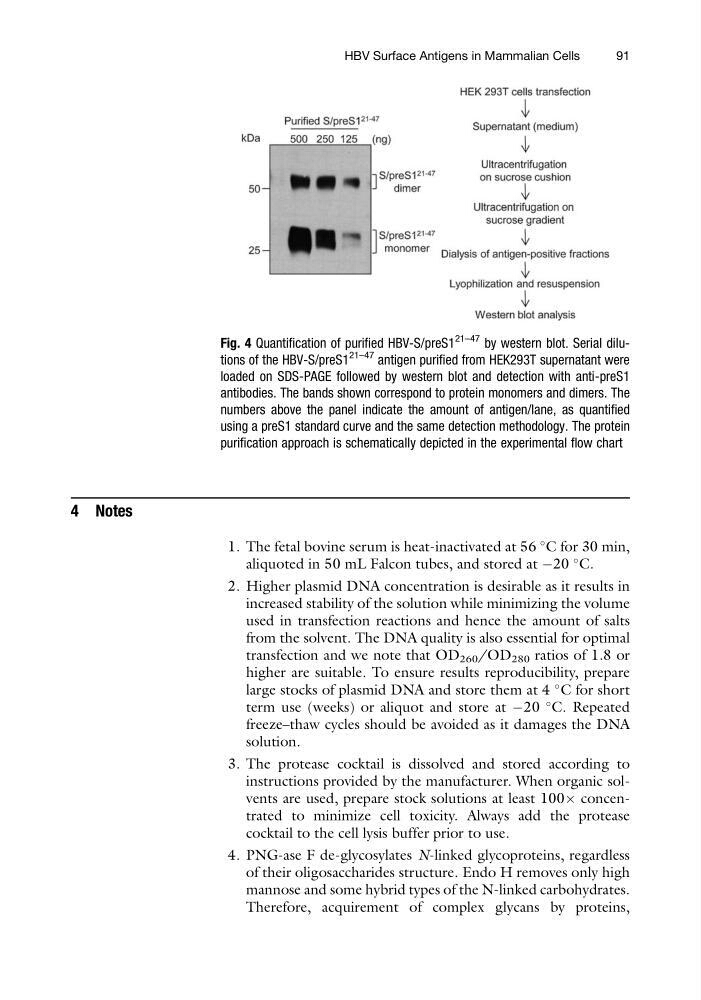
Fig. 4 Quantification of purified HBV-S/preS1
21–47 by western blot. Serial dilutions of the HBV-S/preS1
21–47 antigen purified from HEK293T supernatant were
loaded on SDS-PAGE followed by western blot and detection with anti-preS1
antibodies. The bands shown correspond to protein monomers and dimers. The
numbers above the panel indicate the amount of antigen/lane, as quantified
using a preS1 standard curve and the same detection methodology. The protein
purification approach is schematically depicted in the experimental flow chart
HBV Surface Antigens in Mammalian Cells
91
1. The fetal bovine serum is heat-inactivated at 56
C for 30 min,
aliquoted in 50 mL Falcon tubes, and stored at À20
C.
2. Higher plasmid DNA concentration is desirable as it results in
increased stability of the solution while minimizing the volume
used in transfection reactions and hence the amount of salts
from the solvent. The DNA quality is also essential for optimal
transfection and we note that OD 260 /OD 280 ratios of 1.8 or
higher are suitable. To ensure results reproducibility, prepare
large stocks of plasmid DNA and store them at 4
C for short
term use (weeks) or aliquot and store at À20
C. Repeated
freeze–thaw cycles should be avoided as it damages the DNA
solution.
3. The protease cocktail is dissolved and stored according to
instructions provided by the manufacturer. When organic solvents are used, prepare stock solutions at least 100Â concentrated to minimize cell toxicity. Always add the protease
cocktail to the cell lysis buffer prior to use.
4. PNG-ase F de-glycosylates N-linked glycoproteins, regardless
of their oligosaccharides structure. Endo H removes only high
mannose and some hybrid types of the N-linked carbohydrates.
Therefore, acquirement of complex glycans by proteins,
Fig. 4 Quantification of purified HBV-S/preS1
21–47 by western blot. Serial dilutions of the HBV-S/preS1
21–47 antigen purified from HEK293T supernatant were
loaded on SDS-PAGE followed by western blot and detection with anti-preS1
antibodies. The bands shown correspond to protein monomers and dimers. The
numbers above the panel indicate the amount of antigen/lane, as quantified
using a preS1 standard curve and the same detection methodology. The protein
purification approach is schematically depicted in the experimental flow chart
HBV Surface Antigens in Mammalian Cells
91