

14.8 Optical Fiber Network Performance Testing
617
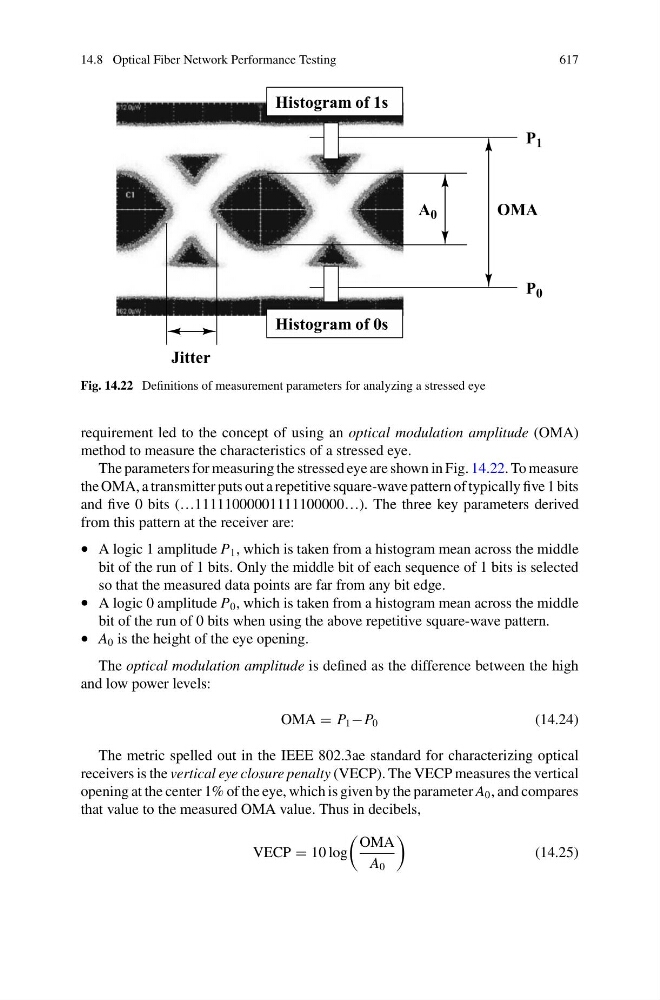
Fig. 14.22 Definitions of measurement parameters for analyzing a stressed eye
requirement led to the concept of using an optical modulation amplitude (OMA)
method to measure the characteristics of a stressed eye.
The parameters for measuring the stressed eye are shown in Fig. 14.22. To measure
the OMA, a transmitter puts out a repetitive square-wave pattern of typically five 1 bits
and five 0 bits (…11111000001111100000…). The three key parameters derived
from this pattern at the receiver are:
• A logic 1 amplitude P 1 , which is taken from a histogram mean across the middle
bit of the run of 1 bits. Only the middle bit of each sequence of 1 bits is selected
so that the measured data points are far from any bit edge.
• A logic 0 amplitude P 0 , which is taken from a histogram mean across the middle
bit of the run of 0 bits when using the above repetitive square-wave pattern.
• A 0 is the height of the eye opening.
The optical modulation amplitude is defined as the difference between the high
and low power levels:
OMA = P 1 −P 0
(14.24)
The metric spelled out in the IEEE 802.3ae standard for characterizing optical
receivers is the vertical eye closure penalty (VECP). The VECP measures the vertical
opening at the center 1% of the eye, which is given by the parameter A 0 , and compares
that value to the measured OMA value. Thus in decibels,
VECP = 10 log
OMA
A 0
(14.25)