

556
13 Fiber Optic Communication Networks
Data center network
Equipment racks
ToR
switches
Aggregation
switches
Core
switches
Stacks of
servers
Equipment racks
10-100 Gb/s
. . .
Internet
100 Gb/s to 1 Tb/s
1-10 Gb/s
10 Gb/s
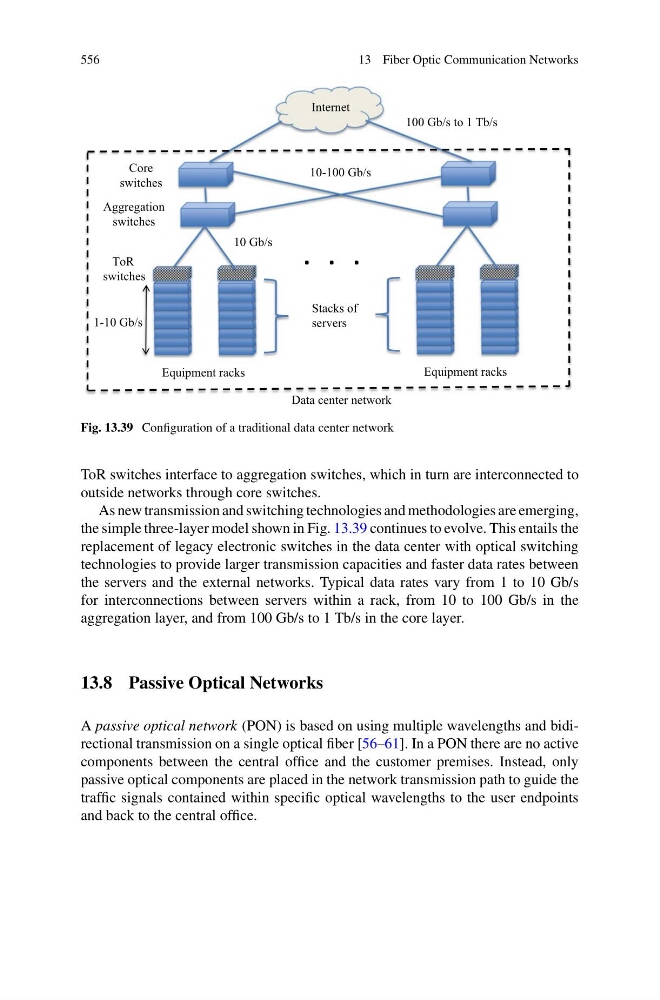
Fig. 13.39 Configuration of a traditional data center network
ToR switches interface to aggregation switches, which in turn are interconnected to
outside networks through core switches.
As new transmission and switching technologies and methodologies are emerging,
the simple three-layer model shown in Fig. 13.39 continues to evolve. This entails the
replacement of legacy electronic switches in the data center with optical switching
technologies to provide larger transmission capacities and faster data rates between
the servers and the external networks. Typical data rates vary from 1 to 10 Gb/s
for interconnections between servers within a rack, from 10 to 100 Gb/s in the
aggregation layer, and from 100 Gb/s to 1 Tb/s in the core layer.
13.8 Passive Optical Networks
A passive optical network (PON) is based on using multiple wavelengths and bidirectional transmission on a single optical fiber [56–61]. In a PON there are no active
components between the central office and the customer premises. Instead, only
passive optical components are placed in the network transmission path to guide the
traffic signals contained within specific optical wavelengths to the user endpoints
and back to the central office.