

40
J. Wu and H. Zhao
0
500
1000
1500
2000
2500
3000
3500
0
50000
100000
150000
200000
250000
300000
thousand of cars
Ten thousand tons
Car production
Cement output
Steel output
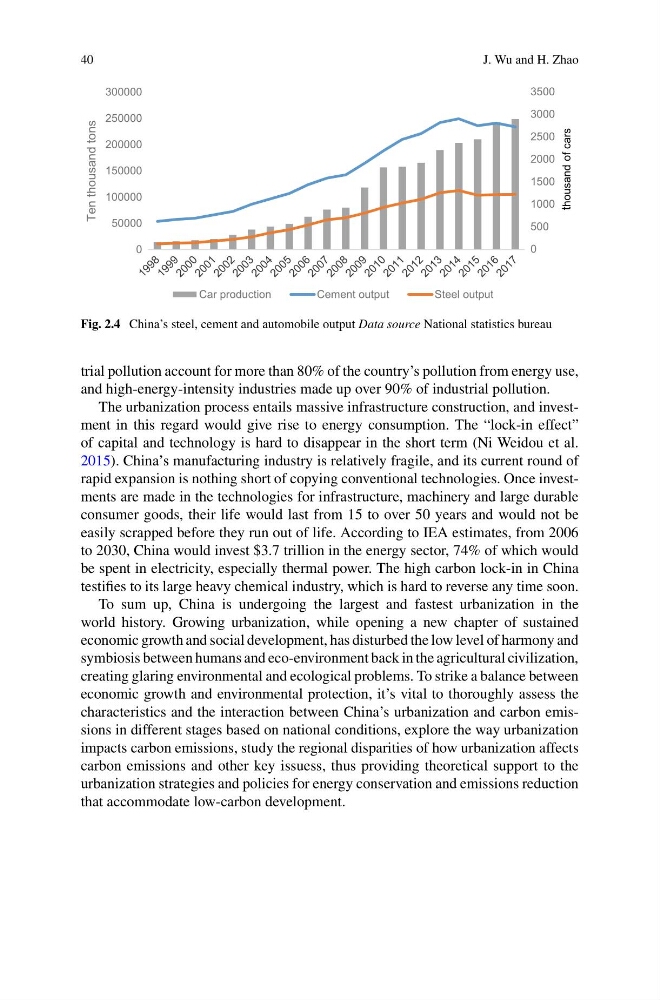
Fig. 2.4 China’s steel, cement and automobile output Data source National statistics bureau
trial pollution account for more than 80% of the country’s pollution from energy use,
and high-energy-intensity industries made up over 90% of industrial pollution.
The urbanization process entails massive infrastructure construction, and investment in this regard would give rise to energy consumption. The “lock-in effect”
of capital and technology is hard to disappear in the short term (Ni Weidou et al.
2015). China’s manufacturing industry is relatively fragile, and its current round of
rapid expansion is nothing short of copying conventional technologies. Once investments are made in the technologies for infrastructure, machinery and large durable
consumer goods, their life would last from 15 to over 50 years and would not be
easily scrapped before they run out of life. According to IEA estimates, from 2006
to 2030, China would invest $3.7 trillion in the energy sector, 74% of which would
be spent in electricity, especially thermal power. The high carbon lock-in in China
testifies to its large heavy chemical industry, which is hard to reverse any time soon.
To sum up, China is undergoing the largest and fastest urbanization in the
world history. Growing urbanization, while opening a new chapter of sustained
economic growth and social development, has disturbed the low level of harmony and
symbiosis between humans and eco-environment back in the agricultural civilization,
creating glaring environmental and ecological problems. To strike a balance between
economic growth and environmental protection, it’s vital to thoroughly assess the
characteristics and the interaction between China’s urbanization and carbon emissions in different stages based on national conditions, explore the way urbanization
impacts carbon emissions, study the regional disparities of how urbanization affects
carbon emissions and other key issuess, thus providing theoretical support to the
urbanization strategies and policies for energy conservation and emissions reduction
that accommodate low-carbon development.
J. Wu and H. Zhao
0
500
1000
1500
2000
2500
3000
3500
0
50000
100000
150000
200000
250000
300000
thousand of cars
Ten thousand tons
Car production
Cement output
Steel output
Fig. 2.4 China’s steel, cement and automobile output Data source National statistics bureau
trial pollution account for more than 80% of the country’s pollution from energy use,
and high-energy-intensity industries made up over 90% of industrial pollution.
The urbanization process entails massive infrastructure construction, and investment in this regard would give rise to energy consumption. The “lock-in effect”
of capital and technology is hard to disappear in the short term (Ni Weidou et al.
2015). China’s manufacturing industry is relatively fragile, and its current round of
rapid expansion is nothing short of copying conventional technologies. Once investments are made in the technologies for infrastructure, machinery and large durable
consumer goods, their life would last from 15 to over 50 years and would not be
easily scrapped before they run out of life. According to IEA estimates, from 2006
to 2030, China would invest $3.7 trillion in the energy sector, 74% of which would
be spent in electricity, especially thermal power. The high carbon lock-in in China
testifies to its large heavy chemical industry, which is hard to reverse any time soon.
To sum up, China is undergoing the largest and fastest urbanization in the
world history. Growing urbanization, while opening a new chapter of sustained
economic growth and social development, has disturbed the low level of harmony and
symbiosis between humans and eco-environment back in the agricultural civilization,
creating glaring environmental and ecological problems. To strike a balance between
economic growth and environmental protection, it’s vital to thoroughly assess the
characteristics and the interaction between China’s urbanization and carbon emissions in different stages based on national conditions, explore the way urbanization
impacts carbon emissions, study the regional disparities of how urbanization affects
carbon emissions and other key issuess, thus providing theoretical support to the
urbanization strategies and policies for energy conservation and emissions reduction
that accommodate low-carbon development.