

2 Research on Urbanization and Low-Carbon Development in China
37
0
5
10
15
20
25
0
10000
20000
30000
40000
50000
60000
CO2 emissions per capita (tons / year)
GDP per capita (USD / year)
America
Germany
France
Japan
China
Korea
Note GDP calculated at constant 2010 USD
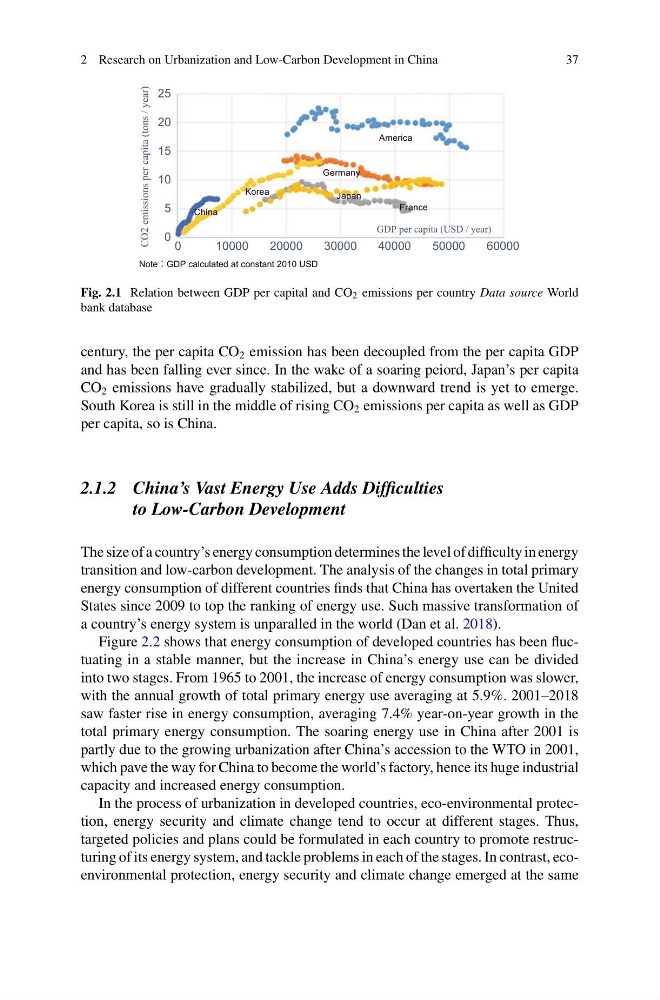
Fig. 2.1 Relation between GDP per capital and CO 2 emissions per country Data source World
bank database
century, the per capita CO 2 emission has been decoupled from the per capita GDP
and has been falling ever since. In the wake of a soaring peiord, Japan’s per capita
CO 2 emissions have gradually stabilized, but a downward trend is yet to emerge.
South Korea is still in the middle of rising CO 2 emissions per capita as well as GDP
per capita, so is China.
2.1.2 China’s Vast Energy Use Adds Difficulties
to Low-Carbon Development
The size of a country’s energy consumption determines the level of difficulty in energy
transition and low-carbon development. The analysis of the changes in total primary
energy consumption of different countries finds that China has overtaken the United
States since 2009 to top the ranking of energy use. Such massive transformation of
a country’s energy system is unparalled in the world (Dan et al. 2018).
Figure 2.2 shows that energy consumption of developed countries has been fluctuating in a stable manner, but the increase in China’s energy use can be divided
into two stages. From 1965 to 2001, the increase of energy consumption was slower,
with the annual growth of total primary energy use averaging at 5.9%. 2001–2018
saw faster rise in energy consumption, averaging 7.4% year-on-year growth in the
total primary energy consumption. The soaring energy use in China after 2001 is
partly due to the growing urbanization after China’s accession to the WTO in 2001,
which pave the way for China to become the world’s factory, hence its huge industrial
capacity and increased energy consumption.
In the process of urbanization in developed countries, eco-environmental protection, energy security and climate change tend to occur at different stages. Thus,
targeted policies and plans could be formulated in each country to promote restructuring of its energy system, and tackle problems in each of the stages. In contrast, ecoenvironmental protection, energy security and climate change emerged at the same
37
0
5
10
15
20
25
0
10000
20000
30000
40000
50000
60000
CO2 emissions per capita (tons / year)
GDP per capita (USD / year)
America
Germany
France
Japan
China
Korea
Note GDP calculated at constant 2010 USD
Fig. 2.1 Relation between GDP per capital and CO 2 emissions per country Data source World
bank database
century, the per capita CO 2 emission has been decoupled from the per capita GDP
and has been falling ever since. In the wake of a soaring peiord, Japan’s per capita
CO 2 emissions have gradually stabilized, but a downward trend is yet to emerge.
South Korea is still in the middle of rising CO 2 emissions per capita as well as GDP
per capita, so is China.
2.1.2 China’s Vast Energy Use Adds Difficulties
to Low-Carbon Development
The size of a country’s energy consumption determines the level of difficulty in energy
transition and low-carbon development. The analysis of the changes in total primary
energy consumption of different countries finds that China has overtaken the United
States since 2009 to top the ranking of energy use. Such massive transformation of
a country’s energy system is unparalled in the world (Dan et al. 2018).
Figure 2.2 shows that energy consumption of developed countries has been fluctuating in a stable manner, but the increase in China’s energy use can be divided
into two stages. From 1965 to 2001, the increase of energy consumption was slower,
with the annual growth of total primary energy use averaging at 5.9%. 2001–2018
saw faster rise in energy consumption, averaging 7.4% year-on-year growth in the
total primary energy consumption. The soaring energy use in China after 2001 is
partly due to the growing urbanization after China’s accession to the WTO in 2001,
which pave the way for China to become the world’s factory, hence its huge industrial
capacity and increased energy consumption.
In the process of urbanization in developed countries, eco-environmental protection, energy security and climate change tend to occur at different stages. Thus,
targeted policies and plans could be formulated in each country to promote restructuring of its energy system, and tackle problems in each of the stages. In contrast, ecoenvironmental protection, energy security and climate change emerged at the same