

7 Development of Low Carbon Technology in China’s Iron …
269
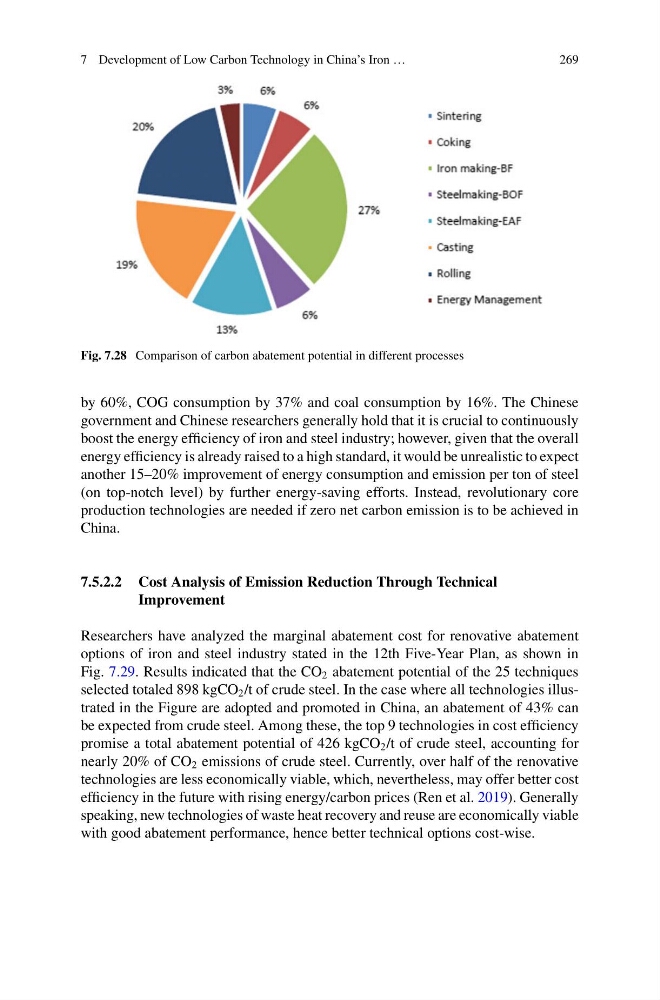
Fig. 7.28 Comparison of carbon abatement potential in different processes
by 60%, COG consumption by 37% and coal consumption by 16%. The Chinese
government and Chinese researchers generally hold that it is crucial to continuously
boost the energy efficiency of iron and steel industry; however, given that the overall
energy efficiency is already raised to a high standard, it would be unrealistic to expect
another 15–20% improvement of energy consumption and emission per ton of steel
(on top-notch level) by further energy-saving efforts. Instead, revolutionary core
production technologies are needed if zero net carbon emission is to be achieved in
China.
7.5.2.2 Cost Analysis of Emission Reduction Through Technical
Improvement
Researchers have analyzed the marginal abatement cost for renovative abatement
options of iron and steel industry stated in the 12th Five-Year Plan, as shown in
Fig. 7.29. Results indicated that the CO 2 abatement potential of the 25 techniques
selected totaled 898 kgCO 2 /t of crude steel. In the case where all technologies illustrated in the Figure are adopted and promoted in China, an abatement of 43% can
be expected from crude steel. Among these, the top 9 technologies in cost efficiency
promise a total abatement potential of 426 kgCO 2 /t of crude steel, accounting for
nearly 20% of CO 2 emissions of crude steel. Currently, over half of the renovative
technologies are less economically viable, which, nevertheless, may offer better cost
efficiency in the future with rising energy/carbon prices (Ren et al. 2019). Generally
speaking, new technologies of waste heat recovery and reuse are economically viable
with good abatement performance, hence better technical options cost-wise.
269
Fig. 7.28 Comparison of carbon abatement potential in different processes
by 60%, COG consumption by 37% and coal consumption by 16%. The Chinese
government and Chinese researchers generally hold that it is crucial to continuously
boost the energy efficiency of iron and steel industry; however, given that the overall
energy efficiency is already raised to a high standard, it would be unrealistic to expect
another 15–20% improvement of energy consumption and emission per ton of steel
(on top-notch level) by further energy-saving efforts. Instead, revolutionary core
production technologies are needed if zero net carbon emission is to be achieved in
China.
7.5.2.2 Cost Analysis of Emission Reduction Through Technical
Improvement
Researchers have analyzed the marginal abatement cost for renovative abatement
options of iron and steel industry stated in the 12th Five-Year Plan, as shown in
Fig. 7.29. Results indicated that the CO 2 abatement potential of the 25 techniques
selected totaled 898 kgCO 2 /t of crude steel. In the case where all technologies illustrated in the Figure are adopted and promoted in China, an abatement of 43% can
be expected from crude steel. Among these, the top 9 technologies in cost efficiency
promise a total abatement potential of 426 kgCO 2 /t of crude steel, accounting for
nearly 20% of CO 2 emissions of crude steel. Currently, over half of the renovative
technologies are less economically viable, which, nevertheless, may offer better cost
efficiency in the future with rising energy/carbon prices (Ren et al. 2019). Generally
speaking, new technologies of waste heat recovery and reuse are economically viable
with good abatement performance, hence better technical options cost-wise.