

268
L. Ren et al.
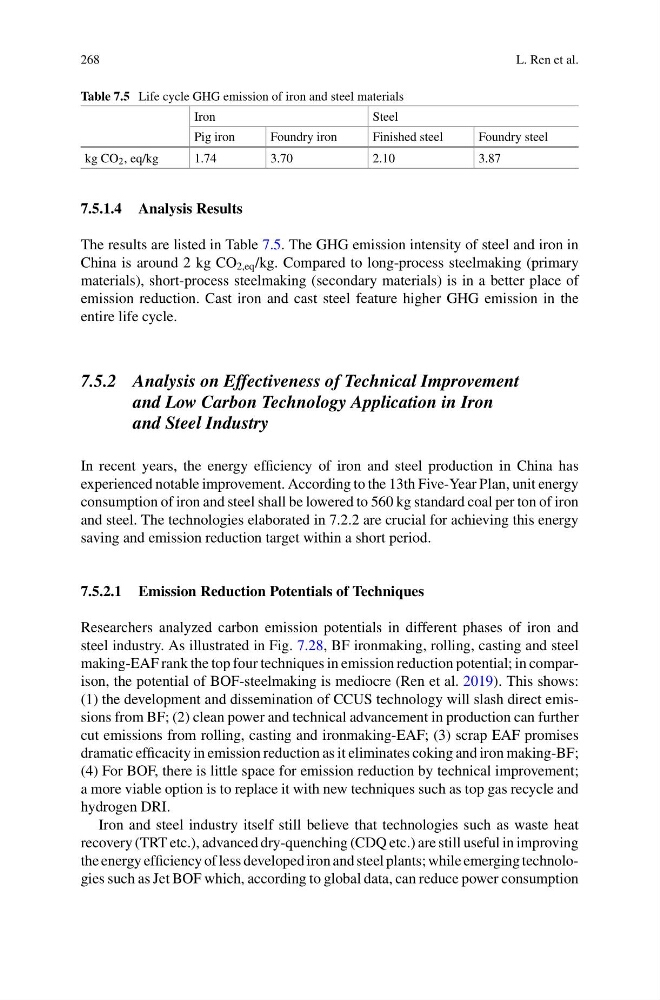
Table 7.5 Life cycle GHG emission of iron and steel materials
Iron
Steel
Pig iron
Foundry iron
Finished steel
Foundry steel
kg CO 2 , eq/kg
1.74
3.70
2.10
3.87
7.5.1.4 Analysis Results
The results are listed in Table 7.5. The GHG emission intensity of steel and iron in
China is around 2 kg CO 2,eq /kg. Compared to long-process steelmaking (primary
materials), short-process steelmaking (secondary materials) is in a better place of
emission reduction. Cast iron and cast steel feature higher GHG emission in the
entire life cycle.
7.5.2 Analysis on Effectiveness of Technical Improvement
and Low Carbon Technology Application in Iron
and Steel Industry
In recent years, the energy efficiency of iron and steel production in China has
experienced notable improvement. According to the 13th Five-Year Plan, unit energy
consumption of iron and steel shall be lowered to 560 kg standard coal per ton of iron
and steel. The technologies elaborated in 7.2.2 are crucial for achieving this energy
saving and emission reduction target within a short period.
7.5.2.1 Emission Reduction Potentials of Techniques
Researchers analyzed carbon emission potentials in different phases of iron and
steel industry. As illustrated in Fig. 7.28, BF ironmaking, rolling, casting and steel
making-EAF rank the top four techniques in emission reduction potential; in comparison, the potential of BOF-steelmaking is mediocre (Ren et al. 2019). This shows:
(1) the development and dissemination of CCUS technology will slash direct emissions from BF; (2) clean power and technical advancement in production can further
cut emissions from rolling, casting and ironmaking-EAF; (3) scrap EAF promises
dramatic efficacity in emission reduction as it eliminates coking and iron making-BF;
(4) For BOF, there is little space for emission reduction by technical improvement;
a more viable option is to replace it with new techniques such as top gas recycle and
hydrogen DRI.
Iron and steel industry itself still believe that technologies such as waste heat
recovery (TRT etc.), advanced dry-quenching (CDQ etc.) are still useful in improving
the energy efficiency of less developed iron and steel plants; while emerging technologies such as Jet BOF which, according to global data, can reduce power consumption
L. Ren et al.
Table 7.5 Life cycle GHG emission of iron and steel materials
Iron
Steel
Pig iron
Foundry iron
Finished steel
Foundry steel
kg CO 2 , eq/kg
1.74
3.70
2.10
3.87
7.5.1.4 Analysis Results
The results are listed in Table 7.5. The GHG emission intensity of steel and iron in
China is around 2 kg CO 2,eq /kg. Compared to long-process steelmaking (primary
materials), short-process steelmaking (secondary materials) is in a better place of
emission reduction. Cast iron and cast steel feature higher GHG emission in the
entire life cycle.
7.5.2 Analysis on Effectiveness of Technical Improvement
and Low Carbon Technology Application in Iron
and Steel Industry
In recent years, the energy efficiency of iron and steel production in China has
experienced notable improvement. According to the 13th Five-Year Plan, unit energy
consumption of iron and steel shall be lowered to 560 kg standard coal per ton of iron
and steel. The technologies elaborated in 7.2.2 are crucial for achieving this energy
saving and emission reduction target within a short period.
7.5.2.1 Emission Reduction Potentials of Techniques
Researchers analyzed carbon emission potentials in different phases of iron and
steel industry. As illustrated in Fig. 7.28, BF ironmaking, rolling, casting and steel
making-EAF rank the top four techniques in emission reduction potential; in comparison, the potential of BOF-steelmaking is mediocre (Ren et al. 2019). This shows:
(1) the development and dissemination of CCUS technology will slash direct emissions from BF; (2) clean power and technical advancement in production can further
cut emissions from rolling, casting and ironmaking-EAF; (3) scrap EAF promises
dramatic efficacity in emission reduction as it eliminates coking and iron making-BF;
(4) For BOF, there is little space for emission reduction by technical improvement;
a more viable option is to replace it with new techniques such as top gas recycle and
hydrogen DRI.
Iron and steel industry itself still believe that technologies such as waste heat
recovery (TRT etc.), advanced dry-quenching (CDQ etc.) are still useful in improving
the energy efficiency of less developed iron and steel plants; while emerging technologies such as Jet BOF which, according to global data, can reduce power consumption