

252
L. Ren et al.
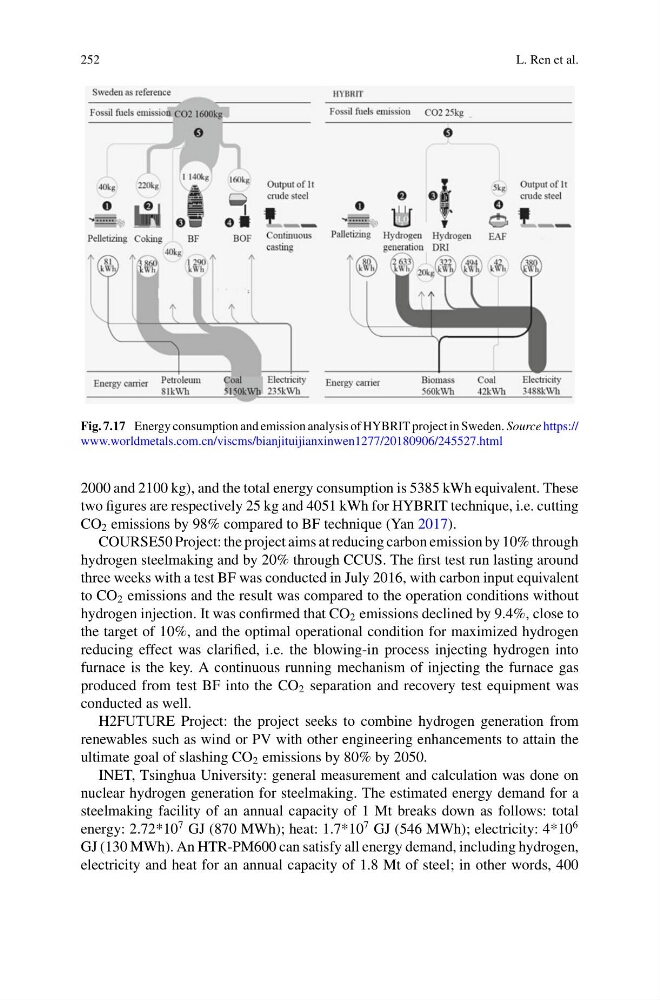
Fig. 7.17 Energy consumption and emission analysis of HYBRIT project in Sweden. Source https://
www.worldmetals.com.cn/viscms/bianjituijianxinwen1277/20180906/245527.html
2000 and 2100 kg), and the total energy consumption is 5385 kWh equivalent. These
two figures are respectively 25 kg and 4051 kWh for HYBRIT technique, i.e. cutting
CO 2 emissions by 98% compared to BF technique (Yan 2017).
COURSE50 Project: the project aims at reducing carbon emission by 10% through
hydrogen steelmaking and by 20% through CCUS. The first test run lasting around
three weeks with a test BF was conducted in July 2016, with carbon input equivalent
to CO 2 emissions and the result was compared to the operation conditions without
hydrogen injection. It was confirmed that CO 2 emissions declined by 9.4%, close to
the target of 10%, and the optimal operational condition for maximized hydrogen
reducing effect was clarified, i.e. the blowing-in process injecting hydrogen into
furnace is the key. A continuous running mechanism of injecting the furnace gas
produced from test BF into the CO 2 separation and recovery test equipment was
conducted as well.
H2FUTURE Project: the project seeks to combine hydrogen generation from
renewables such as wind or PV with other engineering enhancements to attain the
ultimate goal of slashing CO 2 emissions by 80% by 2050.
INET, Tsinghua University: general measurement and calculation was done on
nuclear hydrogen generation for steelmaking. The estimated energy demand for a
steelmaking facility of an annual capacity of 1 Mt breaks down as follows: total
energy: 2.72*10
7 GJ (870 MWh); heat: 1.7*10
7 GJ (546 MWh); electricity: 4*10
6
GJ (130 MWh). An HTR-PM600 can satisfy all energy demand, including hydrogen,
electricity and heat for an annual capacity of 1.8 Mt of steel; in other words, 400
L. Ren et al.
Fig. 7.17 Energy consumption and emission analysis of HYBRIT project in Sweden. Source https://
www.worldmetals.com.cn/viscms/bianjituijianxinwen1277/20180906/245527.html
2000 and 2100 kg), and the total energy consumption is 5385 kWh equivalent. These
two figures are respectively 25 kg and 4051 kWh for HYBRIT technique, i.e. cutting
CO 2 emissions by 98% compared to BF technique (Yan 2017).
COURSE50 Project: the project aims at reducing carbon emission by 10% through
hydrogen steelmaking and by 20% through CCUS. The first test run lasting around
three weeks with a test BF was conducted in July 2016, with carbon input equivalent
to CO 2 emissions and the result was compared to the operation conditions without
hydrogen injection. It was confirmed that CO 2 emissions declined by 9.4%, close to
the target of 10%, and the optimal operational condition for maximized hydrogen
reducing effect was clarified, i.e. the blowing-in process injecting hydrogen into
furnace is the key. A continuous running mechanism of injecting the furnace gas
produced from test BF into the CO 2 separation and recovery test equipment was
conducted as well.
H2FUTURE Project: the project seeks to combine hydrogen generation from
renewables such as wind or PV with other engineering enhancements to attain the
ultimate goal of slashing CO 2 emissions by 80% by 2050.
INET, Tsinghua University: general measurement and calculation was done on
nuclear hydrogen generation for steelmaking. The estimated energy demand for a
steelmaking facility of an annual capacity of 1 Mt breaks down as follows: total
energy: 2.72*10
7 GJ (870 MWh); heat: 1.7*10
7 GJ (546 MWh); electricity: 4*10
6
GJ (130 MWh). An HTR-PM600 can satisfy all energy demand, including hydrogen,
electricity and heat for an annual capacity of 1.8 Mt of steel; in other words, 400