

188
W. Cai et al.
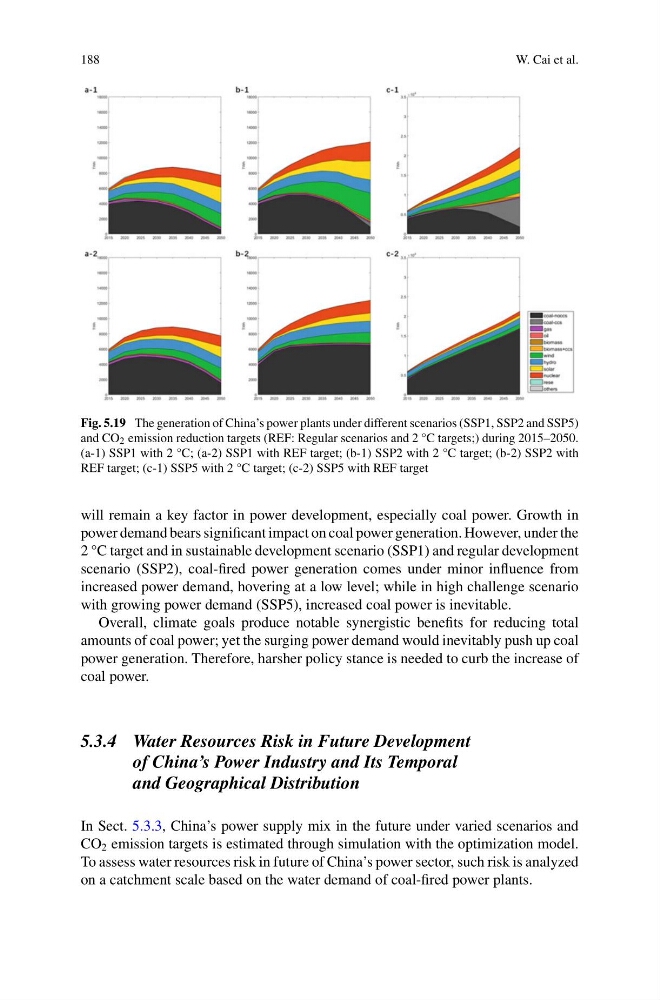
Fig. 5.19 The generation of China’s power plants under different scenarios (SSP1, SSP2 and SSP5)
and CO 2 emission reduction targets (REF: Regular scenarios and 2 °C targets;) during 2015–2050.
(a-1) SSP1 with 2 °C; (a-2) SSP1 with REF target; (b-1) SSP2 with 2 °C target; (b-2) SSP2 with
REF target; (c-1) SSP5 with 2 °C target; (c-2) SSP5 with REF target
will remain a key factor in power development, especially coal power. Growth in
power demand bears significant impact on coal power generation. However, under the
2 °C target and in sustainable development scenario (SSP1) and regular development
scenario (SSP2), coal-fired power generation comes under minor influence from
increased power demand, hovering at a low level; while in high challenge scenario
with growing power demand (SSP5), increased coal power is inevitable.
Overall, climate goals produce notable synergistic benefits for reducing total
amounts of coal power; yet the surging power demand would inevitably push up coal
power generation. Therefore, harsher policy stance is needed to curb the increase of
coal power.
5.3.4 Water Resources Risk in Future Development
of China’s Power Industry and Its Temporal
and Geographical Distribution
In Sect. 5.3.3, China’s power supply mix in the future under varied scenarios and
CO 2 emission targets is estimated through simulation with the optimization model.
To assess water resources risk in future of China’s power sector, such risk is analyzed
on a catchment scale based on the water demand of coal-fired power plants.
W. Cai et al.
Fig. 5.19 The generation of China’s power plants under different scenarios (SSP1, SSP2 and SSP5)
and CO 2 emission reduction targets (REF: Regular scenarios and 2 °C targets;) during 2015–2050.
(a-1) SSP1 with 2 °C; (a-2) SSP1 with REF target; (b-1) SSP2 with 2 °C target; (b-2) SSP2 with
REF target; (c-1) SSP5 with 2 °C target; (c-2) SSP5 with REF target
will remain a key factor in power development, especially coal power. Growth in
power demand bears significant impact on coal power generation. However, under the
2 °C target and in sustainable development scenario (SSP1) and regular development
scenario (SSP2), coal-fired power generation comes under minor influence from
increased power demand, hovering at a low level; while in high challenge scenario
with growing power demand (SSP5), increased coal power is inevitable.
Overall, climate goals produce notable synergistic benefits for reducing total
amounts of coal power; yet the surging power demand would inevitably push up coal
power generation. Therefore, harsher policy stance is needed to curb the increase of
coal power.
5.3.4 Water Resources Risk in Future Development
of China’s Power Industry and Its Temporal
and Geographical Distribution
In Sect. 5.3.3, China’s power supply mix in the future under varied scenarios and
CO 2 emission targets is estimated through simulation with the optimization model.
To assess water resources risk in future of China’s power sector, such risk is analyzed
on a catchment scale based on the water demand of coal-fired power plants.