

4 The Transition of China’s Power System
139
entry of higher harmonic into the AC system. The filter consists of reactance coil,
capacitor and small resistor connected in series.
According to the Annual Development Report on China Power Industry 2019
released by CEC in June 2019, by the end of 2018, China’s cross-regional power
transmission capacity totalled 136.15 million kW, 122.81 million kW of which
were connected to AC and DC networks. The power transmission capacity of
cross-regional point-to-network stood at 13.34 million kW.
The Annual Report on National Power Reliability 2017 issued by CEC in May
2018 revealed statistics of varied HVDC transmission systems (15 point-to-point
EHV systems, 7 point-to-point UHV systems and 3 back-to-back systems), as shown
in Table 4.9. All systems featured over 90% of energy availability, which demonstrates the maturity and reliability of UHV DC transmission technology in China’s
engineering practice.
In the foreseeable future, China’s conventional HVDC transmission technology
will largely remain unchanged, but will reach higher voltage class, larger transmission
capacity, longer transmission and lower cost per unit of construction in the long run
(Jia 2018).
4.3.1.3 UHV AC Transmission Network
In recent years, China has seen a string of major technological breakthroughs in key
UHV technologies, thanks to intensive R&D efforts in automatic voltage control,
secondary-arc current control, commissioning and operation of equipment sets. As
a result, China has owned a whole set of world-leading UHV AC transmission technologies with independent intellectual property rights (IPRs). On January 6, 2009,
the Southeast Shanxi-Nanyang-Jingmen UHV AC pilot—a 1000 kV AC power transmission and transformation project that was developed, designed and built by China
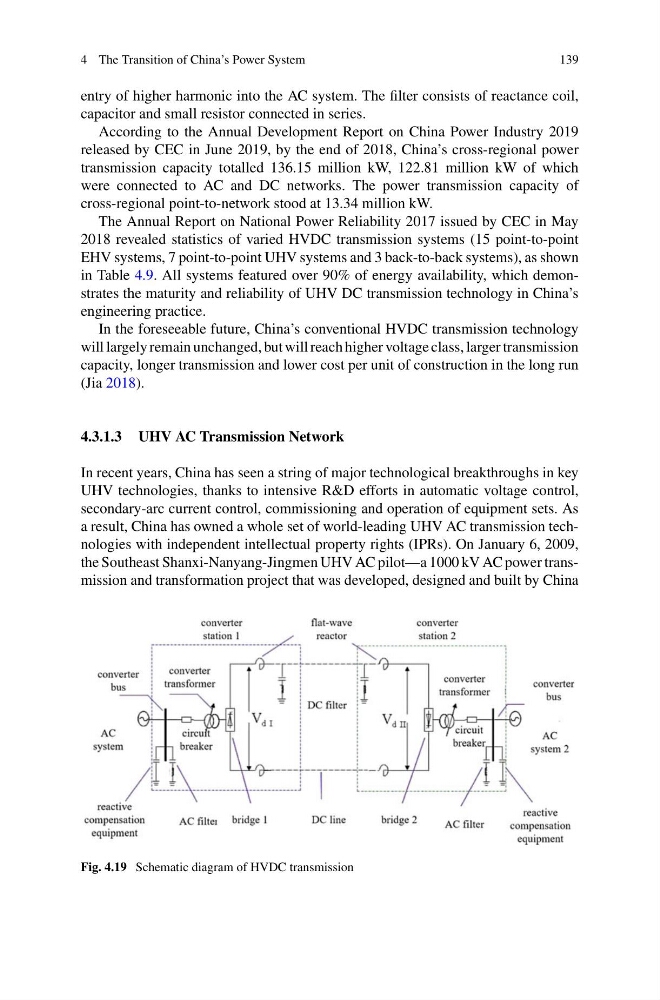
Fig. 4.19 Schematic diagram of HVDC transmission
139
entry of higher harmonic into the AC system. The filter consists of reactance coil,
capacitor and small resistor connected in series.
According to the Annual Development Report on China Power Industry 2019
released by CEC in June 2019, by the end of 2018, China’s cross-regional power
transmission capacity totalled 136.15 million kW, 122.81 million kW of which
were connected to AC and DC networks. The power transmission capacity of
cross-regional point-to-network stood at 13.34 million kW.
The Annual Report on National Power Reliability 2017 issued by CEC in May
2018 revealed statistics of varied HVDC transmission systems (15 point-to-point
EHV systems, 7 point-to-point UHV systems and 3 back-to-back systems), as shown
in Table 4.9. All systems featured over 90% of energy availability, which demonstrates the maturity and reliability of UHV DC transmission technology in China’s
engineering practice.
In the foreseeable future, China’s conventional HVDC transmission technology
will largely remain unchanged, but will reach higher voltage class, larger transmission
capacity, longer transmission and lower cost per unit of construction in the long run
(Jia 2018).
4.3.1.3 UHV AC Transmission Network
In recent years, China has seen a string of major technological breakthroughs in key
UHV technologies, thanks to intensive R&D efforts in automatic voltage control,
secondary-arc current control, commissioning and operation of equipment sets. As
a result, China has owned a whole set of world-leading UHV AC transmission technologies with independent intellectual property rights (IPRs). On January 6, 2009,
the Southeast Shanxi-Nanyang-Jingmen UHV AC pilot—a 1000 kV AC power transmission and transformation project that was developed, designed and built by China
Fig. 4.19 Schematic diagram of HVDC transmission