

90
S. Shimizu
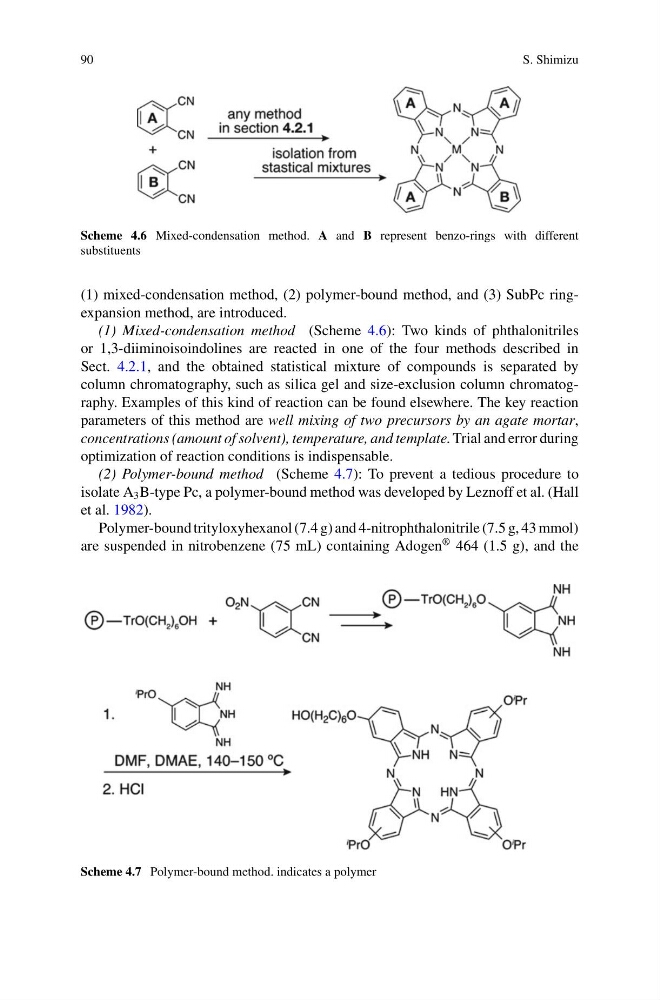
Scheme 4.6 Mixed-condensation method. A and B represent benzo-rings with different
substituents
(1) mixed-condensation method, (2) polymer-bound method, and (3) SubPc ringexpansion method, are introduced.
(1) Mixed-condensation method (Scheme 4.6): Two kinds of phthalonitriles
or 1,3-diiminoisoindolines are reacted in one of the four methods described in
Sect. 4.2.1, and the obtained statistical mixture of compounds is separated by
column chromatography, such as silica gel and size-exclusion column chromatography. Examples of this kind of reaction can be found elsewhere. The key reaction
parameters of this method are well mixing of two precursors by an agate mortar,
concentrations (amount of solvent), temperature, and template. Trial and error during
optimization of reaction conditions is indispensable.
(2) Polymer-bound method (Scheme 4.7): To prevent a tedious procedure to
isolate A 3 B-type Pc, a polymer-bound method was developed by Leznoff et al. (Hall
et al. 1982).
Polymer-bound trityloxyhexanol (7.4 g) and 4-nitrophthalonitrile (7.5 g, 43 mmol)
are suspended in nitrobenzene (75 mL) containing Adogen
® 464 (1.5 g), and the
Scheme 4.7 Polymer-bound method. indicates a polymer
S. Shimizu
Scheme 4.6 Mixed-condensation method. A and B represent benzo-rings with different
substituents
(1) mixed-condensation method, (2) polymer-bound method, and (3) SubPc ringexpansion method, are introduced.
(1) Mixed-condensation method (Scheme 4.6): Two kinds of phthalonitriles
or 1,3-diiminoisoindolines are reacted in one of the four methods described in
Sect. 4.2.1, and the obtained statistical mixture of compounds is separated by
column chromatography, such as silica gel and size-exclusion column chromatography. Examples of this kind of reaction can be found elsewhere. The key reaction
parameters of this method are well mixing of two precursors by an agate mortar,
concentrations (amount of solvent), temperature, and template. Trial and error during
optimization of reaction conditions is indispensable.
(2) Polymer-bound method (Scheme 4.7): To prevent a tedious procedure to
isolate A 3 B-type Pc, a polymer-bound method was developed by Leznoff et al. (Hall
et al. 1982).
Polymer-bound trityloxyhexanol (7.4 g) and 4-nitrophthalonitrile (7.5 g, 43 mmol)
are suspended in nitrobenzene (75 mL) containing Adogen
® 464 (1.5 g), and the
Scheme 4.7 Polymer-bound method. indicates a polymer