

74
J. Setsune
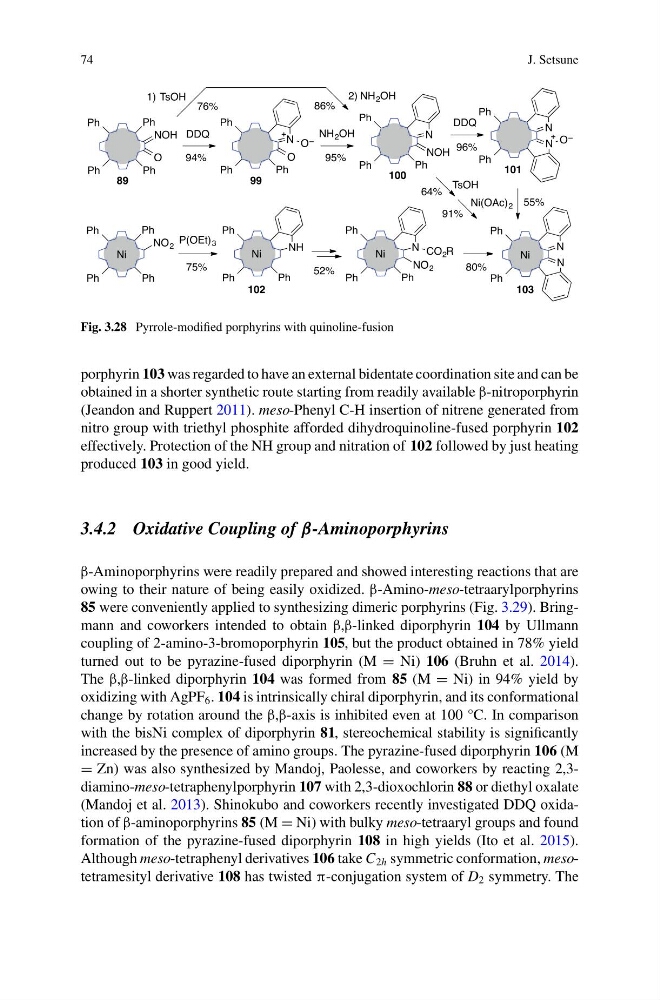
Fig. 3.28 Pyrrole-modified porphyrins with quinoline-fusion
porphyrin 103 was regarded to have an external bidentate coordination site and can be
obtained in a shorter synthetic route starting from readily available β-nitroporphyrin
(Jeandon and Ruppert 2011). meso-Phenyl C-H insertion of nitrene generated from
nitro group with triethyl phosphite afforded dihydroquinoline-fused porphyrin 102
effectively. Protection of the NH group and nitration of 102 followed by just heating
produced 103 in good yield.
3.4.2 Oxidative Coupling of β-Aminoporphyrins
β-Aminoporphyrins were readily prepared and showed interesting reactions that are
owing to their nature of being easily oxidized. β-Amino-meso-tetraarylporphyrins
85 were conveniently applied to synthesizing dimeric porphyrins (Fig. 3.29). Bringmann and coworkers intended to obtain β,β-linked diporphyrin 104 by Ullmann
coupling of 2-amino-3-bromoporphyrin 105, but the product obtained in 78% yield
turned out to be pyrazine-fused diporphyrin (M = Ni) 106 (Bruhn et al. 2014).
The β,β-linked diporphyrin 104 was formed from 85 (M = Ni) in 94% yield by
oxidizing with AgPF 6 . 104 is intrinsically chiral diporphyrin, and its conformational
change by rotation around the β,β-axis is inhibited even at 100 °C. In comparison
with the bisNi complex of diporphyrin 81, stereochemical stability is significantly
increased by the presence of amino groups. The pyrazine-fused diporphyrin 106 (M
= Zn) was also synthesized by Mandoj, Paolesse, and coworkers by reacting 2,3diamino-meso-tetraphenylporphyrin 107 with 2,3-dioxochlorin 88 or diethyl oxalate
(Mandoj et al. 2013). Shinokubo and coworkers recently investigated DDQ oxidation of β-aminoporphyrins 85 (M = Ni) with bulky meso-tetraaryl groups and found
formation of the pyrazine-fused diporphyrin 108 in high yields (Ito et al. 2015).
Although meso-tetraphenyl derivatives 106 take C 2h symmetric conformation, mesotetramesityl derivative 108 has twisted π-conjugation system of D 2 symmetry. The
J. Setsune
Fig. 3.28 Pyrrole-modified porphyrins with quinoline-fusion
porphyrin 103 was regarded to have an external bidentate coordination site and can be
obtained in a shorter synthetic route starting from readily available β-nitroporphyrin
(Jeandon and Ruppert 2011). meso-Phenyl C-H insertion of nitrene generated from
nitro group with triethyl phosphite afforded dihydroquinoline-fused porphyrin 102
effectively. Protection of the NH group and nitration of 102 followed by just heating
produced 103 in good yield.
3.4.2 Oxidative Coupling of β-Aminoporphyrins
β-Aminoporphyrins were readily prepared and showed interesting reactions that are
owing to their nature of being easily oxidized. β-Amino-meso-tetraarylporphyrins
85 were conveniently applied to synthesizing dimeric porphyrins (Fig. 3.29). Bringmann and coworkers intended to obtain β,β-linked diporphyrin 104 by Ullmann
coupling of 2-amino-3-bromoporphyrin 105, but the product obtained in 78% yield
turned out to be pyrazine-fused diporphyrin (M = Ni) 106 (Bruhn et al. 2014).
The β,β-linked diporphyrin 104 was formed from 85 (M = Ni) in 94% yield by
oxidizing with AgPF 6 . 104 is intrinsically chiral diporphyrin, and its conformational
change by rotation around the β,β-axis is inhibited even at 100 °C. In comparison
with the bisNi complex of diporphyrin 81, stereochemical stability is significantly
increased by the presence of amino groups. The pyrazine-fused diporphyrin 106 (M
= Zn) was also synthesized by Mandoj, Paolesse, and coworkers by reacting 2,3diamino-meso-tetraphenylporphyrin 107 with 2,3-dioxochlorin 88 or diethyl oxalate
(Mandoj et al. 2013). Shinokubo and coworkers recently investigated DDQ oxidation of β-aminoporphyrins 85 (M = Ni) with bulky meso-tetraaryl groups and found
formation of the pyrazine-fused diporphyrin 108 in high yields (Ito et al. 2015).
Although meso-tetraphenyl derivatives 106 take C 2h symmetric conformation, mesotetramesityl derivative 108 has twisted π-conjugation system of D 2 symmetry. The