

574
S. Yagi
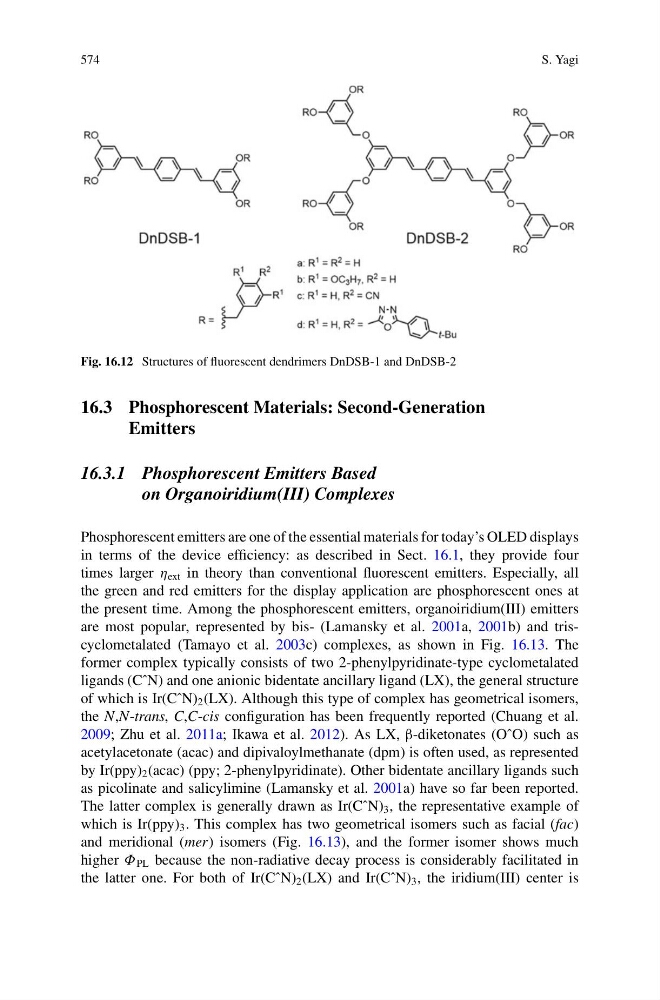
Fig. 16.12 Structures of fluorescent dendrimers DnDSB-1 and DnDSB-2
16.3 Phosphorescent Materials: Second-Generation
Emitters
16.3.1 Phosphorescent Emitters Based
on Organoiridium(III) Complexes
Phosphorescent emitters are one of the essential materials for today’s OLED displays
in terms of the device efficiency: as described in Sect. 16.1, they provide four
times larger η ext in theory than conventional fluorescent emitters. Especially, all
the green and red emitters for the display application are phosphorescent ones at
the present time. Among the phosphorescent emitters, organoiridium(III) emitters
are most popular, represented by bis- (Lamansky et al. 2001a, 2001b) and triscyclometalated (Tamayo et al. 2003c) complexes, as shown in Fig. 16.13. The
former complex typically consists of two 2-phenylpyridinate-type cyclometalated
ligands (CˆN) and one anionic bidentate ancillary ligand (LX), the general structure
of which is Ir(CˆN) 2 (LX). Although this type of complex has geometrical isomers,
the N,N-trans, C,C-cis configuration has been frequently reported (Chuang et al.
2009; Zhu et al. 2011a; Ikawa et al. 2012). As LX, β-diketonates (OˆO) such as
acetylacetonate (acac) and dipivaloylmethanate (dpm) is often used, as represented
by Ir(ppy) 2 (acac) (ppy; 2-phenylpyridinate). Other bidentate ancillary ligands such
as picolinate and salicylimine (Lamansky et al. 2001a) have so far been reported.
The latter complex is generally drawn as Ir(CˆN) 3 , the representative example of
which is Ir(ppy) 3 . This complex has two geometrical isomers such as facial (fac)
and meridional (mer) isomers (Fig. 16.13), and the former isomer shows much
higher Φ PL because the non-radiative decay process is considerably facilitated in
the latter one. For both of Ir(CˆN) 2 (LX) and Ir(CˆN) 3 , the iridium(III) center is