

2 Squaraine Dyes
41
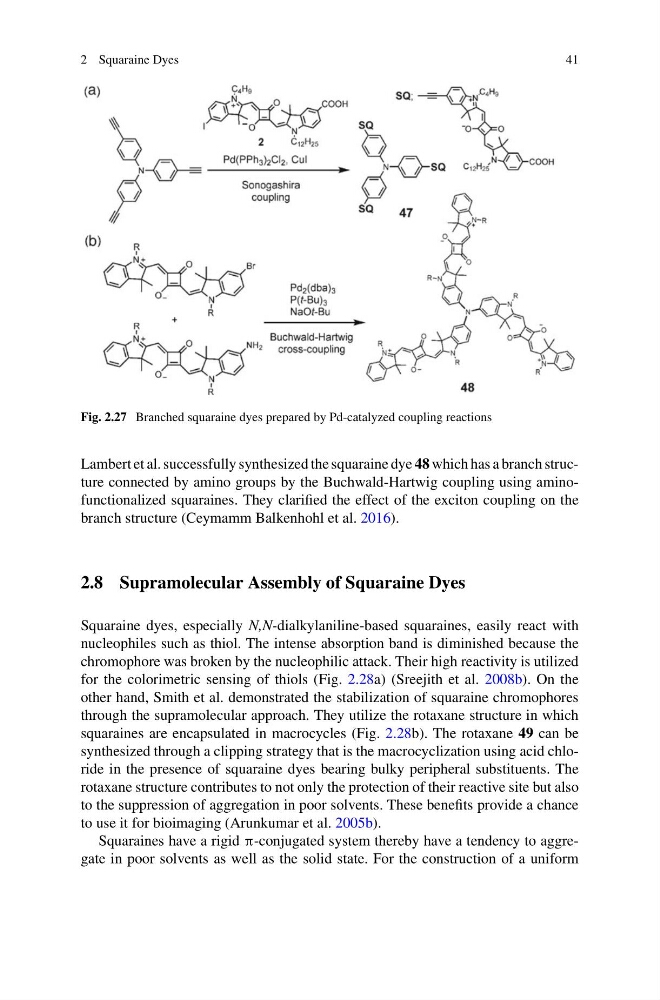
Fig. 2.27 Branched squaraine dyes prepared by Pd-catalyzed coupling reactions
Lambert et al. successfully synthesized the squaraine dye 48 which has a branch structure connected by amino groups by the Buchwald-Hartwig coupling using aminofunctionalized squaraines. They clarified the effect of the exciton coupling on the
branch structure (Ceymamm Balkenhohl et al. 2016).
2.8 Supramolecular Assembly of Squaraine Dyes
Squaraine dyes, especially N,N-dialkylaniline-based squaraines, easily react with
nucleophiles such as thiol. The intense absorption band is diminished because the
chromophore was broken by the nucleophilic attack. Their high reactivity is utilized
for the colorimetric sensing of thiols (Fig. 2.28a) (Sreejith et al. 2008b). On the
other hand, Smith et al. demonstrated the stabilization of squaraine chromophores
through the supramolecular approach. They utilize the rotaxane structure in which
squaraines are encapsulated in macrocycles (Fig. 2.28b). The rotaxane 49 can be
synthesized through a clipping strategy that is the macrocyclization using acid chloride in the presence of squaraine dyes bearing bulky peripheral substituents. The
rotaxane structure contributes to not only the protection of their reactive site but also
to the suppression of aggregation in poor solvents. These benefits provide a chance
to use it for bioimaging (Arunkumar et al. 2005b).
Squaraines have a rigid π-conjugated system thereby have a tendency to aggregate in poor solvents as well as the solid state. For the construction of a uniform
41
Fig. 2.27 Branched squaraine dyes prepared by Pd-catalyzed coupling reactions
Lambert et al. successfully synthesized the squaraine dye 48 which has a branch structure connected by amino groups by the Buchwald-Hartwig coupling using aminofunctionalized squaraines. They clarified the effect of the exciton coupling on the
branch structure (Ceymamm Balkenhohl et al. 2016).
2.8 Supramolecular Assembly of Squaraine Dyes
Squaraine dyes, especially N,N-dialkylaniline-based squaraines, easily react with
nucleophiles such as thiol. The intense absorption band is diminished because the
chromophore was broken by the nucleophilic attack. Their high reactivity is utilized
for the colorimetric sensing of thiols (Fig. 2.28a) (Sreejith et al. 2008b). On the
other hand, Smith et al. demonstrated the stabilization of squaraine chromophores
through the supramolecular approach. They utilize the rotaxane structure in which
squaraines are encapsulated in macrocycles (Fig. 2.28b). The rotaxane 49 can be
synthesized through a clipping strategy that is the macrocyclization using acid chloride in the presence of squaraine dyes bearing bulky peripheral substituents. The
rotaxane structure contributes to not only the protection of their reactive site but also
to the suppression of aggregation in poor solvents. These benefits provide a chance
to use it for bioimaging (Arunkumar et al. 2005b).
Squaraines have a rigid π-conjugated system thereby have a tendency to aggregate in poor solvents as well as the solid state. For the construction of a uniform