

2 Squaraine Dyes
37
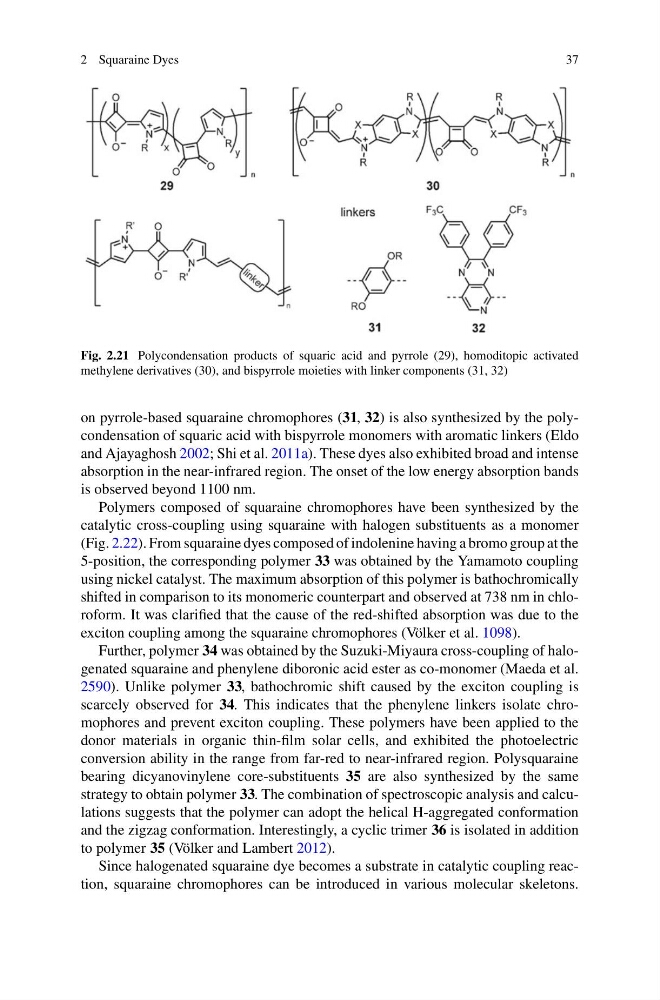
Fig. 2.21 Polycondensation products of squaric acid and pyrrole (29), homoditopic activated
methylene derivatives (30), and bispyrrole moieties with linker components (31, 32)
on pyrrole-based squaraine chromophores (31, 32) is also synthesized by the polycondensation of squaric acid with bispyrrole monomers with aromatic linkers (Eldo
and Ajayaghosh 2002; Shi et al. 2011a). These dyes also exhibited broad and intense
absorption in the near-infrared region. The onset of the low energy absorption bands
is observed beyond 1100 nm.
Polymers composed of squaraine chromophores have been synthesized by the
catalytic cross-coupling using squaraine with halogen substituents as a monomer
(Fig. 2.22). From squaraine dyes composed of indolenine having a bromo group at the
5-position, the corresponding polymer 33 was obtained by the Yamamoto coupling
using nickel catalyst. The maximum absorption of this polymer is bathochromically
shifted in comparison to its monomeric counterpart and observed at 738 nm in chloroform. It was clarified that the cause of the red-shifted absorption was due to the
exciton coupling among the squaraine chromophores (Völker et al. 1098).
Further, polymer 34 was obtained by the Suzuki-Miyaura cross-coupling of halogenated squaraine and phenylene diboronic acid ester as co-monomer (Maeda et al.
2590). Unlike polymer 33, bathochromic shift caused by the exciton coupling is
scarcely observed for 34. This indicates that the phenylene linkers isolate chromophores and prevent exciton coupling. These polymers have been applied to the
donor materials in organic thin-film solar cells, and exhibited the photoelectric
conversion ability in the range from far-red to near-infrared region. Polysquaraine
bearing dicyanovinylene core-substituents 35 are also synthesized by the same
strategy to obtain polymer 33. The combination of spectroscopic analysis and calculations suggests that the polymer can adopt the helical H-aggregated conformation
and the zigzag conformation. Interestingly, a cyclic trimer 36 is isolated in addition
to polymer 35 (Völker and Lambert 2012).
Since halogenated squaraine dye becomes a substrate in catalytic coupling reaction, squaraine chromophores can be introduced in various molecular skeletons.
37
Fig. 2.21 Polycondensation products of squaric acid and pyrrole (29), homoditopic activated
methylene derivatives (30), and bispyrrole moieties with linker components (31, 32)
on pyrrole-based squaraine chromophores (31, 32) is also synthesized by the polycondensation of squaric acid with bispyrrole monomers with aromatic linkers (Eldo
and Ajayaghosh 2002; Shi et al. 2011a). These dyes also exhibited broad and intense
absorption in the near-infrared region. The onset of the low energy absorption bands
is observed beyond 1100 nm.
Polymers composed of squaraine chromophores have been synthesized by the
catalytic cross-coupling using squaraine with halogen substituents as a monomer
(Fig. 2.22). From squaraine dyes composed of indolenine having a bromo group at the
5-position, the corresponding polymer 33 was obtained by the Yamamoto coupling
using nickel catalyst. The maximum absorption of this polymer is bathochromically
shifted in comparison to its monomeric counterpart and observed at 738 nm in chloroform. It was clarified that the cause of the red-shifted absorption was due to the
exciton coupling among the squaraine chromophores (Völker et al. 1098).
Further, polymer 34 was obtained by the Suzuki-Miyaura cross-coupling of halogenated squaraine and phenylene diboronic acid ester as co-monomer (Maeda et al.
2590). Unlike polymer 33, bathochromic shift caused by the exciton coupling is
scarcely observed for 34. This indicates that the phenylene linkers isolate chromophores and prevent exciton coupling. These polymers have been applied to the
donor materials in organic thin-film solar cells, and exhibited the photoelectric
conversion ability in the range from far-red to near-infrared region. Polysquaraine
bearing dicyanovinylene core-substituents 35 are also synthesized by the same
strategy to obtain polymer 33. The combination of spectroscopic analysis and calculations suggests that the polymer can adopt the helical H-aggregated conformation
and the zigzag conformation. Interestingly, a cyclic trimer 36 is isolated in addition
to polymer 35 (Völker and Lambert 2012).
Since halogenated squaraine dye becomes a substrate in catalytic coupling reaction, squaraine chromophores can be introduced in various molecular skeletons.