

36
T. Maeda
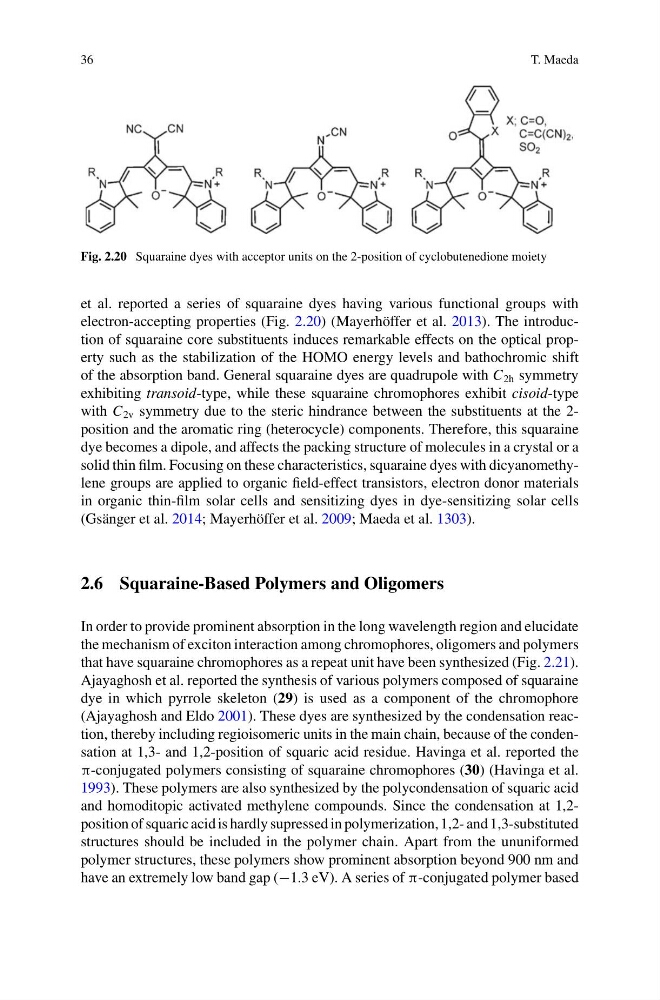
Fig. 2.20 Squaraine dyes with acceptor units on the 2-position of cyclobutenedione moiety
et al. reported a series of squaraine dyes having various functional groups with
electron-accepting properties (Fig. 2.20) (Mayerhöffer et al. 2013). The introduction of squaraine core substituents induces remarkable effects on the optical property such as the stabilization of the HOMO energy levels and bathochromic shift
of the absorption band. General squaraine dyes are quadrupole with C 2h symmetry
exhibiting transoid-type, while these squaraine chromophores exhibit cisoid-type
with C 2v symmetry due to the steric hindrance between the substituents at the 2position and the aromatic ring (heterocycle) components. Therefore, this squaraine
dye becomes a dipole, and affects the packing structure of molecules in a crystal or a
solid thin film. Focusing on these characteristics, squaraine dyes with dicyanomethylene groups are applied to organic field-effect transistors, electron donor materials
in organic thin-film solar cells and sensitizing dyes in dye-sensitizing solar cells
(Gsänger et al. 2014; Mayerhöffer et al. 2009; Maeda et al. 1303).
2.6 Squaraine-Based Polymers and Oligomers
In order to provide prominent absorption in the long wavelength region and elucidate
the mechanism of exciton interaction among chromophores, oligomers and polymers
that have squaraine chromophores as a repeat unit have been synthesized (Fig. 2.21).
Ajayaghosh et al. reported the synthesis of various polymers composed of squaraine
dye in which pyrrole skeleton (29) is used as a component of the chromophore
(Ajayaghosh and Eldo 2001). These dyes are synthesized by the condensation reaction, thereby including regioisomeric units in the main chain, because of the condensation at 1,3- and 1,2-position of squaric acid residue. Havinga et al. reported the
π-conjugated polymers consisting of squaraine chromophores (30) (Havinga et al.
1993). These polymers are also synthesized by the polycondensation of squaric acid
and homoditopic activated methylene compounds. Since the condensation at 1,2position of squaric acid is hardly supressed in polymerization, 1,2- and 1,3-substituted
structures should be included in the polymer chain. Apart from the ununiformed
polymer structures, these polymers show prominent absorption beyond 900 nm and
have an extremely low band gap (−1.3 eV). A series of π-conjugated polymer based
T. Maeda
Fig. 2.20 Squaraine dyes with acceptor units on the 2-position of cyclobutenedione moiety
et al. reported a series of squaraine dyes having various functional groups with
electron-accepting properties (Fig. 2.20) (Mayerhöffer et al. 2013). The introduction of squaraine core substituents induces remarkable effects on the optical property such as the stabilization of the HOMO energy levels and bathochromic shift
of the absorption band. General squaraine dyes are quadrupole with C 2h symmetry
exhibiting transoid-type, while these squaraine chromophores exhibit cisoid-type
with C 2v symmetry due to the steric hindrance between the substituents at the 2position and the aromatic ring (heterocycle) components. Therefore, this squaraine
dye becomes a dipole, and affects the packing structure of molecules in a crystal or a
solid thin film. Focusing on these characteristics, squaraine dyes with dicyanomethylene groups are applied to organic field-effect transistors, electron donor materials
in organic thin-film solar cells and sensitizing dyes in dye-sensitizing solar cells
(Gsänger et al. 2014; Mayerhöffer et al. 2009; Maeda et al. 1303).
2.6 Squaraine-Based Polymers and Oligomers
In order to provide prominent absorption in the long wavelength region and elucidate
the mechanism of exciton interaction among chromophores, oligomers and polymers
that have squaraine chromophores as a repeat unit have been synthesized (Fig. 2.21).
Ajayaghosh et al. reported the synthesis of various polymers composed of squaraine
dye in which pyrrole skeleton (29) is used as a component of the chromophore
(Ajayaghosh and Eldo 2001). These dyes are synthesized by the condensation reaction, thereby including regioisomeric units in the main chain, because of the condensation at 1,3- and 1,2-position of squaric acid residue. Havinga et al. reported the
π-conjugated polymers consisting of squaraine chromophores (30) (Havinga et al.
1993). These polymers are also synthesized by the polycondensation of squaric acid
and homoditopic activated methylene compounds. Since the condensation at 1,2position of squaric acid is hardly supressed in polymerization, 1,2- and 1,3-substituted
structures should be included in the polymer chain. Apart from the ununiformed
polymer structures, these polymers show prominent absorption beyond 900 nm and
have an extremely low band gap (−1.3 eV). A series of π-conjugated polymer based