

414
Y. Kubo
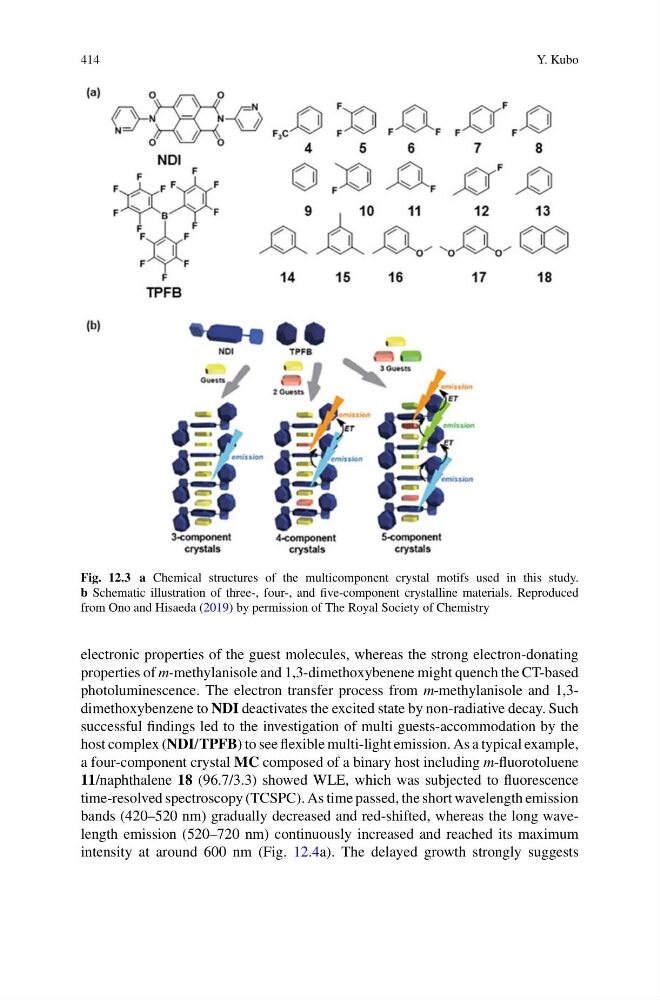
Fig. 12.3 a Chemical structures of the multicomponent crystal motifs used in this study.
b Schematic illustration of three-, four-, and five-component crystalline materials. Reproduced
from Ono and Hisaeda (2019) by permission of The Royal Society of Chemistry
electronic properties of the guest molecules, whereas the strong electron-donating
properties of m-methylanisole and 1,3-dimethoxybenene might quench the CT-based
photoluminescence. The electron transfer process from m-methylanisole and 1,3dimethoxybenzene to NDI deactivates the excited state by non-radiative decay. Such
successful findings led to the investigation of multi guests-accommodation by the
host complex (NDI/TPFB) to see flexible multi-light emission. As a typical example,
a four-component crystal MC composed of a binary host including m-fluorotoluene
11/naphthalene 18 (96.7/3.3) showed WLE, which was subjected to fluorescence
time-resolved spectroscopy (TCSPC). As time passed, the short wavelength emission
bands (420–520 nm) gradually decreased and red-shifted, whereas the long wavelength emission (520–720 nm) continuously increased and reached its maximum
intensity at around 600 nm (Fig. 12.4a). The delayed growth strongly suggests
Y. Kubo
Fig. 12.3 a Chemical structures of the multicomponent crystal motifs used in this study.
b Schematic illustration of three-, four-, and five-component crystalline materials. Reproduced
from Ono and Hisaeda (2019) by permission of The Royal Society of Chemistry
electronic properties of the guest molecules, whereas the strong electron-donating
properties of m-methylanisole and 1,3-dimethoxybenene might quench the CT-based
photoluminescence. The electron transfer process from m-methylanisole and 1,3dimethoxybenzene to NDI deactivates the excited state by non-radiative decay. Such
successful findings led to the investigation of multi guests-accommodation by the
host complex (NDI/TPFB) to see flexible multi-light emission. As a typical example,
a four-component crystal MC composed of a binary host including m-fluorotoluene
11/naphthalene 18 (96.7/3.3) showed WLE, which was subjected to fluorescence
time-resolved spectroscopy (TCSPC). As time passed, the short wavelength emission
bands (420–520 nm) gradually decreased and red-shifted, whereas the long wavelength emission (520–720 nm) continuously increased and reached its maximum
intensity at around 600 nm (Fig. 12.4a). The delayed growth strongly suggests