

34
T. Maeda
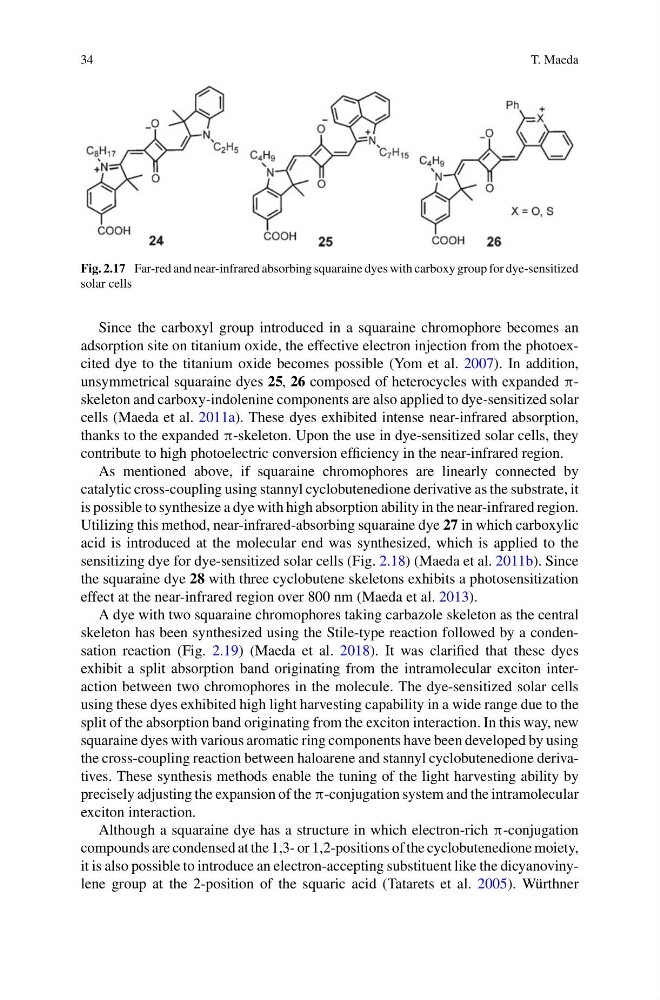
Fig. 2.17 Far-red and near-infrared absorbing squaraine dyes with carboxy group for dye-sensitized
solar cells
Since the carboxyl group introduced in a squaraine chromophore becomes an
adsorption site on titanium oxide, the effective electron injection from the photoexcited dye to the titanium oxide becomes possible (Yom et al. 2007). In addition,
unsymmetrical squaraine dyes 25, 26 composed of heterocycles with expanded πskeleton and carboxy-indolenine components are also applied to dye-sensitized solar
cells (Maeda et al. 2011a). These dyes exhibited intense near-infrared absorption,
thanks to the expanded π-skeleton. Upon the use in dye-sensitized solar cells, they
contribute to high photoelectric conversion efficiency in the near-infrared region.
As mentioned above, if squaraine chromophores are linearly connected by
catalytic cross-coupling using stannyl cyclobutenedione derivative as the substrate, it
is possible to synthesize a dye with high absorption ability in the near-infrared region.
Utilizing this method, near-infrared-absorbing squaraine dye 27 in which carboxylic
acid is introduced at the molecular end was synthesized, which is applied to the
sensitizing dye for dye-sensitized solar cells (Fig. 2.18) (Maeda et al. 2011b). Since
the squaraine dye 28 with three cyclobutene skeletons exhibits a photosensitization
effect at the near-infrared region over 800 nm (Maeda et al. 2013).
A dye with two squaraine chromophores taking carbazole skeleton as the central
skeleton has been synthesized using the Stile-type reaction followed by a condensation reaction (Fig. 2.19) (Maeda et al. 2018). It was clarified that these dyes
exhibit a split absorption band originating from the intramolecular exciton interaction between two chromophores in the molecule. The dye-sensitized solar cells
using these dyes exhibited high light harvesting capability in a wide range due to the
split of the absorption band originating from the exciton interaction. In this way, new
squaraine dyes with various aromatic ring components have been developed by using
the cross-coupling reaction between haloarene and stannyl cyclobutenedione derivatives. These synthesis methods enable the tuning of the light harvesting ability by
precisely adjusting the expansion of the π-conjugation system and the intramolecular
exciton interaction.
Although a squaraine dye has a structure in which electron-rich π-conjugation
compounds are condensed at the 1,3- or 1,2-positions of the cyclobutenedione moiety,
it is also possible to introduce an electron-accepting substituent like the dicyanovinylene group at the 2-position of the squaric acid (Tatarets et al. 2005). Würthner
T. Maeda
Fig. 2.17 Far-red and near-infrared absorbing squaraine dyes with carboxy group for dye-sensitized
solar cells
Since the carboxyl group introduced in a squaraine chromophore becomes an
adsorption site on titanium oxide, the effective electron injection from the photoexcited dye to the titanium oxide becomes possible (Yom et al. 2007). In addition,
unsymmetrical squaraine dyes 25, 26 composed of heterocycles with expanded πskeleton and carboxy-indolenine components are also applied to dye-sensitized solar
cells (Maeda et al. 2011a). These dyes exhibited intense near-infrared absorption,
thanks to the expanded π-skeleton. Upon the use in dye-sensitized solar cells, they
contribute to high photoelectric conversion efficiency in the near-infrared region.
As mentioned above, if squaraine chromophores are linearly connected by
catalytic cross-coupling using stannyl cyclobutenedione derivative as the substrate, it
is possible to synthesize a dye with high absorption ability in the near-infrared region.
Utilizing this method, near-infrared-absorbing squaraine dye 27 in which carboxylic
acid is introduced at the molecular end was synthesized, which is applied to the
sensitizing dye for dye-sensitized solar cells (Fig. 2.18) (Maeda et al. 2011b). Since
the squaraine dye 28 with three cyclobutene skeletons exhibits a photosensitization
effect at the near-infrared region over 800 nm (Maeda et al. 2013).
A dye with two squaraine chromophores taking carbazole skeleton as the central
skeleton has been synthesized using the Stile-type reaction followed by a condensation reaction (Fig. 2.19) (Maeda et al. 2018). It was clarified that these dyes
exhibit a split absorption band originating from the intramolecular exciton interaction between two chromophores in the molecule. The dye-sensitized solar cells
using these dyes exhibited high light harvesting capability in a wide range due to the
split of the absorption band originating from the exciton interaction. In this way, new
squaraine dyes with various aromatic ring components have been developed by using
the cross-coupling reaction between haloarene and stannyl cyclobutenedione derivatives. These synthesis methods enable the tuning of the light harvesting ability by
precisely adjusting the expansion of the π-conjugation system and the intramolecular
exciton interaction.
Although a squaraine dye has a structure in which electron-rich π-conjugation
compounds are condensed at the 1,3- or 1,2-positions of the cyclobutenedione moiety,
it is also possible to introduce an electron-accepting substituent like the dicyanovinylene group at the 2-position of the squaric acid (Tatarets et al. 2005). Würthner