

294
T. Ishi-i
N
O
Et 2 N
32
em 660 nm, F 0.0047 (PBS, pH 7.4)
O
N
O
Et 2 N
O
N
O
NEt 2
O
O
Pd
O
O
Pd
O
CO
Nonfluorescence
Strong Fluorescence
(60-fold enhancement)
31
O
Et 2 N
29
O
em 645 nm (PBS, pH 7.4)
O
+
NEt 2
O
Et 2 N
30
O
O
NEt 2
SO 3 H
SO 2
em 450 nm (PBS, pH 7.4)
O
27
16 GM at 830 nm,
em 702 nm (PBS (50% DMSO), pH 7.4)
O
O
CN
NC
O
OH
CN
NC
cysteine
28
Red fluorescence
Strong Fluorescence
(35-fold enhancement)
O
25
CN
H 2 S
NC
N 3
O
26
CN
NC
NH 2
Nonfluorescence
Strong Fluorescence
(65-fold enhancement)
F 50 GM at 820 nm, em 660 nm (DMSO),
em 670 nm (PBS (50% DMSO), pH 7.4)
Nonfluorescence
Blue fluorescence
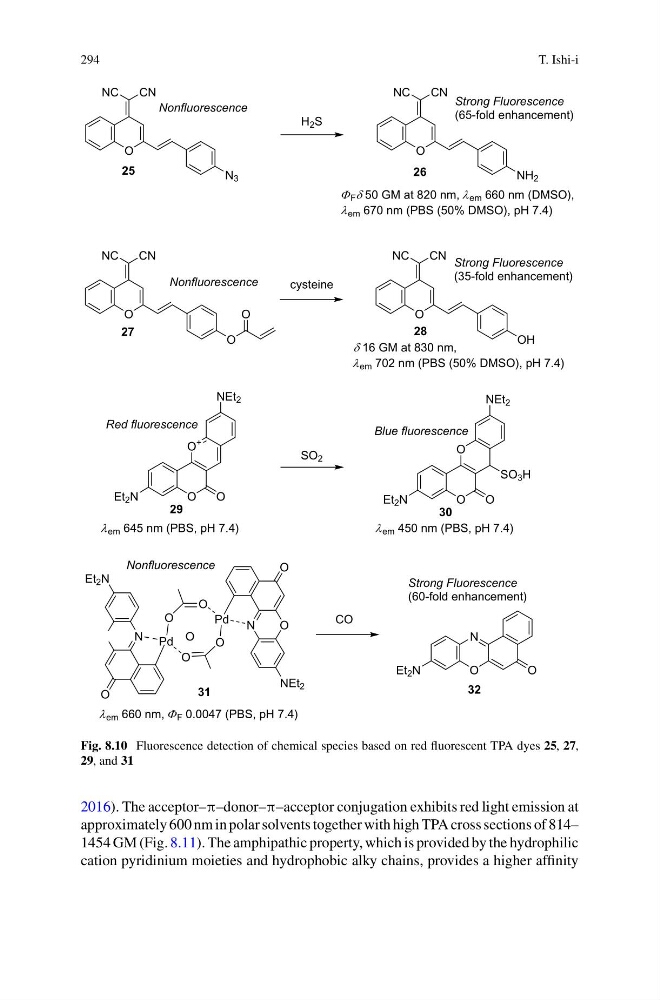
Fig. 8.10 Fluorescence detection of chemical species based on red fluorescent TPA dyes 25, 27,
29, and 31
2016). The acceptor–π–donor–π–acceptor conjugation exhibits red light emission at
approximately 600 nm in polar solvents together with high TPA cross sections of 814–
1454 GM (Fig. 8.11). The amphipathic property, which is provided by the hydrophilic
cation pyridinium moieties and hydrophobic alky chains, provides a higher affinity
T. Ishi-i
N
O
Et 2 N
32
em 660 nm, F 0.0047 (PBS, pH 7.4)
O
N
O
Et 2 N
O
N
O
NEt 2
O
O
Pd
O
O
Pd
O
CO
Nonfluorescence
Strong Fluorescence
(60-fold enhancement)
31
O
Et 2 N
29
O
em 645 nm (PBS, pH 7.4)
O
+
NEt 2
O
Et 2 N
30
O
O
NEt 2
SO 3 H
SO 2
em 450 nm (PBS, pH 7.4)
O
27
16 GM at 830 nm,
em 702 nm (PBS (50% DMSO), pH 7.4)
O
O
CN
NC
O
OH
CN
NC
cysteine
28
Red fluorescence
Strong Fluorescence
(35-fold enhancement)
O
25
CN
H 2 S
NC
N 3
O
26
CN
NC
NH 2
Nonfluorescence
Strong Fluorescence
(65-fold enhancement)
F 50 GM at 820 nm, em 660 nm (DMSO),
em 670 nm (PBS (50% DMSO), pH 7.4)
Nonfluorescence
Blue fluorescence
Fig. 8.10 Fluorescence detection of chemical species based on red fluorescent TPA dyes 25, 27,
29, and 31
2016). The acceptor–π–donor–π–acceptor conjugation exhibits red light emission at
approximately 600 nm in polar solvents together with high TPA cross sections of 814–
1454 GM (Fig. 8.11). The amphipathic property, which is provided by the hydrophilic
cation pyridinium moieties and hydrophobic alky chains, provides a higher affinity