

238
S. Matsumoto and J. Hwang
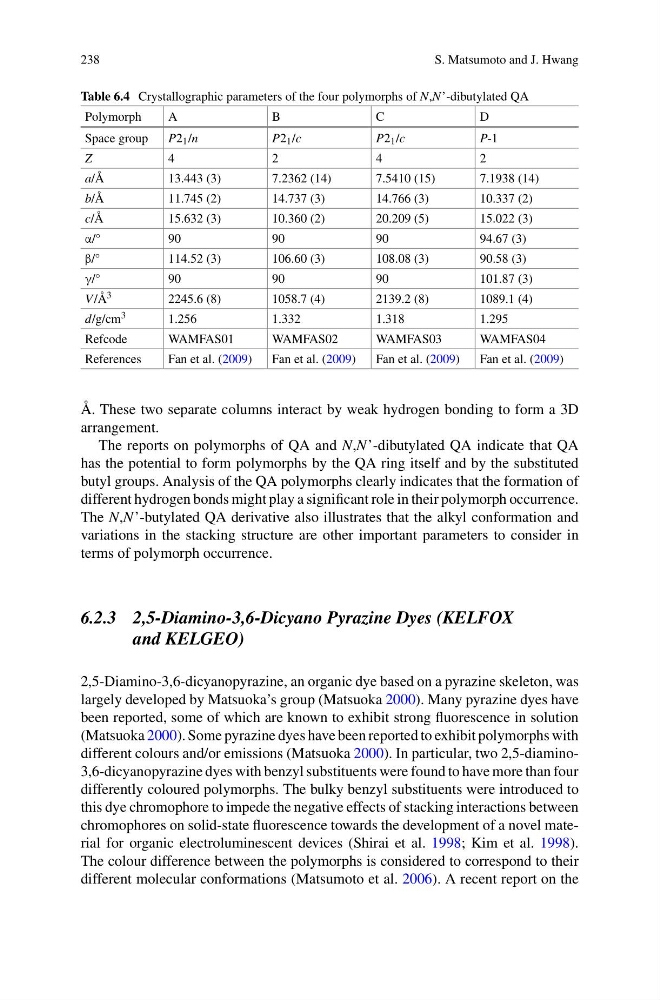
Table 6.4 Crystallographic parameters of the four polymorphs of N,N’-dibutylated QA
Polymorph
A
B
C
D
Space group
P2 1 /n
P2 1 /c
P2 1 /c
P-1
Z
4
2
4
2
a/Å
13.443 (3)
7.2362 (14)
7.5410 (15)
7.1938 (14)
b/Å
11.745 (2)
14.737 (3)
14.766 (3)
10.337 (2)
c/Å
15.632 (3)
10.360 (2)
20.209 (5)
15.022 (3)
α/°
90
90
90
94.67 (3)
β/°
114.52 (3)
106.60 (3)
108.08 (3)
90.58 (3)
γ/°
90
90
90
101.87 (3)
V /Å 3
2245.6 (8)
1058.7 (4)
2139.2 (8)
1089.1 (4)
d/g/cm 3
1.256
1.332
1.318
1.295
Refcode
WAMFAS01
WAMFAS02
WAMFAS03
WAMFAS04
References
Fan et al. (2009)
Fan et al. (2009)
Fan et al. (2009)
Fan et al. (2009)
Å. These two separate columns interact by weak hydrogen bonding to form a 3D
arrangement.
The reports on polymorphs of QA and N,N’-dibutylated QA indicate that QA
has the potential to form polymorphs by the QA ring itself and by the substituted
butyl groups. Analysis of the QA polymorphs clearly indicates that the formation of
different hydrogen bonds might play a significant role in their polymorph occurrence.
The N,N’-butylated QA derivative also illustrates that the alkyl conformation and
variations in the stacking structure are other important parameters to consider in
terms of polymorph occurrence.
6.2.3 2,5-Diamino-3,6-Dicyano Pyrazine Dyes (KELFOX
and KELGEO)
2,5-Diamino-3,6-dicyanopyrazine, an organic dye based on a pyrazine skeleton, was
largely developed by Matsuoka’s group (Matsuoka 2000). Many pyrazine dyes have
been reported, some of which are known to exhibit strong fluorescence in solution
(Matsuoka 2000). Some pyrazine dyes have been reported to exhibit polymorphs with
different colours and/or emissions (Matsuoka 2000). In particular, two 2,5-diamino3,6-dicyanopyrazine dyes with benzyl substituents were found to have more than four
differently coloured polymorphs. The bulky benzyl substituents were introduced to
this dye chromophore to impede the negative effects of stacking interactions between
chromophores on solid-state fluorescence towards the development of a novel material for organic electroluminescent devices (Shirai et al. 1998; Kim et al. 1998).
The colour difference between the polymorphs is considered to correspond to their
different molecular conformations (Matsumoto et al. 2006). A recent report on the
S. Matsumoto and J. Hwang
Table 6.4 Crystallographic parameters of the four polymorphs of N,N’-dibutylated QA
Polymorph
A
B
C
D
Space group
P2 1 /n
P2 1 /c
P2 1 /c
P-1
Z
4
2
4
2
a/Å
13.443 (3)
7.2362 (14)
7.5410 (15)
7.1938 (14)
b/Å
11.745 (2)
14.737 (3)
14.766 (3)
10.337 (2)
c/Å
15.632 (3)
10.360 (2)
20.209 (5)
15.022 (3)
α/°
90
90
90
94.67 (3)
β/°
114.52 (3)
106.60 (3)
108.08 (3)
90.58 (3)
γ/°
90
90
90
101.87 (3)
V /Å 3
2245.6 (8)
1058.7 (4)
2139.2 (8)
1089.1 (4)
d/g/cm 3
1.256
1.332
1.318
1.295
Refcode
WAMFAS01
WAMFAS02
WAMFAS03
WAMFAS04
References
Fan et al. (2009)
Fan et al. (2009)
Fan et al. (2009)
Fan et al. (2009)
Å. These two separate columns interact by weak hydrogen bonding to form a 3D
arrangement.
The reports on polymorphs of QA and N,N’-dibutylated QA indicate that QA
has the potential to form polymorphs by the QA ring itself and by the substituted
butyl groups. Analysis of the QA polymorphs clearly indicates that the formation of
different hydrogen bonds might play a significant role in their polymorph occurrence.
The N,N’-butylated QA derivative also illustrates that the alkyl conformation and
variations in the stacking structure are other important parameters to consider in
terms of polymorph occurrence.
6.2.3 2,5-Diamino-3,6-Dicyano Pyrazine Dyes (KELFOX
and KELGEO)
2,5-Diamino-3,6-dicyanopyrazine, an organic dye based on a pyrazine skeleton, was
largely developed by Matsuoka’s group (Matsuoka 2000). Many pyrazine dyes have
been reported, some of which are known to exhibit strong fluorescence in solution
(Matsuoka 2000). Some pyrazine dyes have been reported to exhibit polymorphs with
different colours and/or emissions (Matsuoka 2000). In particular, two 2,5-diamino3,6-dicyanopyrazine dyes with benzyl substituents were found to have more than four
differently coloured polymorphs. The bulky benzyl substituents were introduced to
this dye chromophore to impede the negative effects of stacking interactions between
chromophores on solid-state fluorescence towards the development of a novel material for organic electroluminescent devices (Shirai et al. 1998; Kim et al. 1998).
The colour difference between the polymorphs is considered to correspond to their
different molecular conformations (Matsumoto et al. 2006). A recent report on the