

188
Y. Kubota
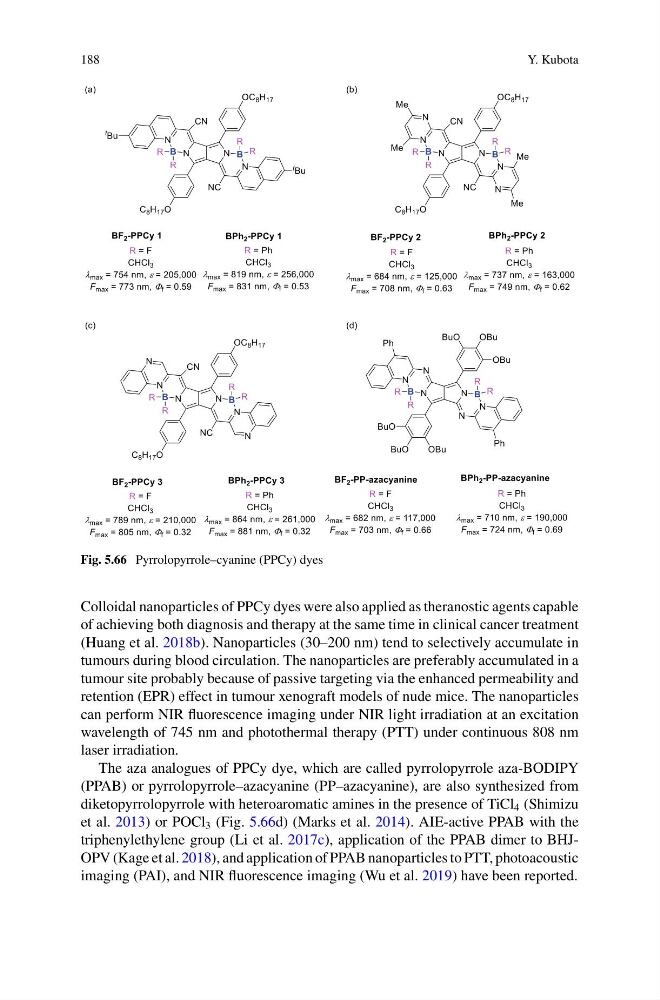
Fig. 5.66 Pyrrolopyrrole–cyanine (PPCy) dyes
Colloidal nanoparticles of PPCy dyes were also applied as theranostic agents capable
of achieving both diagnosis and therapy at the same time in clinical cancer treatment
(Huang et al. 2018b). Nanoparticles (30–200 nm) tend to selectively accumulate in
tumours during blood circulation. The nanoparticles are preferably accumulated in a
tumour site probably because of passive targeting via the enhanced permeability and
retention (EPR) effect in tumour xenograft models of nude mice. The nanoparticles
can perform NIR fluorescence imaging under NIR light irradiation at an excitation
wavelength of 745 nm and photothermal therapy (PTT) under continuous 808 nm
laser irradiation.
The aza analogues of PPCy dye, which are called pyrrolopyrrole aza-BODIPY
(PPAB) or pyrrolopyrrole–azacyanine (PP–azacyanine), are also synthesized from
diketopyrrolopyrrole with heteroaromatic amines in the presence of TiCl 4 (Shimizu
et al. 2013) or POCl 3 (Fig. 5.66d) (Marks et al. 2014). AIE-active PPAB with the
triphenylethylene group (Li et al. 2017c), application of the PPAB dimer to BHJOPV (Kage et al. 2018), and application of PPAB nanoparticles to PTT, photoacoustic
imaging (PAI), and NIR fluorescence imaging (Wu et al. 2019) have been reported.
Y. Kubota
Fig. 5.66 Pyrrolopyrrole–cyanine (PPCy) dyes
Colloidal nanoparticles of PPCy dyes were also applied as theranostic agents capable
of achieving both diagnosis and therapy at the same time in clinical cancer treatment
(Huang et al. 2018b). Nanoparticles (30–200 nm) tend to selectively accumulate in
tumours during blood circulation. The nanoparticles are preferably accumulated in a
tumour site probably because of passive targeting via the enhanced permeability and
retention (EPR) effect in tumour xenograft models of nude mice. The nanoparticles
can perform NIR fluorescence imaging under NIR light irradiation at an excitation
wavelength of 745 nm and photothermal therapy (PTT) under continuous 808 nm
laser irradiation.
The aza analogues of PPCy dye, which are called pyrrolopyrrole aza-BODIPY
(PPAB) or pyrrolopyrrole–azacyanine (PP–azacyanine), are also synthesized from
diketopyrrolopyrrole with heteroaromatic amines in the presence of TiCl 4 (Shimizu
et al. 2013) or POCl 3 (Fig. 5.66d) (Marks et al. 2014). AIE-active PPAB with the
triphenylethylene group (Li et al. 2017c), application of the PPAB dimer to BHJOPV (Kage et al. 2018), and application of PPAB nanoparticles to PTT, photoacoustic
imaging (PAI), and NIR fluorescence imaging (Wu et al. 2019) have been reported.