

130
Y. Kubota
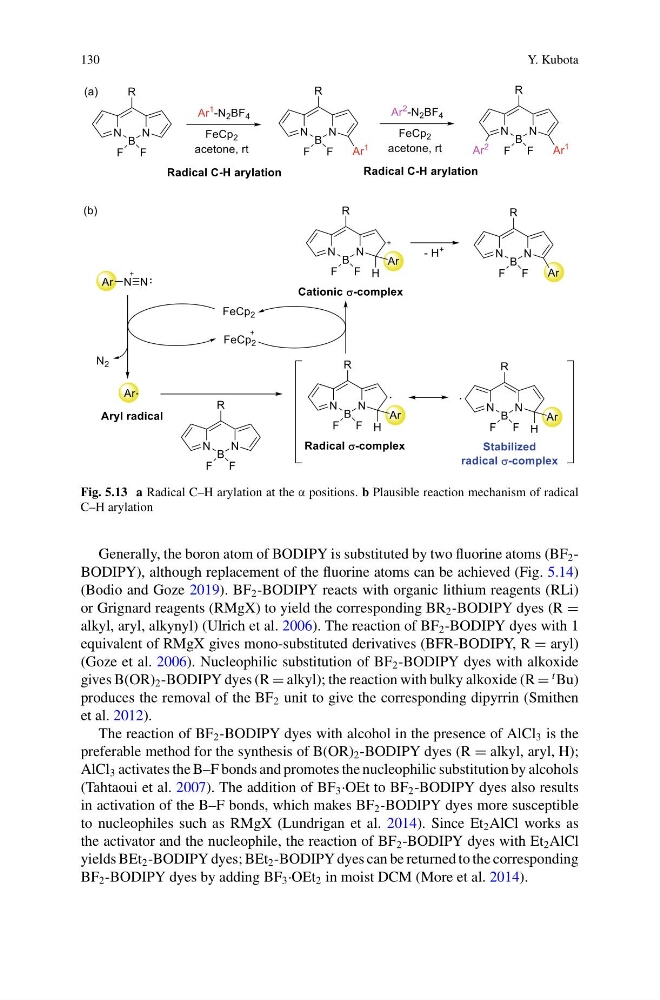
Fig. 5.13 a Radical C–H arylation at the α positions. b Plausible reaction mechanism of radical
C–H arylation
Generally, the boron atom of BODIPY is substituted by two fluorine atoms (BF 2 -
BODIPY), although replacement of the fluorine atoms can be achieved (Fig. 5.14)
(Bodio and Goze 2019). BF 2 -BODIPY reacts with organic lithium reagents (RLi)
or Grignard reagents (RMgX) to yield the corresponding BR 2 -BODIPY dyes (R =
alkyl, aryl, alkynyl) (Ulrich et al. 2006). The reaction of BF 2 -BODIPY dyes with 1
equivalent of RMgX gives mono-substituted derivatives (BFR-BODIPY, R = aryl)
(Goze et al. 2006). Nucleophilic substitution of BF 2 -BODIPY dyes with alkoxide
gives B(OR) 2 -BODIPY dyes (R = alkyl); the reaction with bulky alkoxide (R =
t Bu)
produces the removal of the BF 2 unit to give the corresponding dipyrrin (Smithen
et al. 2012).
The reaction of BF 2 -BODIPY dyes with alcohol in the presence of AlCl 3 is the
preferable method for the synthesis of B(OR) 2 -BODIPY dyes (R = alkyl, aryl, H);
AlCl 3 activates the B–F bonds and promotes the nucleophilic substitution by alcohols
(Tahtaoui et al. 2007). The addition of BF 3 ·OEt to BF 2 -BODIPY dyes also results
in activation of the B–F bonds, which makes BF 2 -BODIPY dyes more susceptible
to nucleophiles such as RMgX (Lundrigan et al. 2014). Since Et 2 AlCl works as
the activator and the nucleophile, the reaction of BF 2 -BODIPY dyes with Et 2 AlCl
yields BEt 2 -BODIPY dyes; BEt 2 -BODIPY dyes can be returned to the corresponding
BF 2 -BODIPY dyes by adding BF 3 ·OEt 2 in moist DCM (More et al. 2014).
Y. Kubota
Fig. 5.13 a Radical C–H arylation at the α positions. b Plausible reaction mechanism of radical
C–H arylation
Generally, the boron atom of BODIPY is substituted by two fluorine atoms (BF 2 -
BODIPY), although replacement of the fluorine atoms can be achieved (Fig. 5.14)
(Bodio and Goze 2019). BF 2 -BODIPY reacts with organic lithium reagents (RLi)
or Grignard reagents (RMgX) to yield the corresponding BR 2 -BODIPY dyes (R =
alkyl, aryl, alkynyl) (Ulrich et al. 2006). The reaction of BF 2 -BODIPY dyes with 1
equivalent of RMgX gives mono-substituted derivatives (BFR-BODIPY, R = aryl)
(Goze et al. 2006). Nucleophilic substitution of BF 2 -BODIPY dyes with alkoxide
gives B(OR) 2 -BODIPY dyes (R = alkyl); the reaction with bulky alkoxide (R =
t Bu)
produces the removal of the BF 2 unit to give the corresponding dipyrrin (Smithen
et al. 2012).
The reaction of BF 2 -BODIPY dyes with alcohol in the presence of AlCl 3 is the
preferable method for the synthesis of B(OR) 2 -BODIPY dyes (R = alkyl, aryl, H);
AlCl 3 activates the B–F bonds and promotes the nucleophilic substitution by alcohols
(Tahtaoui et al. 2007). The addition of BF 3 ·OEt to BF 2 -BODIPY dyes also results
in activation of the B–F bonds, which makes BF 2 -BODIPY dyes more susceptible
to nucleophiles such as RMgX (Lundrigan et al. 2014). Since Et 2 AlCl works as
the activator and the nucleophile, the reaction of BF 2 -BODIPY dyes with Et 2 AlCl
yields BEt 2 -BODIPY dyes; BEt 2 -BODIPY dyes can be returned to the corresponding
BF 2 -BODIPY dyes by adding BF 3 ·OEt 2 in moist DCM (More et al. 2014).