

Gold is usually the preferred metal for thiol deposition, mainly because it
is inert, biocompatible, and can withstand harsh chemical cleaning
treatments. Gold is also easy to pattern using lithographic methods. Low
molecular weight thiols can be deposited on gold surfaces by vapor
deposition. Most other thiols can be deposited using a simpler method.
First, the thiols are dissolved in an organic solvent such as chloroform or
ethanol. The gold is then immersed in this dilute solution (~1 mM) for 12
to 72 hours at room temperature. The metal is then removed, washed
with appropriate solvents, and dried in a stream of nitrogen. It should be
stressed that the gold surface needs to be free of impurities before being
immersed in the thiol solution. The surface is usually cleaned in appropriate solvents and then exposed to intense UV light in the presence of
oxygen for about 30 minutes. The production of oxygen atoms and ozone
during the UV exposure causes organic impurities on the gold surface to
be oxidized.
The final structure of SAMs constructed using thiols depends on the
curvature of the substrate. Planar substrates have no curvature. However,
SAMs on nanoparticles such as colloidal particles and nanocrystals tend
X X X X X
S
X
S S S S S
Au
Au
SH
Fe
O
O
CH 3
HS
HS
SH
OH
O
HSCH 2 (CH 2 ) g CH 2
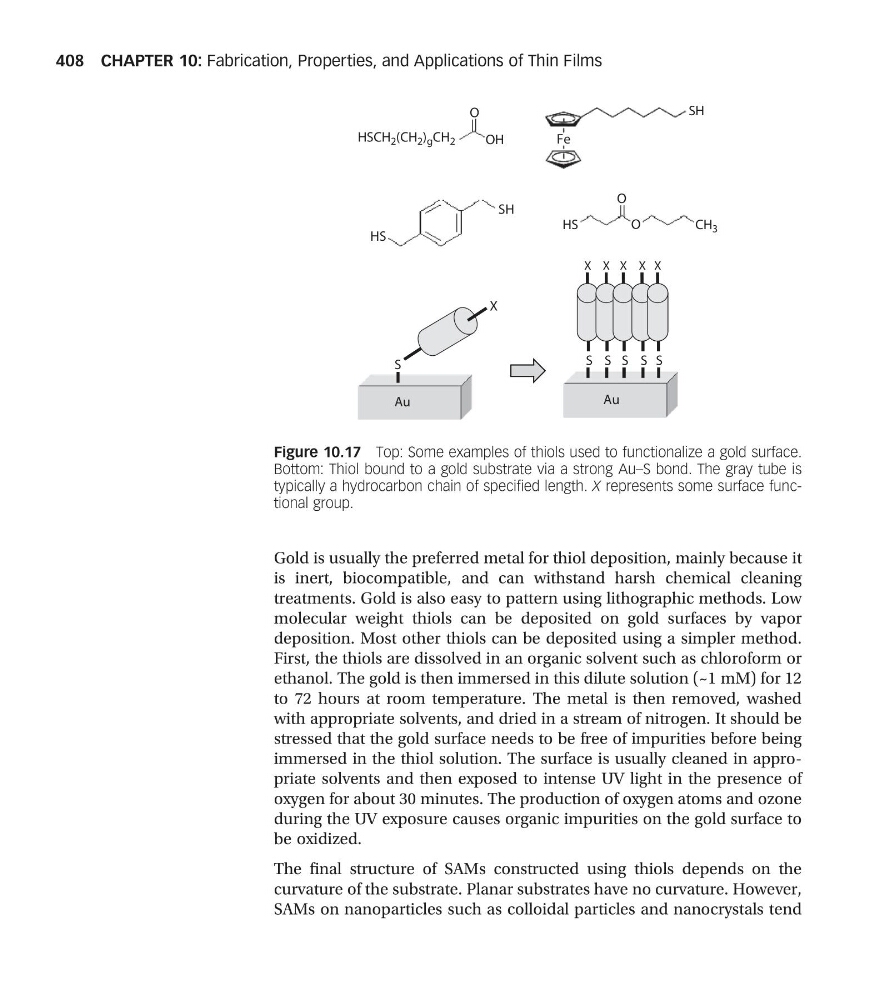
Figure 10.17 Top: Some examples of thiols used to functionalize a gold surface.
Bottom: Thiol bound to a gold substrate via a strong Au–S bond. The gray tube is
typically a hydrocarbon chain of specified length. X represents some surface functional group.
CHAPTER 10: Fabrication, Properties, and Applications of Thin Films
408
is inert, biocompatible, and can withstand harsh chemical cleaning
treatments. Gold is also easy to pattern using lithographic methods. Low
molecular weight thiols can be deposited on gold surfaces by vapor
deposition. Most other thiols can be deposited using a simpler method.
First, the thiols are dissolved in an organic solvent such as chloroform or
ethanol. The gold is then immersed in this dilute solution (~1 mM) for 12
to 72 hours at room temperature. The metal is then removed, washed
with appropriate solvents, and dried in a stream of nitrogen. It should be
stressed that the gold surface needs to be free of impurities before being
immersed in the thiol solution. The surface is usually cleaned in appropriate solvents and then exposed to intense UV light in the presence of
oxygen for about 30 minutes. The production of oxygen atoms and ozone
during the UV exposure causes organic impurities on the gold surface to
be oxidized.
The final structure of SAMs constructed using thiols depends on the
curvature of the substrate. Planar substrates have no curvature. However,
SAMs on nanoparticles such as colloidal particles and nanocrystals tend
X X X X X
S
X
S S S S S
Au
Au
SH
Fe
O
O
CH 3
HS
HS
SH
OH
O
HSCH 2 (CH 2 ) g CH 2
Figure 10.17 Top: Some examples of thiols used to functionalize a gold surface.
Bottom: Thiol bound to a gold substrate via a strong Au–S bond. The gray tube is
typically a hydrocarbon chain of specified length. X represents some surface functional group.
CHAPTER 10: Fabrication, Properties, and Applications of Thin Films
408