

FLIC can also be used to look at the topography of a secondary membrane. A secondary lipid bilayer can be assembled atop a solid supported
bilayer via the rupture of giant lipid vesicles with diameters that approach
tens of microns. The secondary membrane is separated from the primary
membrane by a confined layer of water and is therefore free to exhibit
nanometer-scale height fluctuations.
10.3.7 Solvent assisted lipid bilayer formation
Recently the solvent-assisted lipid bilayer (SALB) formation method was
discovered as a simpler alternative to the vesicle fusion method described
in Section 10.3.2 (Tabaei, S. R. et. al., 2014). Furthermore, SALB formation
does not involve vesicles and is thus not susceptible to the limiting step of
vesicle formation, which is exclusive to certain lipid compositions.
Therefore, SALB formation is applicable to a much wider range of lipid
compositions than vesicle fusion and can thus mimic more bilayer types
(e.g., mammalian, bacterial, and cholesterol-rich bilayers).
The SALB method involves the formation of a bilayer at the solid–liquid
interface. This occurs with a change of bulk solutions passed over a silica
surface, which induces multiple lyotropic phase transitions. The lipids are
initially dissolved in water-miscible alcohols (e.g., isopropanol or
ethanol). The solid support surface is exposed to a water-based buffer
solution (10 mM Tris, 150 mM NaCl, pH 7.5) followed by isopropanol.
Then, the lipid mixture at a final concentration of 0.5 mg/mL is introduced. Finally, the water-based buffer is reintroduced. As the water
fraction increases, the lyotropic phase transitions occur and induce the
lipids to self-assemble into a planar bilayer.
Excitation
Emission
SiO 2 layer
Fluorophore
Assembly
Silicon substrate
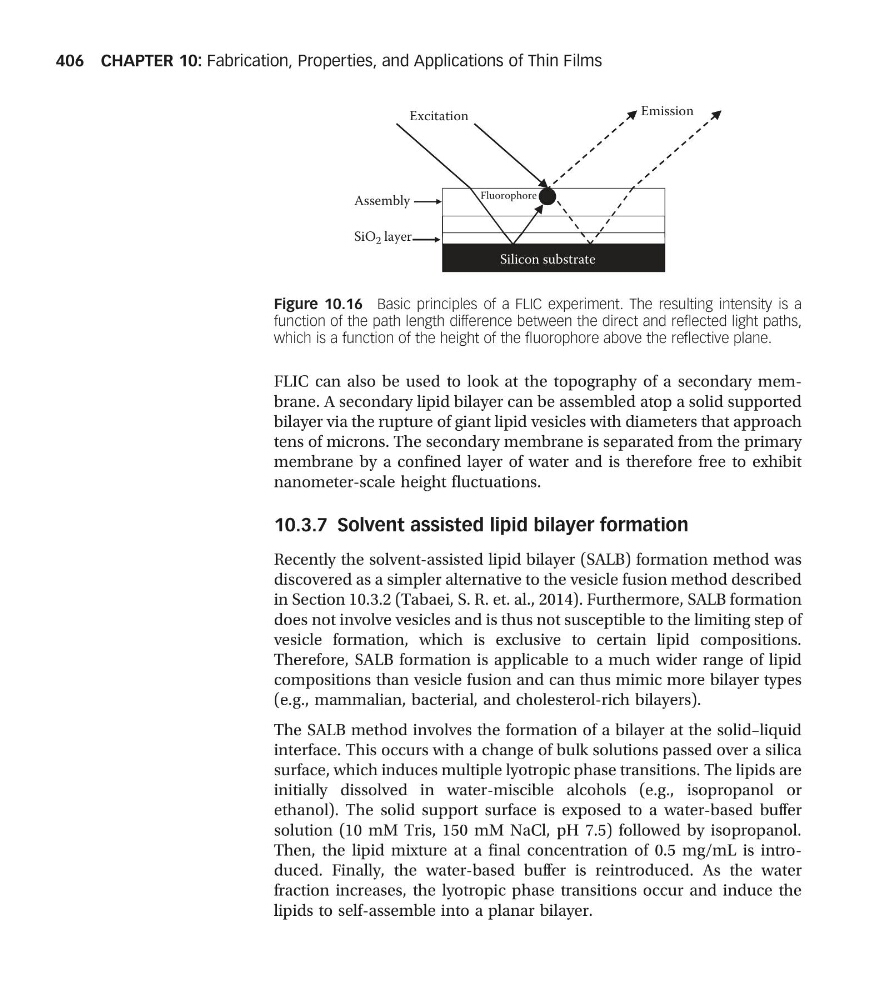
Figure 10.16 Basic principles of a FLIC experiment. The resulting intensity is a
function of the path length difference between the direct and reflected light paths,
which is a function of the height of the fluorophore above the reflective plane.
CHAPTER 10: Fabrication, Properties, and Applications of Thin Films
406
bilayer via the rupture of giant lipid vesicles with diameters that approach
tens of microns. The secondary membrane is separated from the primary
membrane by a confined layer of water and is therefore free to exhibit
nanometer-scale height fluctuations.
10.3.7 Solvent assisted lipid bilayer formation
Recently the solvent-assisted lipid bilayer (SALB) formation method was
discovered as a simpler alternative to the vesicle fusion method described
in Section 10.3.2 (Tabaei, S. R. et. al., 2014). Furthermore, SALB formation
does not involve vesicles and is thus not susceptible to the limiting step of
vesicle formation, which is exclusive to certain lipid compositions.
Therefore, SALB formation is applicable to a much wider range of lipid
compositions than vesicle fusion and can thus mimic more bilayer types
(e.g., mammalian, bacterial, and cholesterol-rich bilayers).
The SALB method involves the formation of a bilayer at the solid–liquid
interface. This occurs with a change of bulk solutions passed over a silica
surface, which induces multiple lyotropic phase transitions. The lipids are
initially dissolved in water-miscible alcohols (e.g., isopropanol or
ethanol). The solid support surface is exposed to a water-based buffer
solution (10 mM Tris, 150 mM NaCl, pH 7.5) followed by isopropanol.
Then, the lipid mixture at a final concentration of 0.5 mg/mL is introduced. Finally, the water-based buffer is reintroduced. As the water
fraction increases, the lyotropic phase transitions occur and induce the
lipids to self-assemble into a planar bilayer.
Excitation
Emission
SiO 2 layer
Fluorophore
Assembly
Silicon substrate
Figure 10.16 Basic principles of a FLIC experiment. The resulting intensity is a
function of the path length difference between the direct and reflected light paths,
which is a function of the height of the fluorophore above the reflective plane.
CHAPTER 10: Fabrication, Properties, and Applications of Thin Films
406