

adsorbs to an oppositely charged substrate surface because of favorable
electrostatic attraction between the charged groups on the polyion and
those on the surface. The counterions that previously neutralized the
charges on both components are displaced into solution. The process is
irreversible, barring a large change in pH, due to the low probability of
simultaneously breaking all of the ionic interactions between the polyelectrolyte and the surface. The amount of polyelectrolyte deposited can
be controlled by varying the strength of the interaction (e.g., by changing
the polyion, pH, or ionic strength of the system).
A commonly used system is a positively charged polyelectrolyte on an
oxidized silica or silanol surface. The silica substrate surface is negatively
charged due to deprotonated silanol groups. When exposed to a cationic
solution, the negative charge on the substrate quickly attracts the cations
to the surface. ESA methods typically expose a solid substrate surface to
the desired adsorbent by “dipping” the substrate into an aqueous solution
of the adsorbent for about 10 minutes. In order to build multilayered
assemblies, this “dipping” procedure is repeated with alternating polycation and polyanion aqueous solutions, with a rinse step with either
water or slightly ionic solution in between that increases the ability of the
next layer to be well ordered and removes the counterions that had been
displaced in the previous assembly step. The rinse step removes weakly
adsorbed molecules that are not a part of the film and primes the surface
Spontaneous
self-assembly
Polycation
Polyanion
Polyelectrolyte
complexation
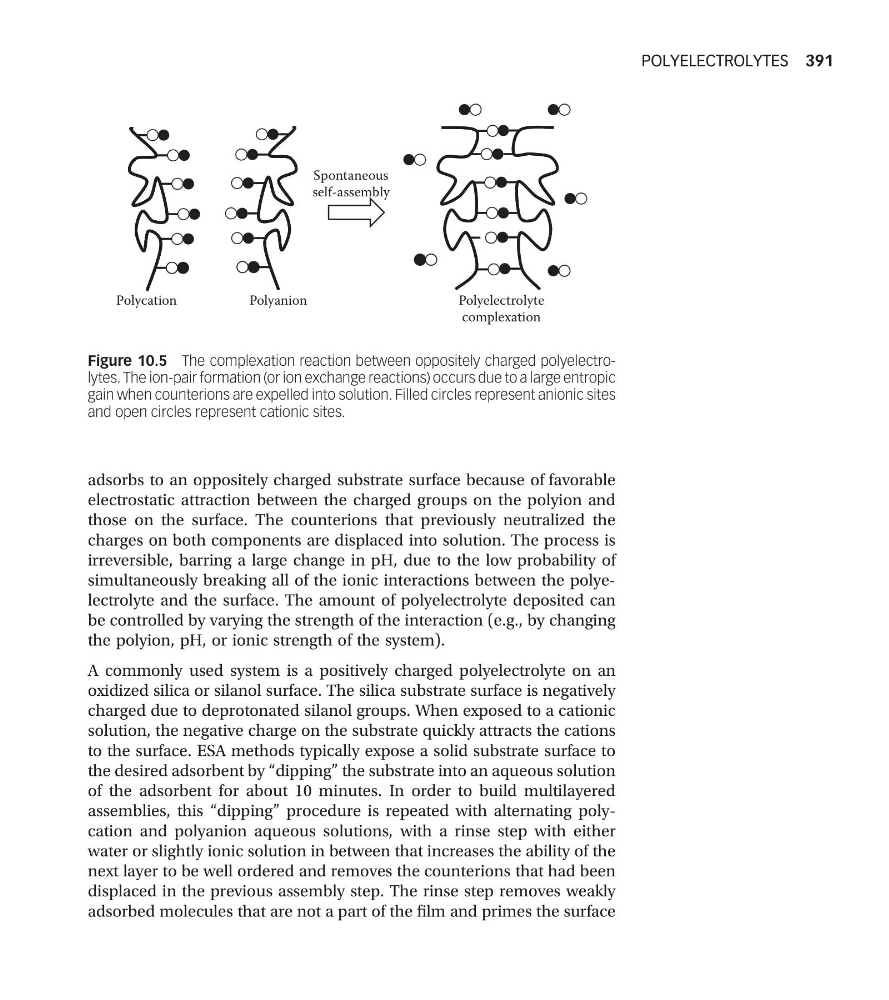
Figure 10.5 The complexation reaction between oppositely charged polyelectrolytes. The ion-pair formation (or ion exchange reactions) occurs due to a large entropic
gain when counterions are expelled into solution. Filled circles represent anionic sites
and open circles represent cationic sites.
POLYELECTROLYTES 391
electrostatic attraction between the charged groups on the polyion and
those on the surface. The counterions that previously neutralized the
charges on both components are displaced into solution. The process is
irreversible, barring a large change in pH, due to the low probability of
simultaneously breaking all of the ionic interactions between the polyelectrolyte and the surface. The amount of polyelectrolyte deposited can
be controlled by varying the strength of the interaction (e.g., by changing
the polyion, pH, or ionic strength of the system).
A commonly used system is a positively charged polyelectrolyte on an
oxidized silica or silanol surface. The silica substrate surface is negatively
charged due to deprotonated silanol groups. When exposed to a cationic
solution, the negative charge on the substrate quickly attracts the cations
to the surface. ESA methods typically expose a solid substrate surface to
the desired adsorbent by “dipping” the substrate into an aqueous solution
of the adsorbent for about 10 minutes. In order to build multilayered
assemblies, this “dipping” procedure is repeated with alternating polycation and polyanion aqueous solutions, with a rinse step with either
water or slightly ionic solution in between that increases the ability of the
next layer to be well ordered and removes the counterions that had been
displaced in the previous assembly step. The rinse step removes weakly
adsorbed molecules that are not a part of the film and primes the surface
Spontaneous
self-assembly
Polycation
Polyanion
Polyelectrolyte
complexation
Figure 10.5 The complexation reaction between oppositely charged polyelectrolytes. The ion-pair formation (or ion exchange reactions) occurs due to a large entropic
gain when counterions are expelled into solution. Filled circles represent anionic sites
and open circles represent cationic sites.
POLYELECTROLYTES 391